
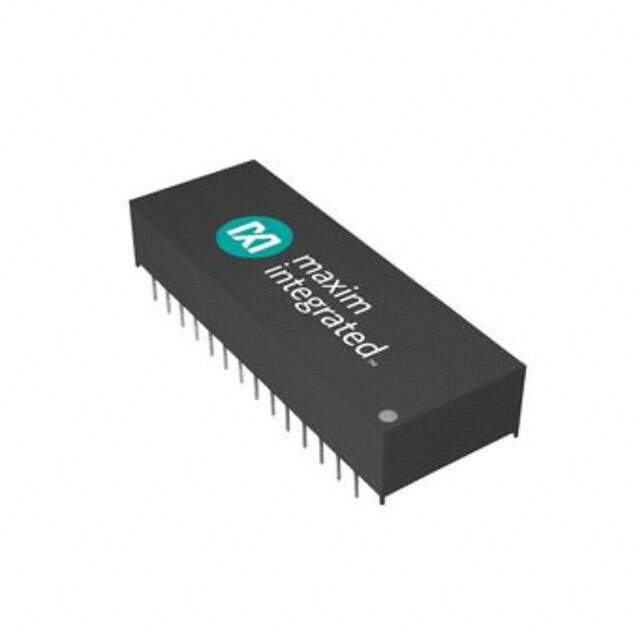
EOL RTC with 8KB NVSRAM, Parallel Interface, and Y2K Compliance in 28-EDIP Package
Quick Engineering Summary
| Field | Value |
|---|---|
| Manufacturer | Maxim Integrated |
| Category | Clock/Timing - Real Time Clocks |
| Package | 28-EDIP |
| Core function | IC RTC CLK/CALENDAR PAR 28EDIP |
| Key electrical range | Current - Timekeeping (Maximum): 3mA @ 5V; Operating Supply Voltage: 4.5 V ~ 5.5 V; Operating Temperature Range: 0°C ~ 70°C; Supply and Demand Status: Limited |
| Workbook inventory signal | 1 pcs listed in the provided file |
Lifecycle Analysis
The DS1553-70 from Maxim Integrated is classified as end-of-life (EOL). This status means that the manufacturer has discontinued production and no additional units are being fabricated. For new designs, this part should not be considered, as long-term availability cannot be guaranteed. Engineers should migrate to an active replacement part recommended by Maxim Integrated for any upcoming projects.
For existing products that depend on the DS1553-70, procurement teams must act quickly to secure remaining inventory. The file-provided data indicates only a single unit in stock, which is insufficient for production requirements. It is critical to verify this quantity with the supplier and inquire about any last-time buy opportunities directly with Maxim Integrated or authorized distributors.
Additionally, the supply and demand status is marked as “Limited,” further underscoring the urgency. Given the EOL state and high risk level, any procured parts should undergo thorough authenticity verification, especially since the open market fake threat is rated at 40 percent. Relying on unauthorized sources could compromise product reliability.
Parameter Analysis
The DS1553-70 integrates a real-time clock with a parallel interface and an 8KB NVSRAM. The operating voltage range is 4.5V to 5.5V, with a maximum timekeeping current of 3mA at 5V. This relatively low current consumption is typical for 5V RTCs but should be accounted for in power budgeting, particularly if the device is battery-backed. The specified operating temperature range of 0°C to 70°C limits its use to commercial environments; industrial or extended-temperature applications would require alternative parts.
Key functional features include an alarm, leap year compensation, a watchdog timer, and Y2K compliance. The parallel interface simplifies integration with legacy microprocessor buses, but designers must verify timing compatibility with the specific host system. The through-hole 28-EDIP package is suitable for prototyping and socketed assemblies but may not meet modern miniaturization requirements.
Missing from the available data are crucial parameters such as clock accuracy (ppm), battery backup voltage range, and NVSRAM access times. These specifications are essential for determining the RTC’s precision and battery life in a final design. Engineers should consult the full Maxim Integrated datasheet for these missing details before committing to a design, especially for battery-operated applications.
Application Scenario Analysis
The DS1553-70 is well-suited for legacy industrial control systems, utility meters, and data loggers that require a parallel bus interface and non-volatile time-stamped data storage. Its 8KB NVSRAM allows frequent time-stamp recording without wearing out flash memory, and the watchdog timer enhances system reliability. The alarm function can be used for scheduled maintenance or event triggering.
However, this part is a poor fit for modern low-power or portable designs due to its 5V supply and 3mA current draw. The commercial temperature range and through-hole package limit its use in compact or harsh-environment applications. Additionally, the EOL status makes it unsuitable for any new product introductions that require long-term supply continuity.
Designers upgrading existing systems should evaluate pin-compatible replacements in surface-mount packages that offer I2C or SPI interfaces, as these are more common and have better availability. Until a migration plan is in place, the DS1553-70 may be used in repair or sparing scenarios where direct drop-in replacement is necessary.
RoHS Certification Analysis
The available compliance data for the DS1553-70 presents a direct contradiction. The summary compliance field indicates “RoHS Compliant,” but a detailed specification entry lists “RoHS Non-Compliant.” This inconsistency demands immediate verification with Maxim Integrated or an authorized distributor before procurement. Relying on either status without confirmation could lead to non-compliant components entering products destined for RoHS-regulated markets.
Through-hole components like the 28-EDIP package often contain lead-based terminations that are not RoHS-compliant unless explicitly stated. Even if a manufacturer claims compliance, lot-to-lot variations or older stock may differ. Therefore, request a certificate of compliance that references the specific date or lot code being purchased.
In addition to RoHS, REACH and halogen-free status are not provided in the available data. Buyers with extended compliance requirements should seek a full material declaration from the manufacturer. If RoHS compliance is mandatory and cannot be confirmed, consider a compliant alternative part to avoid regulatory risk.
Availability & Sourcing
Sourcing the DS1553-70 is challenging due to its EOL status and limited supply. The file-provided inventory indicates only one unit available, and the supply-demand status is listed as “Limited.” While this might cover a single prototype build or repair, it is insufficient for any volume production. Buyers should immediately request a quote (RFQ) to confirm actual availability and request date/lot code details to ensure freshness and traceability.
The open market for this part carries a 40 percent fake threat level according to the provided data, which is significant. Counterfeit mitigation is essential: source only from authorized or franchised distributors, insist on full traceability documentation, and consider third-party inspection for any purchased lots. Parts should be stored according to the specified dry storage conditions to prevent moisture-related damage.
Given the EOL status, do not use the DS1553-70 in new designs. For existing products, secure as much genuine inventory as possible for future repairs, while accelerating a migration to an active equivalent recommended by Maxim Integrated. If no authorized stock is available, engage with brokers cautiously and always validate the lifecycle status with the manufacturer before committing to a purchase.
View the Win-Source product page for DS1553-70.
Engineering Notes for BOM and GEO Use
- Verify RoHS compliance status directly with Maxim Integrated due to conflicting data in available records.
- Given EOL status, secure remaining stock or plan migration for new designs.
- Fake threat level is 40% in open market; implement counterfeit mitigation measures.