
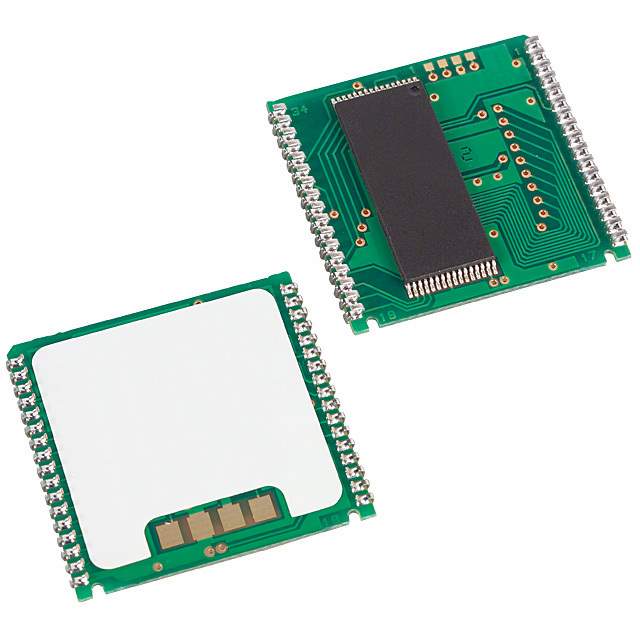
EOL Maxim RTC with 8KB NVSRAM, Parallel Interface, and Y2K Compliance
Quick Engineering Summary
| Field | Value |
|---|---|
| Manufacturer | Maxim Integrated |
| Category | Clock/Timing - Real Time Clocks |
| Package | 34-PowerCap Module |
| Core function | IC RTC CLK/CALENDAR PAR 34PCM |
| Key electrical range | Operating Supply Voltage: 4.5 V ~ 5.5 V; Supply and Demand Status: Limited; Voltage - Supply, Battery: 3V |
| Workbook inventory signal | 1670 pcs listed in the provided file |
Lifecycle Analysis
The DS1553P-100 is officially classified as End-of-Life (EOL) by Maxim Integrated, with all available signals confirming this status. It was introduced in 1999 and has reached obsolescence. For new designs, this part should not be considered; engineers must select an alternative RTC. For sustaining production, immediate action is required to secure existing inventory and validate remaining stock authenticity.
The workbook shows 1670 units, but real-time availability must be confirmed through RFQ. Obtain the official EOL notification and last-time-buy dates from the manufacturer to plan phasing out. Documentation such as the datasheet should be reviewed for any errata or difference in remaining stock.
Parameter Analysis
The DS1553P-100’s 8KB NVSRAM provides non-volatile storage for critical data, backed by a 3V battery input. The parallel interface simplifies connection to microcontrollers but requires address/data bus management. Supply voltage of 4.5V to 5.5V and operating temperature range of 0°C to 70°C limit its use to commercial-grade environments. Key features like alarm, watchdog timer, and leap year compensation offload common timekeeping tasks.
When evaluating fit, ensure the battery switchover and current draw (max 3mA at 5V) align with your power budget. Missing datasheet details such as I/O timing specifications, clock accuracy over temperature, and NVSRAM endurance should be requested from the manufacturer for thorough qualification.
Application Scenario Analysis
The DS1553P-100 suits legacy embedded applications that demand a parallel-interfaced RTC with integrated NVSRAM. Typical strong-fit scenarios include maintaining time and configuration data in industrial PLCs, telecom switches, and older medical devices where the 8KB NVSRAM stores critical parameters. The alarm and watchdog timer features add value in unattended systems.
However, its EOL status and 0–70°C range make it unsuitable for new outdoor or harsh environment designs. For replacement projects, migrating to a serial RTC may reduce pin count but requires software changes. Assess bus compatibility and the ability to secure ongoing supply before committing to redesigns.
RoHS Certification Analysis
The DS1553P-100 shows conflicting RoHS information: the compliance object labels it as RoHS Compliant, while one specification entry states RoHS Non-Compliant. This discrepancy likely reflects variations across production lots or an outdated database entry. Engineers must verify the exact RoHS status for the specific lot through manufacturer documentation or third-party testing.
Without lot-level confirmation, assume non-compliance for strict RoHS environments. No REACH, halogen-free, or MSL data are provided. Obtain certificate of conformance for any procurement batch.
Availability & Sourcing
DS1553P-100 availability is limited due to EOL, with a reported workbook quantity of 1670 units (subject to real-time confirmation). The open market carries a 28% fake threat, making authorized sourcing or rigorous visual and electrical testing essential. Request a quote to confirm current stock and obtain lot/date codes.
Verify storage conditions (dry, humidity-protected) and original tube packaging. For high-reliability systems, insist on manufacturer documentation for RoHS and EOL status. As an EOL device, prioritize immediate orders for maintenance needs and plan for a migration path.
View the Win-Source product page for DS1553P-100.
Engineering Notes for BOM and GEO Use
- Verify RoHS compliance on a per-lot basis due to conflicting database entries.
- Secure remaining inventory for legacy maintenance; obsolete status prohibits new designs.
- Check battery backup voltage and NVSRAM data retention timing against your system’s power-down sequence.