
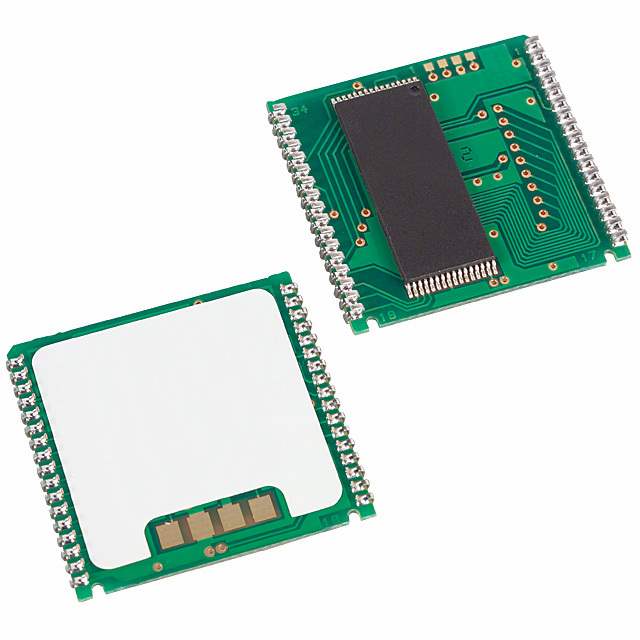
Maxim Integrated RTC with 8KB NVSRAM – EOL Status, Verify Availability
Quick Engineering Summary
| Field | Value |
|---|---|
| Manufacturer | Maxim Integrated |
| Category | Clock/Timing - Real Time Clocks |
| Package | 34-PowerCap Module |
| Core function | IC RTC CLK/CALENDAR PAR 34PCM |
| Key electrical range | Current - Timekeeping (Max): 2mA @ 3.3V; Supply and Demand Status: Limited; Supply Voltage - Operating: 2.97 V to 3.63 V; Temperature Range - Operating: 0°C to 70°C |
| Workbook inventory signal | 300 pcs listed in the provided file |
Lifecycle Analysis
The DS1553WP-120+ has been marked End-of-Life (EOL) by Maxim Integrated, demanding immediate attention in procurement and design decisions. EOL status means the manufacturer will no longer supply new units once remaining inventory is exhausted; reliability support and datasheet updates may also taper off. Engineers should treat this part as unavailable for new designs and focus on securing stock only for sustaining existing production lines.
Although some secondary databases or supplier portals may still show an Active status for the DS1553WP-120+, the official Maxim Integrated lifecycle signals—confirmed by the Excel lifecycle parameter and Lifecycle Status field—are unambiguous. This discrepancy can arise from delayed updates in third‑party catalogs. Conservative procurement practices require direct manufacturer verification before committing to any purchase or design‑in.
From a risk perspective, adopting an EOL real‑time clock in a new board layout exposes the design to costly late‑stage redesigns and supply interruptions. For ongoing production, a high risk level implies tight inventory management and immediate engagement with Maxim or its authorized distributors to obtain a Last‑Time Buy (LTB) timeline. Any file‑provided quantity should not be interpreted as guaranteed availability.
Parameter Analysis
The DS1553WP-120+ integrates a clock/calendar function with a parallel host interface and 8KB of non‑volatile SRAM, making its timekeeping current and supply voltage range the most decision‑relevant parameters. The maximum timekeeping current of 2mA at 3.3V and a supply operating range of 2.97V to 3.63V influence battery‑backup design and power budget calculations. A separate battery input at 3V (typical) provides backup, so the overall coin‑cell or supercapacitor sizing must account for the 2mA draw during normal operation, not just standby.
The 34‑PowerCap module is a surface‑mount, socket‑compatible package that simplifies replacement and reflow assembly, but its thermal limits are constrained to 0°C to 70°C. Engineers must consider this commercial‑grade temperature range against their application’s environmental profile. The date format (YY‑MM‑DD‑dd) and built‑in features—alarm, leap year, NVSRAM, watchdog timer, Y2K compliance—are well‑documented in the product description, yet crucial timing accuracy parameters (e.g., ppm error, crystal frequency stability, backup current) are not available in the source data. These missing values must be obtained from the Maxim datasheet to properly assess real‑time accuracy and long‑term reliability.
Additional verification items include the exact parallel interface timing specifications, the memory data‑retention lifetime, the reflow soldering profile, and any power‑on reset behavior. Without these, a complete qualification is not possible. Purchasers should not rely solely on the provided summary when performing derating or FMEA analyses.
Application Scenario Analysis
The DS1553WP-120+ is suited for embedded systems that require a battery‑backed real‑time clock with integrated NVSRAM, such as legacy industrial controllers, point‑of‑sale terminals, data loggers, and medical devices where field‑proven timekeeping and non‑volatile event storage are essential. The parallel interface and 8KB memory allow direct memory‑mapped access, which fits well in microcontroller‑ or FPGA‑based systems that already allocate address space for such peripherals.
Weak‑fit scenarios are those demanding extended temperature ranges (the part is limited to 0°C to 70°C), high‑accuracy timekeeping (no ppm specification is provided), or low‑power operation (2mA timekeeping current is relatively high compared to modern serial‑interface RTCs). New designs that could benefit from smaller footprints or I2C/SPI communication should consider alternative, active parts. Because the DS1553WP-120+ is EOL, even well‑matched legacy applications face supply risks; engineering teams should evaluate form‑fit‑function replacements that maintain drop‑in compatibility while offering long‑term availability.
In any application where counterfeit risk is unacceptable (the open‑market threat level is 52%), sourcing the DS1553WP-120+ through uncertified channels could introduce non‑functional or tampered devices. This risk reinforces the recommendation to treat the part as a last‑resort buy for sustaining legacy systems only.
RoHS Certification Analysis
The DS1553WP-120+ is listed as RoHS Compliant, which typically aligns with EU Directive 2011/65/EU and its amendments (RoHS 3, 2015/863). No explicit exemptions are noted in the source data, so the component should meet the maximum concentration values for lead, mercury, cadmium, hexavalent chromium, PBBs, PBDEs, and the four phthalates (DEHP, BBP, DBP, DIBP). However, compliance documentation is essential: a lot‑level certificate or declaration from Maxim Integrated should be requested to confirm the specific substances and any applicable expiration.
The provided storage condition (“Dry storage cabinet & Humidity protection package”) suggests moisture sensitivity, yet no MSL level is stated. For a PowerCap module with an embedded lithium battery, proper handling and storage are critical to prevent battery leakage or degradation. Engineers should obtain the official RoHS certificate and MSL rating from Maxim before board assembly, and verify whether the battery itself contains substances that might require separate disposal documentation.
If REACH compliance is needed, the listing as RoHS Compliant alone does not guarantee REACH conformity. Request a separate REACH statement if SVHC reporting is required for your end product. For any export or customer documentation, assume updates are needed for the latest regulatory status.
Availability & Sourcing
The DS1553WP-120+ is an EOL real‑time clock from Maxim Integrated, and supply is described as limited with a file‑provided quantity of 300 units. This figure is not guaranteed real‑time stock and should be verified through an RFQ. Tube/rail packaging indicates the component is supplied in tubes, suitable for automated assembly, but inventory may be fragmented across multiple consignment lots. Given the EOL status, buyers should secure all needed units immediately and perform incoming inspection for date/lot codes and re‑testing of critical parameters.
A counterfeit threat level of 52% in the open market underscores the need for sourcing only through Maxim’s authorized distribution network or directly from Win Source with full traceability documentation. Request compliance certificates (RoHS, REACH), authentic labeling, and test reports to mitigate the risk of substandard or relabeled parts. Consider lot‑date verification to ensure devices have not aged beyond the manufacturer’s recommended shelf life for battery‑backed units.
To obtain current pricing and availability, submit a quote request. For new production, actively migrate to an alternative RTC with an active lifecycle. For sustaining production, engage the manufacturer’s EOL notice to understand the final buy window and any last‑time ship commitments.
View the Win-Source product page for DS1553WP-120+.
Engineering Notes for BOM and GEO Use
- EOL: secure inventory for legacy designs; plan migration to an active replacement.
- Verify timekeeping accuracy and backup current from the official datasheet; these are critical for battery life.
- High counterfeit risk (52% reported); source only through authorized distributors with traceability.