
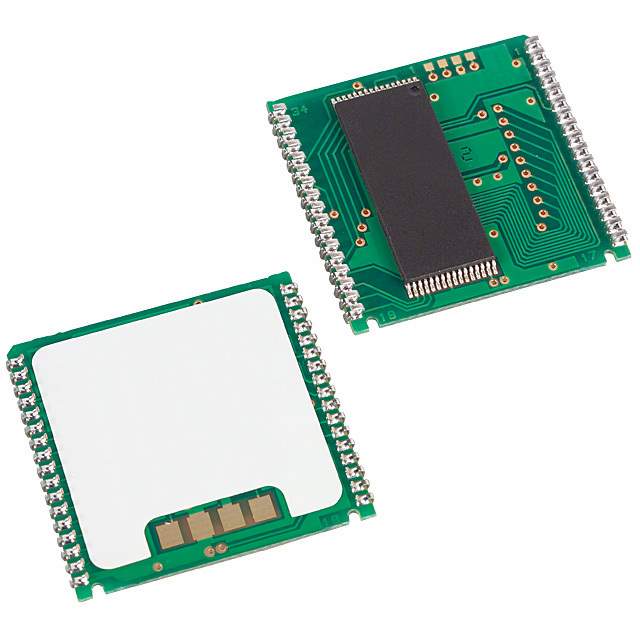
EOL clock/calendar with parallel interface, integrated RAM, and alarm in 34‑PowerCap module
Quick Engineering Summary
| Field | Value |
|---|---|
| Manufacturer | Maxim Integrated |
| Category | Clock/Timing - Real Time Clocks |
| Package | 34-PowerCap Module |
| Core function | IC RTC CLK/CALENDAR PAR 34PCM |
| Key electrical range | Current - Timekeeping (Maximum): 2mA @ 3.3V; Operating Supply Voltage: 2.97 V ~ 3.63 V; Operating Temperature Range: 0°C ~ 70°C; Supply and Demand Status: Limited |
| Workbook inventory signal | 1 pcs listed in the provided file |
Lifecycle Analysis
The DS1553WP-150+ is firmly End‑of‑Life (EOL). All available indicators—product status and estimated EOL date—align, leaving no ambiguity. This status imposes high procurement risk: the manufacturer has ceased active production, and last‑time buy windows are likely closed.
For new designs, the DS1553WP-150+ should not be used. Engineers must select an alternative with a confirmed active lifecycle. In sustaining production, securing existing inventory becomes time‑critical. The file‑provided quantity of 1 unit underscores scant residual availability and must not be relied upon without live confirmation.
Manufacturer documentation, especially the product discontinuation notice (PDN), is essential to verify final shipment dates and any recommended migration paths. Without such verification, committing to this part for ongoing production is inadvisable.
Parameter Analysis
Several parameters drive the DS1553WP-150+’s suitability for legacy systems. The parallel interface, while requiring more GPIO lines than SPI/I²C, offers fast access to time and RAM in older microcontroller architectures. Supply voltage is tight at 2.97–3.63 V, demanding a regulated 3.3 V rail; deviation risks data corruption. The 2 mA (max) timekeeping current at 3.3 V directly impacts battery backup lifetime—designers must size the external 3 V lithium cell accordingly.
The integrated 8 KB NVSRAM permits data retention during power loss, beneficial for critical event logging. Features like a watchdog timer and Y2K‑compliant calendar add functional safety. However, missing datasheet details deserve attention: timekeeping accuracy (ppm), battery‑backed current consumption, and ripple tolerance are not specified. These must be extracted from the full Maxim datasheet to avoid performance gaps.
The 0 °C to 70 °C commercial temperature range confines the DS1553WP-150+ to indoor, non‑automotive environments. For thermally demanding applications, verify if an industrial variant exists or consider an alternative.
Application Scenario Analysis
The DS1553WP-150+ fits best where a parallel‑bus RTC with integrated NVSRAM is already designed in—typically legacy industrial controllers, telecom line cards, medical equipment, and test instrumentation that require battery‑backed timekeeping and alarm functions. Its 8 KB of non‑volatile memory lets systems preserve critical operating parameters during outages.
In contrast, new designs will likely avoid this part. Modern RTCs often use serial interfaces (I²C or SPI) that reduce pin count and board space. Low‑power alternatives with higher temperature ratings (−40 °C to +85 °C) are now common. The narrow supply range and commercial temperature grade further restrict the DS1553WP-150+ to mature, controlled environments.
If an existing bill of materials already contains the DS1553WP-150+, the immediate goal is to validate remaining stock and source to prevent production gaps. For future revisions, a pin‑compatible replacement is not guaranteed, so a board redesign may be inevitable.
RoHS Certification Analysis
The DS1553WP-150+ is supplier‑stated as RoHS compliant. Given the EOL timeline, this likely refers to the original EU RoHS directive or its 2015/863 recast (RoHS 3). However, REACH status and halogen‑free declarations are absent from the provided data, so these should not be assumed.
RoHS compliance for an EOL part carries a caveat: residual stock may include older, non‑compliant lots. Certification at the family level does not guarantee every unit meets the standard. Buyers must request a full‑material declaration or compliance certificate specific to the date/lot code before purchase, especially when shipping into EU markets.
In summary, while the datasheet and supplier flag RoHS compliance, due diligence at the lot level is mandatory to avoid environmental compliance violations.
Availability & Sourcing
As an EOL part, DS1553WP-150+ availability is severely constrained. The file shows only 1 unit in stock, a figure that must be validated through a real‑time quote. Open‑market options may exist but carry a 41% counterfeit threat—extreme caution is warranted.
Sourcing workflows should prioritize authorized Maxim Integrated distributors. Request date/lot code verification, dry‑storage handling confirmation (the part requires humidity protection), and RoHS compliance documents for the specific batch. For urgent needs, a request for quote (RFQ) is the only reliable path; no price information can be inferred from the available data.
For future production, engineering teams should identify a manufacturer‑recommended replacement or design around an active RTC alternative. This mitigates long‑term supply risk and eases compliance documentation.
View the Win-Source product page for DS1553WP-150+.
Engineering Notes for BOM and GEO Use
- Verify last‑time buy status with Maxim Integrated before committing DS1553WP-150+ to new production.
- The 2mA timekeeping current at 3.3V requires careful battery sizing to meet backup duration requirements.
- Given the 41% open‑market counterfeit threat, source only from authorized distributors with full traceability documentation.