
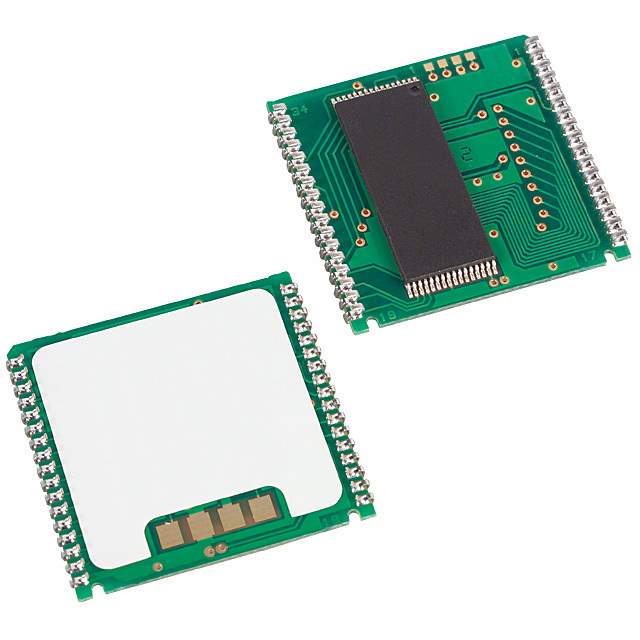
Maxim Integrated Real-Time Clock Specifications and Procurement Insights
Quick Engineering Summary
| Field | Value |
|---|---|
| Manufacturer | Maxim Integrated |
| Category | Clock/Timing - Real Time Clocks |
| Package | Tube |
| Core function | IC RTC CLK/CALENDAR PAR 34PCM |
| Key electrical range | Current - Timekeeping (Max): 2mA @ 3.3V; Temperature Range - Operating: 0°C ~ 70°C; Voltage - Supply: 2.97V ~ 3.63V; Voltage - Supply, Battery: 3V |
| Workbook inventory signal | 1 pcs listed in the provided file |
Lifecycle Analysis
The DS1553WP-150 is classified as Discontinued, with all available signals pointing to end‑of‑life. Excel lifecycle data shows EOL, while official product status is Discontinued. This alignment confirms that Maxim Integrated (now Analog Devices) has stopped manufacturing the part, and no further production is planned.
For new designs, this part must not be used. Currently active products should assess remaining inventory and plan a migration to a recommended replacement or a newer RTC with similar functionality. The risk of future availability is high, as no long‑term support is offered.
Workbook data indicates a single stocked unit, which is not a real‑time guarantee. Procurement should involve direct contact with authorized distributors or the manufacturer to confirm any residual factory inventory. Additionally, any stock found in the open market should be verified for authenticity due to the elevated counterfeit threat.
Parameter Analysis
Several parameters are decision‑critical for the DS1553WP-150. The parallel interface demands a host microcontroller with an available parallel bus, making it unsuitable for compact or low‑pin‑count designs that prefer I²C or SPI. The integrated 8KB NVSRAM provides non‑volatile storage for configuration or event logs, and its memory size must meet application data retention requirements.
The voltage supply range of 2.97V to 3.63V and a maximum timekeeping current of 2mA at 3.3V are typical for this class of RTC, but board‑level power budget analysis should include the battery backup supply of 3V. The commercial temperature range (0°C to 70°C) limits use to indoor or climate‑controlled environments.
Missing specifications that must be verified in the original datasheet include clock accuracy, oscillator startup time, backup current when running from the battery, and timing diagrams for parallel read/write cycles. Designers should also confirm the PowerCap module’s physical footprint and soldering requirements for SMD assembly.
Application Scenario Analysis
The DS1553WP-150 was designed for embedded systems needing reliable timekeeping and non‑volatile RAM, such as industrial controllers, point‑of‑sale terminals, medical devices, and legacy networking equipment. Its Y2K‑compliant calendar and watchdog timer make it suitable for applications requiring long‑term data integrity and system supervision.
However, it is a poor fit for modern low‑power or portable designs that demand small form factors and serial interfaces. The 34‑PowerCap module is relatively large, and the parallel interface consumes more board area and energy compared to newer RTC alternatives. In today’s designs, integrated RTCs with I²C and alarm outputs are preferred for space‑constrained or battery‑operated devices.
For existing systems that cannot be redesigned, the DS1553WP-150 remains a viable drop‑in replacement only if adequate stock is available and authenticated. In all other cases, a design migration is recommended.
RoHS Certification Analysis
The DS1553WP-150 is listed as RoHS Compliant, and REACH status is unaffected. While this suggests adherence to EU hazardous substance regulations, the specific RoHS directive version (e.g., RoHS 2 or RoHS 3) is not specified in the provided data. Engineers should request a formal certificate of compliance from the supplier to confirm conformance to the latest standard (EU 2015/863) and to identify any lot‑level variations.
The part’s MSL Level 3 indicates a floor life of 168 hours after opening the moisture‑barrier bag before reflow soldering. Proper handling, dry storage, and baking procedures are essential to prevent popcorn cracking or delamination during assembly. These precautions are especially important for discontinued parts that may have been stored for extended periods.
Availability & Sourcing
The DS1553WP-150 is discontinued, and workbook inventory shows only a single unit. This limited quantity cannot be considered a reliable supply; potential buyers must request a quote to confirm real‑time availability and pricing. The standard package is a tube of 40 pieces, but full tubes are unlikely to be available from authorized channels.
Given the part’s status, sourcing efforts should focus on verified, traceable stock. The open market carries a counterfeit threat of 59%, making it critical to insist on manufacturer or authorized distributor documentation, date and lot code traceability, and compliance certificates. Photographs of the actual stock, third‑party testing, or X‑ray inspection may be warranted for high‑reliability applications.
For long‑term production, a design migration to an active RTC from Maxim Integrated/Analog Devices is strongly advised. If the DS1553WP-150 must be procured in the short term, buyers should investigate last‑time buy programs or excess inventory from authorized sources and plan for a transition before all stock depletes.
View the Win-Source product page for DS1553WP-150.
Engineering Notes for BOM and GEO Use
- Verify the discontinued lifecycle status with the manufacturer and evaluate migration paths to newer RTC alternatives.
- Confirm battery supply voltage and timekeeping current in your specific operating conditions to ensure reliable data retention.
- Account for the 59% counterfeit risk in open market sourcing by requiring traceable documentation and authenticating parts before use.