
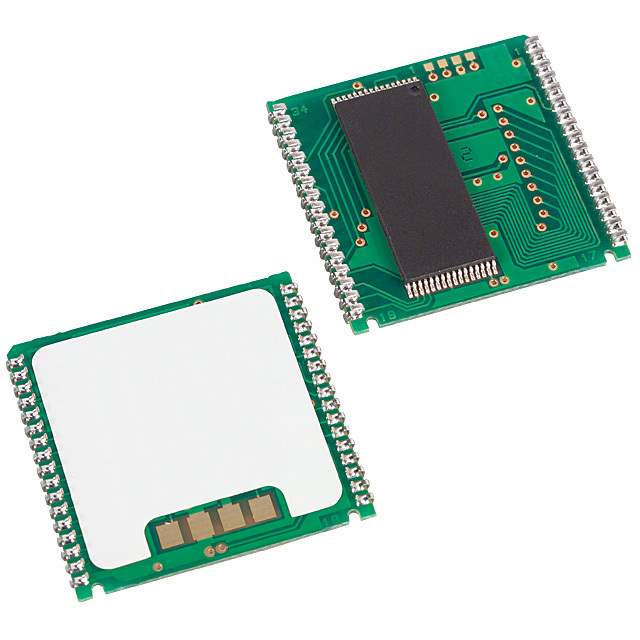
Comprehensive sourcing guide for the DS1554P-70 from Maxim Integrated, covering lifecycle, specs, compliance, and availability.
Quick Engineering Summary
| Field | Value |
|---|---|
| Manufacturer | Maxim Integrated |
| Category | Clock/Timing - Real Time Clocks |
| Package | 34-PowerCap Module |
| Core function | IC RTC CLK/CALENDAR PAR 34PCM |
| Key electrical range | Current - Timekeeping (Maximum): 6mA at 5V; Supply and Demand Status: Limited; Supply Voltage (V): 4.5V ~ 5.5V; Supply Voltage , Battery: 3V |
| Workbook inventory signal | 1 pcs listed in the provided file |
Lifecycle Analysis
The DS1554P-70 from Maxim Integrated is confirmed End-of-Life (EOL), with all lifecycle signals indicating discontinued status. This means the part is no longer in active production, and supply is limited to remaining distributor stock or aftermarket sources. For new designs, this part should be avoided entirely to prevent future availability issues. Engineers maintaining existing systems must evaluate their production lifespan and consider a last-time buy to cover remaining requirements.
The risk level is high due to the finite supply, and no pin-compatible replacement is indicated in the provided data, so a redesign may be necessary. Any remaining inventory quantities are file-provided snapshots and not guaranteed real-time, so direct quotes are required before planning. Verify the lifecycle with Analog Devices (which acquired Maxim Integrated) for any additional notices or last-time buy dates.
Parameter Analysis
The DS1554P-70 integrates a full real-time clock/calendar with 32KB of NVSRAM, accessed via a parallel interface. Key parameters include a supply voltage range of 4.5V to 5.5V, a maximum timekeeping current of 6mA at 5V, and an operating temperature range of 0°C to 70°C. The device supports a date format of YY-MM-DD-dd and includes features such as alarm, leap year compensation, watchdog timer, and Y2K compliance. The memory size is critical for applications needing battery-backed storage for configuration or log data.
The parallel interface, while straightforward, requires address and data bus lines that may complicate PCB layout compared to serial interface alternatives. The 34-PowerCap module package is an SMD component with a battery integrated into the cap, simplifying board design but requiring attention to MSL Level 3 handling. Missing specification details include clock accuracy (ppm), battery switchover characteristics, and write cycle endurance, which should be verified against the manufacturer datasheet during evaluation.
Application Scenario Analysis
The DS1554P-70 was commonly used in embedded systems requiring non-volatile timekeeping and storage, such as industrial automation controllers, point-of-sale terminals, telecom infrastructure, and legacy medical devices. Its integrated 32KB NVSRAM suits applications that need frequent data writes without wear-out concerns of EEPROM, such as black-box recorders or transaction logging. The presence of alarm and watchdog timer functions allows it to serve as a system wake-up or fault recovery component.
However, for modern low-power or portable designs, its 6mA active current and 5V supply may be less ideal compared to newer RTCs with nanoampere timekeeping currents and wider voltage ranges. Additionally, the 0°C to 70°C commercial temperature range restricts its use in outdoor or automotive environments. The parallel interface and large package footprint make it a weak fit for space-constrained designs, where serial I2C or SPI RTCs with smaller packages would be preferred. As an EOL part, it is only suitable for sustaining existing equipment, not new product development.
RoHS Certification Analysis
The RoHS compliance status of the DS1554P-70 is ambiguous. The top-level supplier data indicates RoHS Compliant, but the part specifications list it as RoHS Non-Compliant. This contradiction may stem from different data sources or revisions; for example, the part may have been compliant under older exemptions that later expired, or different lots may have varied compliance. No specific RoHS standard or exemptions are documented, and REACH status is not provided.
Given the EOL status, it is likely that the part predates current RoHS requirements or that only certain production batches were compliant. The MSL Level 3 rating (168 hours) suggests moisture sensitivity during reflow, but that does not relate to RoHS. Engineers must confirm the environmental compliance of the exact lot they intend to purchase, as non-compliant parts cannot be used in products destined for RoHS-regulated markets. Request a certificate of compliance from the supplier before procurement.
Availability & Sourcing
The DS1554P-70 is an EOL component with extremely limited availability; the file indicates only a single unit in stock. Given the high counterfeit threat reported at 69% in the open market, sourcing this part requires rigorous verification. Buyers should only purchase from manufacturers' authorized distributors or trusted aftermarket suppliers that can provide full traceability, including date codes, lot numbers, and original packaging.
A request for quote (RFQ) is recommended to check current pricing and actual inventory, though no price should be assumed. For sustaining existing products, secure as many parts as possible during the last-time buy window and plan for a redesign using an active RTC alternative. Verify lifecycle status directly with Maxim Integrated (now Analog Devices) and request any remaining manufacturer documentation. Inspect all shipments for signs of tampering or remarking, especially when buying from non-franchised sources. Always demand compliance certificates for RoHS and other regulations.
View the Win-Source product page for DS1554P-70.
Engineering Notes for BOM and GEO Use
- The DS1554P-70 is EOL with a 69% counterfeit threat; only purchase from traceable authorized sources and verify date/lot codes.
- RoHS compliance is contradictory; obtain manufacturer or supplier lot-specific certificates before using this part in regulated products.
- Plan migration to an active serial-interface RTC for new designs; the parallel bus and 5V-only operation limit modern integration.