
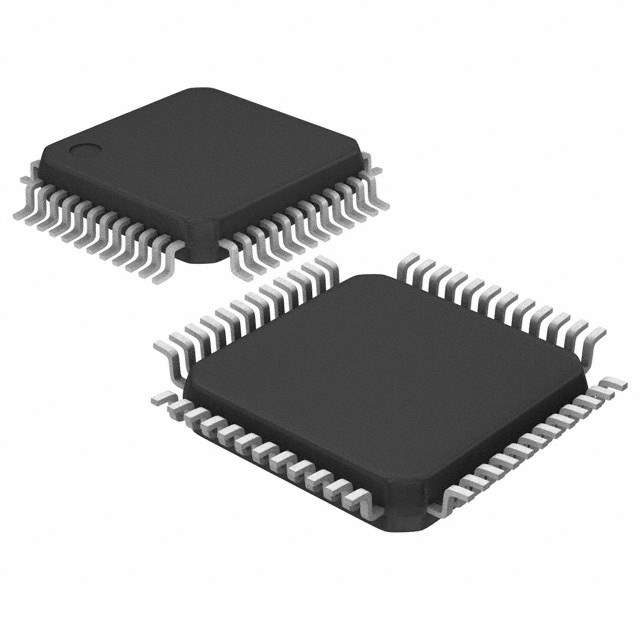
Maxim Integrated Real-Time Clock (RTC) with Parallel Interface, 48‑LQFP – Active Lifecycle, RoHS Compliant
Quick Engineering Summary
| Field | Value |
|---|---|
| Manufacturer | Maxim Integrated |
| Category | Clock/Timing - Real Time Clocks |
| Package | TQFP |
| Core function | IC RTC CLK/CALENDAR PAR 48LQFP |
| Key electrical range | Max Supply Voltage: 5.5 V; Maximum Operating Temperature: 85 °C; Min Operating Temperature: -40 °C; Min Supply Voltage: 4.5 V |
| Workbook inventory signal | 1 pcs listed in the provided file |
Lifecycle Analysis
The DS1558Y+ carries an Active lifecycle status from Maxim Integrated, with no contradictory signals in the supplied data. Active means the part is in full production, fully supported by the manufacturer, and can be designed into new projects without near-term obsolescence concerns. Engineers can expect standard lead times, available technical documentation, and ongoing reliability monitoring. For sustaining production, this status reduces supply chain risk; however, it is still prudent to revalidate lifecycle status with Maxim or authorized distributors before committing to high-volume or long-lifecycle programs, especially since market dynamics can change.
The file-provided workbook quantity is not a live inventory indicator and should not be relied upon for production planning. Always confirm real-time stock through an RFQ process. Given that the supply and demand status notes a shortage, early engagement with the supply chain is advisable even for an Active part. No NRND or EOL notices are present, making the DS1558Y+ a stable choice for timekeeping functions in industrial and embedded systems that require a parallel interface RTC.
Parameter Analysis
Key parameters of the DS1558Y+ revolve around its real-time clock function with parallel interface in a space‑conscious 48‑LQFP package. Supply voltage spans 4.5V to 5.5V, nominal 5V, which aligns it with traditional 5V logic systems. This directly influences level‑shifting considerations when interfacing to 3.3V or lower voltage microcontrollers. The maximum operating temperature of 85°C and minimum of -40°C provide a solid industrial temperature range, important for embedded equipment in harsh environments. Date format YY‑MM‑DD‑dd offers century‑aware calendar functionality essential for timestamp accuracy.
The parallel interface determines pin count and bus topology; designers must allocate sufficient GPIO or memory‑mapped address space. Additional features extracted from supplementary data include an alarm, leap year compensation, watchdog timer, and Y2K compliance. These enhance the part’s utility in time‑critical monitoring and data logging.
Missing in the provided spec sheet are the backup battery voltage range, timekeeping current (beyond the 6mA at 5V from the raw description), and detailed register maps. Engineers should consult the official Maxim Integrated datasheet to verify backup switchover thresholds, oscillator accuracy, and I/O timing parameters. Storage condition calls for a dry cabinet and humidity‑protected packaging, indicating moisture sensitivity that must be managed during assembly.
Application Scenario Analysis
The DS1558Y+ fits well in 5V industrial embedded systems that rely on parallel bus architectures. Classic use cases include PLCs, industrial controllers, data loggers, and legacy equipment that require a real‑time clock with a straightforward memory‑mapped interface. The built‑in alarm and watchdog timer make it suitable for scheduled wake‑up events or system health monitoring where timestamp accuracy is critical.
In newer designs that favor serial interfaces (I²C, SPI) or low‑power sub‑3V operation, the DS1558Y+ may be a weaker fit because of its 5V supply and parallel interface footprint. Battery‑backed portable devices would likely see higher standby current and board space penalties compared to serial RTCs with dedicated trickle‑charge features. Nevertheless, for mid‑complexity embedded systems that already use 5V I/O and have available parallel bus resources, this part remains a robust solution, especially where the Y2K‑compliant calendar and leap year handling are needed without software overhead.
Users should verify that the date format YY‑MM‑DD‑dd matches the desired system representation. Also confirm that the LQFP package does not conflict with space constraints, as the 48‑pin 7×7 mm body requires careful PCB routing for parallel data and address lines.
RoHS Certification Analysis
The DS1558Y+ is flagged as RoHS Compliant and lead‑free, indicating compliance with European Union hazardous substance restrictions under RoHS 3 (EU 2015/863). This is critical for products destined for the EU market and for global designs that adopt RoHS as a baseline environmental standard. The lead‑free attribute also satisfies many corporate sustainability policies.
However, the REACH SVHC status is reported as unknown. REACH compliance is a separate regulation covering substances of very high concern, and its absence from the provided data does not confirm non‑compliance. Designers should request the manufacturer’s REACH declaration or a full material disclosure for the specific lot if end equipment requires REACH certification.
MSL (Moisture Sensitivity Level) is not supplied in the source data but is an important parameter for surface‑mount assembly. Since the part specifies dry storage and humidity‑protected packaging, it is likely moisture‑sensitive; verify the MSL rating from Maxim Integrated’s datasheet and follow the recommended bake and floor‑life procedures. For high‑reliability applications, lot‑level RoHS and REACH test reports are advisable to avoid compliance gaps caused by component‑level family declarations.
Availability & Sourcing
As an Active lifecycle part, the DS1558Y+ can be sourced through standard distribution and authorized channels. The supply and demand status indicates a shortage, so engineers should request quotes early and validate current stock directly. The file‑provided workbook quantity of one unit is a static snapshot and cannot be used for purchasing decisions. Always engage with a sourcing platform or distributor to obtain live inventory, lead time, and pricing information.
A significant concern for this part is the 52% fake threat in the open market. Counterfeit risk is elevated for components with intermittent availability, and a parallel‑interface RTC in an LQFP package can be cloned. Insist on full traceability documentation, lot and date codes, and compliance certificates (RoHS, REACH, and possibly a Certificate of Conformance). For production‑critical designs, verifying the lifecycle and authenticity directly with Maxim Integrated (now Analog Devices) is a recommended step before committing to a BOM.
Given the Active status, normal procurement workflows apply: qualify the part, request a quote with the exact manufacturer part number DS1558Y+, and secure anti‑counterfeit inspection if sourcing outside authorized distribution. For NRND or EOL scenarios, inventory planning and migration would be advised, but that is not the case here. Still, early ordering and qualification buffer protect against lead‑time variability.
View the Win-Source product page for DS1558Y+.
Engineering Notes for BOM and GEO Use
- Verify VCC stability and decoupling; the DS1558Y+ operates from 4.5V to 5.5V and a noisy rail can corrupt timekeeping registers.
- Open market counterfeit threat is 52%; mandate full traceability, date codes, and compliance documentation from suppliers.
- Check the exact 48‑LQFP (7x7 mm) footprint and thermal pad requirements from the official Maxim datasheet before PCB layout.