
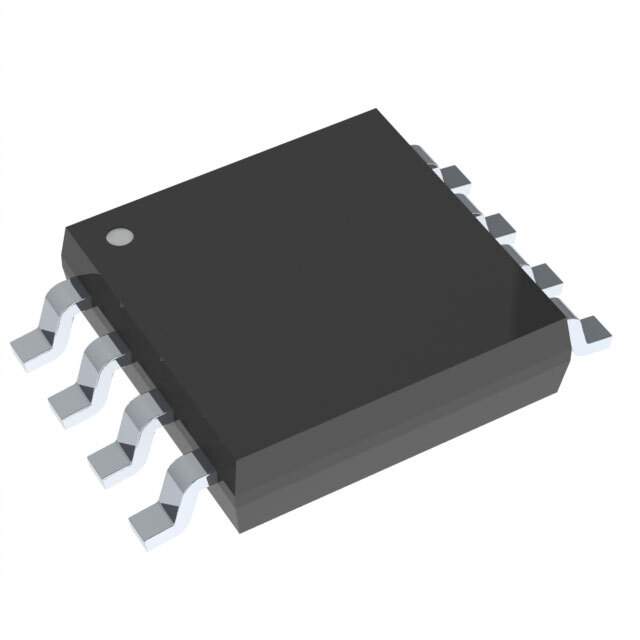
End-of-life binary elapsed time counter in 8-SOIC; verify residual stock and migration plan.
Quick Engineering Summary
| Field | Value |
|---|---|
| Manufacturer | Maxim Integrated |
| Category | Clock/Timing - Real Time Clocks |
| Package | 8-SOIC |
| Core function | IC RTC ELAPSED CTR SER 8SOIC |
| Key electrical range | Operating Temperature Range: -40°C ~ 85°C; Supply and Demand Status: Balance |
| Workbook inventory signal | 1 pcs listed in the provided file |
Lifecycle Analysis
The DS1602S has reached End-of-Life (EOL), with Maxim Integrated marking the part as Obsolete. This lifecycle status means the device is no longer in production and should not be used in new designs. For existing systems, engineers and buyers must act quickly to secure remaining inventory through last-time buy programs if still available. After official distribution channels are exhausted, only the open market remains, which introduces significant procurement risks.
All available lifecycle signals align on EOL status, with no conflicting data to suggest otherwise. The file-provided inventory count of 1 unit underscores the extreme scarcity of this part. Even if other sources show small quantities, these numbers are not guaranteed in real-time and may represent residual stocks that have already been depleted. Given the high counterfeit threat (89%) for this part, extreme caution is warranted when purchasing from non-authorized distributors.
For long-term production, a migration strategy to an active alternative should be evaluated immediately. The DS1602S family may have pin-compatible replacements or functional equivalents from Maxim Integrated or other vendors, but these must be verified against the original datasheet. Delaying migration risks production line stoppages and higher costs as secondary market prices inflate.
Parameter Analysis
The DS1602S is a binary elapsed time counter, not a full-featured calendar RTC. Key parameters include its 3-wire serial interface, 8-SOIC surface-mount package, supply voltage range of 4.5V–5.5V, battery backup voltage of 2.5V–3.5V, and maximum timekeeping current of 50µA at 5V. The operating temperature spans -40°C to +85°C, suiting industrial environments. These specifications determine compatibility with host microcontrollers and power architectures.
The 3-wire serial interface requires careful PCB routing to maintain signal integrity, especially if the clock line is shared with other SPI-like devices. The battery backup input allows timekeeping during primary power loss, but the backup voltage range must be matched to the chosen battery or supercapacitor. The 50µA current draw at 5V is critical for battery life calculations in always-on applications. Missing parameters that designers must verify from the original datasheet include timekeeping accuracy (ppm), memory size for elapsed count storage, and interface timing characteristics.
Before integrating the DS1602S, confirm that the 8-SOIC footprint and tube packaging align with your assembly process. The MSL 1 rating means no special moisture handling is needed, but as an obsolete part, the actual date/lot codes may affect solderability. Since no guaranteed specifications are available for this EOL part, procured samples should be tested for functionality across temperature and voltage extremes to ensure they meet the original design tolerances.
Application Scenario Analysis
The DS1602S is optimized for applications requiring a simple binary elapsed time counter, such as event timing, equipment runtime tracking, or power-on hour monitoring. Its 3-wire interface and low power consumption make it suitable for embedded systems where a full calendar is unnecessary. Industrial equipment, medical devices, and consumer appliances that log operating hours are typical use cases. The wide temperature range supports deployment in harsh environments.
This part is a less optimal choice for designs needing calendar functions, timestamp generation, or high-precision timekeeping, as it lacks those capabilities. Systems that require I²C or SPI interfaces would need additional hardware translation, adding complexity. Moreover, the 5V supply voltage may not be directly compatible with modern low-voltage microcontrollers without level shifting. Given its EOL status, even strong-fit applications face procurement obstacles, making the DS1602S a risky choice for new production.
Engineers evaluating a redesign should consider active RTCs with similar elapsed time counter features but broader interface support and lower voltage operation. In legacy designs where a drop-in replacement is unavailable, a board revision may be required. The high counterfeit rate further discourages any new use; only emergency production for legacy systems with validated stock and thorough testing should be considered.
RoHS Certification Analysis
The DS1602S is declared RoHS Compliant, meaning it was manufactured to meet EU Directive 2015/863 (RoHS 3) restrictions on hazardous substances. Additionally, it is classified as REACH Unaffected, indicating no substances of very high concern are present above threshold levels. The moisture sensitivity level is MSL 1, allowing unlimited floor life before soldering. These certifications are based on the original manufacturer's family-level documentation.
Despite the formal compliance, end-of-life parts present a unique challenge: documentation may be incomplete or unavailable for specific lots, and any remaining stock could have been stored in uncontrolled conditions that affect compliance over time. For example, tin whiskering or oxidation on leads in older inventory could introduce reliability concerns not covered by the original RoHS certificate. Therefore, lot-specific compliance certificates should be requested when buying any DS1602S units.
If the DS1602S is intended for use in regulated industries (medical, aerospace, automotive), additional validation is necessary. The absence of listed exemptions suggests full material compliance, but without active manufacturer support, proving compliance falls on the buyer. As an alternative, sourcing a newer, active RTC with documented compliance reduces both regulatory and supply-chain risk.
Availability & Sourcing
As an EOL and obsolete part, DS1602S availability is critically limited. The file-provided quantity is only 1 unit, which is subject to real-time verification. Procurement teams should immediately request a quote to confirm actual stock levels and pricing from authorized distributors or reputable brokers. Standard packaging is tubes of 88 units, but any remaining inventory may be available in cut tape or partial quantities.
The open market carries an 89% counterfeit threat for this part, according to supply-chain risk data. Buyers must enforce strict inspection protocols, including visual inspection, X-ray, and electrical testing, to ensure authentic units. Demand full traceability documentation, such as Certificate of Conformance (CoC), date/lot codes, and chain-of-custody records. Avoid sources with no verifiable history.
Given the lifecycle status, the recommended action is to secure any remaining stock for emergency repairs only. For production needs, immediately begin migration to an alternate part. Contact Maxim Integrated or authorized distributors for last-time buy information if not already expired. For any purchased DS1602S, verify RoHS compliance and functionality before use. The supply-demand balance is reported as 'Balance', but with EOL, this may rapidly shift to shortage.
View the Win-Source product page for DS1602S.
Engineering Notes for BOM and GEO Use
- DS1602S is obsolete – secure last-time buy and begin migration to an active replacement immediately.
- Verify authenticity due to 89% counterfeit risk in the open market; insist on traceable supply chains.
- Confirm electrical and packaging parameters against the original datasheet before integration, as limited stock may vary in date/lot codes.