
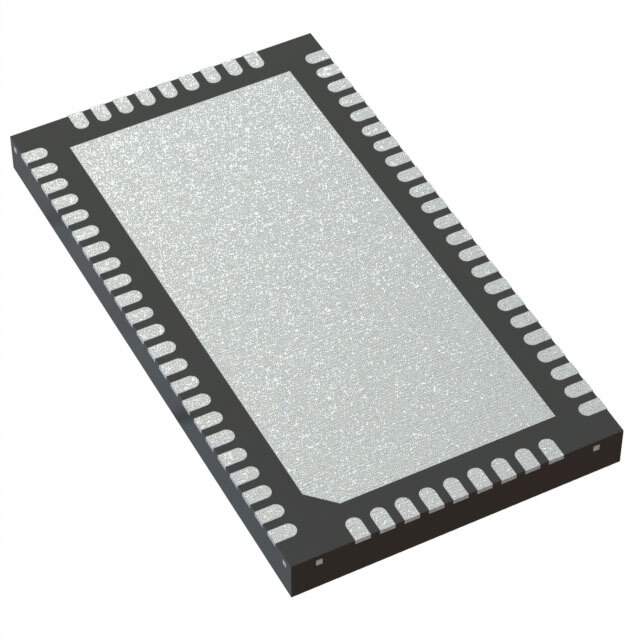
8-channel PCIe 4.0 buffer/repeater for high-speed signal conditioning applications
Quick Engineering Summary
| Field | Value |
|---|---|
| Manufacturer | Texas Instruments |
| Category | Interface - Signal Buffers, Repeaters, Splitters |
| Package | Tape & Reel (TR) |
| Core function | PCIE 4. |
| Key electrical range | Capacitance - Input: 1.5 pF; Current - Supply: 260mA; Input: LVCMOS; Output: Differential |
| Workbook inventory signal | 1530 pcs listed in the provided file |
Lifecycle Analysis
The DS160PR822NJXR from Texas Instruments is currently classified as Active based on all available lifecycle signals. This status indicates that the manufacturer continues to produce and support the part, making it suitable for both new design starts and ongoing production volume. For long-term programs, however, engineers should periodically confirm lifecycle status directly with Texas Instruments or authorized distributors, as product roadmaps can evolve.
As a buffer/repeater in the signal conditioning category, the DS160PR822NJXR benefits from the sustained demand for PCIe 4.0 and high-speed interface solutions, which typically supports a stable product lifecycle. Nevertheless, the high counterfeit threat rate of 68% on the open market reinforces the need to source only from authorized channels to avoid obsolete or non-conforming lots entering the supply chain.
Parameter Analysis
The DS160PR822NJXR is an 8-channel PCIe 4.0 redriver with a maximum data rate of 16 Gbps, a critical parameter for ensuring signal integrity in high-speed serial links. The 1.5 pF typical input capacitance and 90 ps propagation delay directly influence channel budget calculations and timing alignment in multi-lane designs. Operating from a single 3.3 V supply (3 V to 3.6 V range), the device draws 260 mA, dictating power supply decoupling and thermal management requirements—especially in dense PCB layouts where multiple channels are active.
The built-in input equalization and output de-emphasis provide adjustable signal conditioning, but the specific tuning ranges and control interface are not detailed in the supplied specifications; engineers must consult the full datasheet for programming details, RX detection, and CTLE profiles. Additional parameters like jitter performance, return loss, and eye width/height compliance across the –40 °C to +85 °C temperature range are essential for margin analysis and should be verified with Texas Instruments’ characterization data.
Application Scenario Analysis
This device is designed explicitly for PCI Express 4.0 and similar 16 Gbps NRZ serial interfaces, making it a strong fit for applications such as motherboard downlinks, server backplanes, GPU riser cards, and high-performance computing clusters that require low-latency signal conditioning across up to eight differential lanes. Its architecture also suits storage systems using PCIe-based NVMe drives, where clean signal regeneration over extended trace lengths or connectors is needed.
While the DS160PR822NJXR might be used in other high-speed differential standards like SAS-4 or InfiniBand HDR, careful evaluation is required because the input equalization and output de-emphasis characteristics are optimized for PCIe channel models. It is not appropriate for lower-data-rate legacy buses (e.g., PCIe 2.0/3.0 at slower speeds unless configured correctly) or single-ended protocols. Engineers should validate compatibility using vendor-provided IBIS-AMI models and reference designs.
RoHS Certification Analysis
Texas Instruments reports the DS160PR822NJXR as RoHS Compliant, meaning it meets the requirements of EU Directive 2011/65/EU and its amendments, including 2015/863 (RoHS 3). This classification applies to the homogeneous materials within the product and covers the usual six hazardous substances plus the four added phthalates. No specific exemptions are cited in the provided data, but datasheet or full material declarations should be consulted for any necessary application-specific details.
For production procurement, compliance should be confirmed at the lot level through Certificates of Conformance or laboratory testing, especially given the prevalence of counterfeit parts. RoHS does not automatically imply REACH compliance or halogen-free status; those separate certifications are not indicated here and must be requested if required by end-market regulations. The moisture sensitivity level (MSL) is not listed, so assembly planning should include a review of the package's MSL rating from Texas Instruments’ packaging documents.
Availability & Sourcing
As an active Texas Instruments buffer/repeater, the DS160PR822NJXR is generally available through authorized semiconductor distributors and catalog partners. File-provided inventory data indicates 1,530 units in stock, though this quantity is not guaranteed real-time and reflects a snapshot at the time of reporting. The device is supplied in tape & reel packaging with a standard package quantity of 3,000 pieces, facilitating efficient pick-and-place assembly.
Given the reported 68% counterfeit risk in the open market, procurement teams must prioritize traceable sources: insist on full date and lot code traceability, valid Certificates of Conformance, and where possible, third-party inspection for high-reliability applications. For current pricing and lead time, request a quote directly from your sourcing partner, specifying the DS160PR822NJXR and the required quantity. Periodically re-verify lifecycle status with Texas Instruments to ensure continuous production alignment for ongoing or new design wins.
View the Win-Source product page for DS160PR822NJXR.
Engineering Notes for BOM and GEO Use
- The DS160PR822NJXR supports up to 16 Gbps on 8 channels, making it suitable for PCIe 4.0 designs; verify maximum data rate headroom and channel count match your board routing.
- With a high reported open-market counterfeit risk (68%), source only from authorized distribution to ensure traceability and authentic parts.
- The 1.5 pF input capacitance and 90 ps delay require careful PCB layout; refer to Texas Instruments application notes for signal integrity guidelines.