
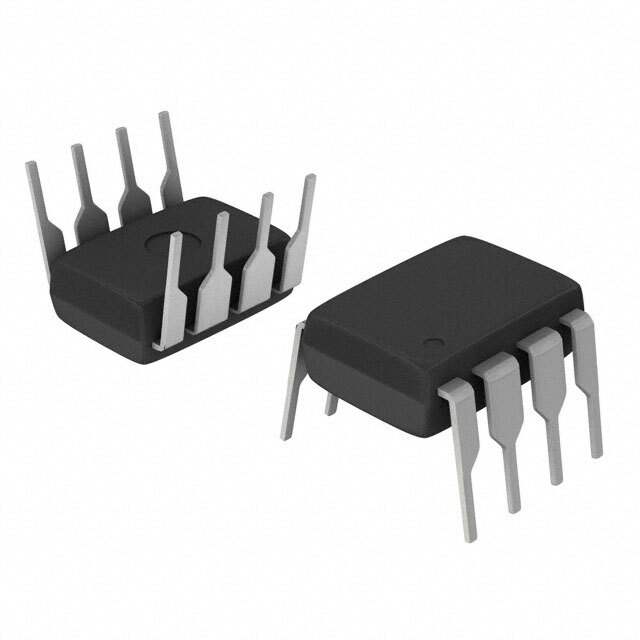
Discontinued digital temperature sensor - verify RoHS and lifecycle before procurement.
Quick Engineering Summary
| Field | Value |
|---|---|
| Manufacturer | Maxim Integrated |
| Category | Temperature Sensors - Analog and Digital Output |
| Package | Tube |
| Core function | SENSOR DIGITAL -55C-125C 8DIP |
| Key electrical range | Output Type: I2C; Sensing Temperature - Local: -55°C ~ 125°C; Temperature Range - Operating: -55°C ~ 125°C; Voltage - Supply: 2.7V ~ 5.5V |
| Workbook inventory signal | 1 pcs listed in the provided file |
Lifecycle Analysis
The Maxim Integrated DS1621 is officially listed as Discontinued. This status means the part is no longer in active production and should not be considered for new design projects. Multiple data sources (Excel lifecycle parameter, Lifecycle Status, and Product Status) all indicate end-of-life conditions, with the Excel field specifying EOL and the others explicitly stating Discontinued. This convergence reinforces a conservative procurement posture.
For existing systems that rely on the DS1621, immediate verification of remaining stock is critical. The file-provided inventory quantity of one unit is not a real-time commitment and cannot be relied upon for production planning. Engineers and buyers should contact authorized distributors or Analog Devices (which acquired Maxim Integrated) to confirm whether any factory reserves, authorized aftermarket inventory, or end-of-life buys remain available.
Parameter Analysis
The DS1621 operates as a digital, local temperature sensor with an I2C interface, delivering 9-bit resolution. Its specified accuracy is ±0.5°C within the 0°C to 70°C range, degrading to ±2°C over the full -55°C to 125°C operating span. Supply voltage requirements span 2.7V to 5.5V, making it compatible with both 3.3V and 5V logic systems. The through-hole 8-DIP package suits prototyping, legacy PCB layouts, and applications where surface-mount is not feasible.
Key parameters that influence design decisions include the sensing local range, resolution, and I2C output type. The accuracy specification and test condition define the thermal margin in a control loop. For integration, verify the I2C slave address options, conversion time, and standby current from the original datasheet, as these are not captured in the supplied listing. Also assess whether the 9-bit resolution meets the system’s thermal monitoring granularity requirements.
Application Scenario Analysis
As a discontinued digital temperature sensor, the DS1621 is best suited for maintenance of legacy equipment, industrial environmental monitoring systems originally designed with through-hole components, and applications where a simple I2C temperature readout with ±0.5°C accuracy is sufficient. The one-shot and standby mode features can reduce power consumption in battery-operated logging or telemetry devices, provided the host microcontroller can manage the I2C awakening sequence.
However, this sensor is a weak fit for new compact designs, as modern alternatives offer smaller SMD packages and higher resolution. In multi-drop I2C buses, the limited or fixed address options may cause conflicts if multiple sensors share the bus. Additionally, applications requiring continuous, high-speed temperature sampling or fast transient response should validate the sensor’s conversion time and thermal time constant against requirements, as these details are not provided in the listing.
RoHS Certification Analysis
The provided compliance information for the DS1621 is contradictory. One field indicates RoHS Compliant, while the detailed specification entry explicitly states RoHS Non-Compliant. This inconsistency must be resolved before using this part in any design where RoHS conformity is mandatory, such as products shipped to the European Union.
Given the part’s discontinued status, it is likely that only older, non-RoHS-compliant stocks remain. REACH status is listed as Unaffected, and the MSL Level is 1 (Unlimited), indicating no special moisture sensitivity handling, but these do not compensate for RoHS non-compliance. Buyers should request a certificate of compliance for the specific date/lot code from the supplier, and if RoHS compliance cannot be documented, consider alternative sensors for RoHS-regulated applications.
Availability & Sourcing
The DS1621 is a discontinued part with very limited market availability. A file-provided quantity of one unit suggests extreme scarcity, and no real-time stock is guaranteed. With a counterfeit threat rating of 58% in the open market, sourcing from unauthorized channels carries significant risk of receiving non-functional or out-of-spec parts.
Procurement teams should follow a strict RFQ process that includes lifecycle verification, traceability requirements (date and lot code), and compliance documentation for each transaction. Given the discontinuity, the immediate priority is to secure any remaining verified inventory for sustaining production while simultaneously initiating a migration plan to an active replacement sensor. Contact Analog Devices or their authorized distributors to confirm official status and explore any last-time buy or remarketing options.
View the Win-Source product page for DS1621.
Engineering Notes for BOM and GEO Use
- Confirm RoHS compliance status directly with manufacturer documentation before procurement, as supplied data shows conflicting reports.
- Due to high counterfeiting risk (58% open market threat), source only from authorized or verified suppliers with traceable date and lot codes.
- Evaluate migration to an equivalent active sensor if this is for a new design, as the DS1621 is discontinued and stock is extremely limited.