
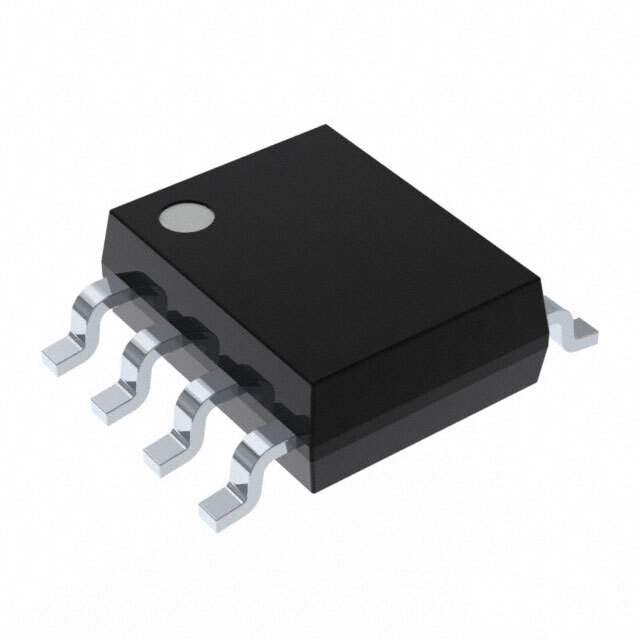
Digital I2C temperature sensor with ±0.5°C accuracy, 2.7–5.5V, 8-SOIC. Sourcing guide for engineers and buyers.
Quick Engineering Summary
| Field | Value |
|---|---|
| Manufacturer | Maxim Integrated |
| Category | Temperature Sensors - Analog and Digital Output |
| Package | 8-SOIC |
| Core function | SENSOR DIGITAL -55C-125C 8SOIC |
| Key electrical range | Output Type: I2C; Sensing Temperature - Local: -55°C to 125°C; Supply and Demand Status: Limited; Supply Voltage - Operating: 2.7 V to 5.5 V |
| Workbook inventory signal | 8178 pcs listed in the provided file |
Lifecycle Analysis
The DS1621S+ is currently listed as Active by Maxim Integrated, with all lifecycle signals consistent across the supplied data. This status means the part is in full production and supported for new designs as well as sustaining existing production volumes. From a procurement standpoint, an Active lifecycle translates to low risk for product availability and long-term supply continuity.
Engineers can confidently incorporate the DS1621S+ into new board designs without immediate concern over discontinuation. However, standard best practice recommends checking the manufacturer’s official product page or contacting a representative to confirm that no last-time-buy notices or process changes are pending. The file-provided inventory quantity of 8178 units suggests current stock exists, but this is not a real-time figure and should be verified via quote.
Given the confirmed Active status, product lifecycle risk is assessed as low. No EOL or NRND indicators were found, so the device remains suitable for both prototypes and volume production. Any update to lifecycle status would require re-evaluation of sourcing strategy.
Parameter Analysis
The DS1621S+ provides digital temperature sensing with I2C output, targeted at applications requiring a simple digital interface. Key decision-relevant parameters from the source data include its accuracy, resolution, supply voltage, and operating temperature range. The specified accuracy is ±0.5°C within the 0°C to 70°C test condition, widening to ±2°C over the full -55°C to 125°C operating range. This dual specification is critical for designers working near thermal extremes—performance outside the narrow band will degrade, potentially impacting system-level precision.
Resolution is 8 bits, corresponding to 0.5°C per LSB, which is sufficient for many ambient monitoring tasks but may be too coarse for fine-grained thermal profiling. The I2C interface simplifies multi‑sensor bus topologies, and the supply voltage range of 2.7 V to 5.5 V eases integration into both 3.3 V and 5 V systems. The 8‑SOIC package is surface‑mount, suited for automated assembly.
Important missing datasheet parameters that should be verified include conversion time, standby and active supply current, and I2C timing specifications. These affect total power consumption and bus speed. Additionally, the “Fake Threat” value of 32% highlights the need for authentic parts, so verifying electrical performance against the datasheet after purchase is advisable.
Application Scenario Analysis
The DS1621S+ excels in applications that require digital temperature readout with moderate accuracy and low system overhead. Its I2C interface and wide supply voltage make it a strong fit for microcontroller‑based environmental monitors, industrial temperature loggers, HVAC controls, and consumer electronics. The one‑shot and standby modes are particularly advantageous in battery‑powered or energy‑harvesting designs where periodic temperature sampling is needed and quiescent current must be minimized.
In cold‑chain logistics, the -55°C to 125°C range allows tracking of frozen goods or high‑temperature sterilization cycles, though accuracy at the extremes must be derated according to the ±2°C specification. For server or telecom thermal management, the 8‑bit resolution may be sufficient for threshold‑based fan control when combined with the output switch feature.
Weak‑fit scenarios include applications demanding faster response than digital conversion allows, or those requiring resolution finer than 0.5°C. High‑precision medical or laboratory instruments should scrutinize the accuracy curves thoroughly and possibly select a higher‑resolution alternative. Similarly, designs needing analog voltage output for legacy ADC inputs would not directly benefit from the DS1621S+’s digital I2C output unless an I2C‑to‑analog converter is added.
RoHS Certification Analysis
The DS1621S+ is listed as RoHS Compliant, indicating conformity with the Restriction of Hazardous Substances directive. Based on the status alone, it is reasonable to assume compliance with RoHS 3 (EU 2015/863), which covers lead, mercury, cadmium, hexavalent chromium, and specific phthalates. The supplied data does not detail any exemptions, but for most semiconductor devices in 8‑SOIC packages, common exemptions such as lead in high‑melting‑temperature solder (7a) might apply to internal die attach and are typically noted in the manufacturer’s material declaration.
No REACH or halogen‑free information appears in the source records, so those certifications cannot be confirmed from this data. REACH is a separate regulation and does not substitute for RoHS; thus compliance verification for EU market access should be based on a full RoHS certificate, not a REACH statement. Engineers should request the latest certificate of compliance from Maxim Integrated for the specific lot or date code being procured, as compliance can change with process modifications.
For high‑reliability or safety‑critical applications, it is also advisable to verify MSL (moisture sensitivity level) and lead‑finish details directly from the datasheet or packaging label, though these are not provided here. The part’s storage condition of dry cabinet and humidity protection packaging suggests it is a moisture‑sensitive device, but the exact MSL rating requires confirmation.
Availability & Sourcing
The DS1621S+ is an Active, RoHS‑compliant temperature sensor with a documented stock quantity of 8,178 units in the source workbook. This file‑provided figure is not a live inventory count, so buyers must request a quote for current availability, lead time, and any minimum order quantities. The part is packaged in tubes, which is typical for low‑ to medium‑volume assembly; for high‑volume automated lines, conversion to tape‑and‑reel may be required and should be discussed with the distributor.
Given the 32% fake‑threat rating on the open market, sourcing from authorized Maxim Integrated distributors or directly from the manufacturer is strongly recommended. Ask for traceable date codes, lot numbers, and factory certification to reduce the risk of counterfeit or refurbished parts. The storage condition note of dry cabinet and humidity protection implies MSL sensitivity, so proper handling during assembly is essential.
Procurement strategy: For Active parts, the standard workflow is to obtain a competitive quote from multiple authorized sources, verify current lifecycle status, and request compliance documentation (RoHS certificate, country of origin). If the part is destined for high‑reliability or medical applications, additional screening such as decapsulation or X‑ray may be warranted. For ongoing production, consider negotiating a blanket order or safety stock arrangement to protect against market fluctuations.
View the Win-Source product page for DS1621S+.
Engineering Notes for BOM and GEO Use
- Verify accuracy at temperature extremes beyond 0–70°C using the datasheet, as the ±0.5°C figure applies only within that narrowed band, and ±2°C governs the full -55–125°C range.
- Confirm I2C address pin strapping options if multiple DS1621S+ sensors share the bus, since the datasheet details the address configuration.
- For high-volume SMT assembly, tube packaging may require conversion to tape-and-reel; inquire if alternate packaging is available to streamline pick-and-place.