
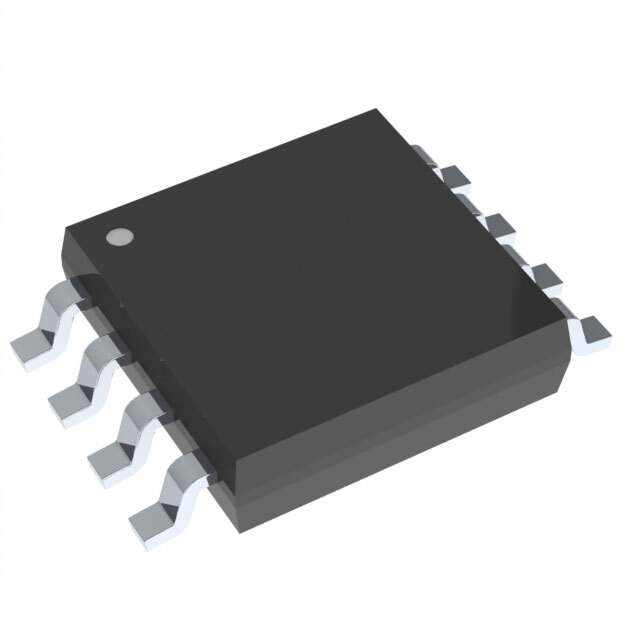
Understanding the DS1621V for sustaining production and end-of-life procurement
Quick Engineering Summary
| Field | Value |
|---|---|
| Manufacturer | Maxim Integrated |
| Category | Temperature Sensors - Analog and Digital Output |
| Package | 8-SOIC (0.209", 5.30mm Width) |
| Core function | SENSOR DIGITAL -55C-125C 8SOIC |
| Key electrical range | Output Type: I2C; Sensing Temperature - Local: -55°C ~ 125°C; Supply and Demand Status: Balance; Supply Voltage (V): 2.7V ~ 5.5V |
| Workbook inventory signal | 797 pcs listed in the provided file |
Lifecycle Analysis
The DS1621V is officially classified as End of Life (EOL) by Maxim Integrated. All available lifecycle signals—including the Excel-based lifecycle parameter, lifecycle status field, and part status—align on this designation. For engineers, this means the part should not be designed into new products. Its use is limited to sustaining existing systems where a redesign is not feasible.
The absence of a published last-time-buy (LTB) date adds uncertainty. Procurement teams must contact Maxim Integrated or authorized distributors to determine if any remaining factory stock can be purchased. Without this confirmation, any available inventory is likely limited to what is already in the supply chain.
The file-provided inventory quantity of 797 units should not be viewed as guaranteed real-time availability. It serves only as a snapshot of potential stock. Buyers must verify current quantities directly with the selling source. Additionally, given the EOL status, rechecking the manufacturer’s official product change notification (PCN) and obsolescence notice is critical before finalizing any purchase.
Parameter Analysis
The DS1621V’s accuracy is specified as ±0.5°C over the 0°C to 70°C range, which covers many commercial and mild industrial environments. Across the full -55°C to 125°C operating range, accuracy degrades to ±2°C. This dual accuracy characteristic is important for applications requiring precise temperature control in typical ambient conditions but can tolerate wider errors at extremes.
The sensor’s 8-bit resolution limits the smallest temperature increment to about 1°C. While sufficient for basic monitoring, it may not meet high-precision requirements. The I2C digital output simplifies integration with microcontrollers and offers bus connectivity, but designers must verify the specific I2C address options from the datasheet since they are not provided here.
Supply voltage spans 2.7V to 5.5V, making the part compatible with both 3.3V and 5V logic. The 8-SOIC surface-mount package is widely used, but PCB layout should account for thermal coupling and proper decoupling. Critical missing parameters that require datasheet confirmation include conversion time, supply current in active and standby modes, and I2C timing details. Without these, a full design qualification cannot be completed.
Application Scenario Analysis
The DS1621V fits well in industrial temperature monitoring, environmental sensing, and thermostat-type applications where moderate accuracy is acceptable and an I2C interface is preferred. The one-shot conversion and standby mode indicate suitability for battery-powered or energy-harvesting devices, as the sensor can be powered down between measurements.
Its operating range of -55°C to 125°C and accuracy of ±0.5°C over 0-70°C make it a reasonable choice for cooling systems, server room monitoring, or embedded controllers. However, the EOL status strongly limits its use to maintaining legacy equipment. New designs requiring long-term availability should look to alternative parts with active lifecycle status.
Weak fits include applications that demand high-resolution (12-bit or more), fast sampling rates, or safety-critical temperature control where sensor obsolescence cannot be tolerated. The part also should not be considered for automotive-grade qualification unless supported by additional qualification data from the manufacturer.
RoHS Certification Analysis
The RoHS compliance status of the DS1621V is ambiguous in the supplied data. The top-level compliance field reports ‘RoHS Compliant’, yet the detailed specifications table lists the RoHS status as ‘RoHS Non-Compliant’. This contradiction points to possible lot-to-lot variation or outdated records.
When purchasing an EOL component, verifying environmental compliance is critical for both regulatory and corporate sustainability goals. The MSL Level 1 (Unlimited) rating indicates the package is not moisture-sensitive, which is typical for many SOIC devices, but it does not address RoHS substance restrictions.
Given the conflict, the only safe approach is to treat the part as potentially non-compliant until a valid certificate is obtained for the specific batch. Request a RoHS certificate along with any relevant REACH or halogen-free statements from the seller. Without this documentation, the part may be unacceptable for markets requiring EU RoHS conformity.
Availability & Sourcing
As an EOL part, the DS1621V presents significant sourcing challenges. The file indicates a workbook quantity of 797 units, but this is not a real-time inventory guarantee. Prospective buyers must initiate a request for quote (RFQ) to obtain current stock levels, date/lot codes, and traceability information.
The reported 67% fake threat in the open market for this part is a serious concern. Counterfeit components can compromise system reliability and safety. Only source from authorized, vetted suppliers who can provide full documentation, including certificates of conformance and authenticity. Inspection of physical markings and x-ray comparison to known good units is advisable for critical applications.
Since the manufacturer may have already halted production, securing enough inventory for the anticipated lifespan of your product is essential. In parallel, evaluate alternative temperature sensors that are actively supported, especially if your design will continue beyond existing stock. Request a quote now to confirm availability, verify RoHS status per lot, and protect against counterfeit risk.
View the Win-Source product page for DS1621V.
Engineering Notes for BOM and GEO Use
- Verify remaining stock authenticity due to a 67% fake threat reported on the open market.
- Confirm RoHS compliance status per production lot, as conflicting data exists between general status and detailed specifications.
- Plan a migration path for new designs given the EOL status, and only consider DS1621V for existing product maintenance.