
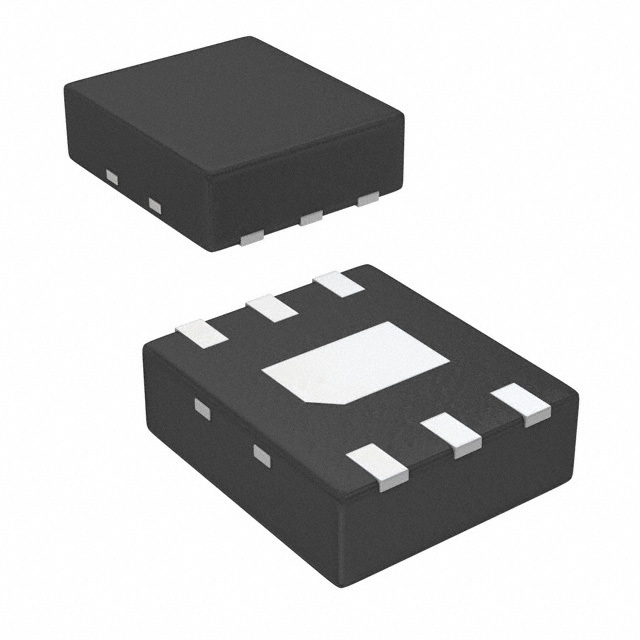
Active lifecycle, RoHS compliant, ±0.5°C accuracy, 3‑wire digital output temperature sensor in 8‑SOIC package.
Quick Engineering Summary
| Field | Value |
|---|---|
| Manufacturer | Maxim Integrated |
| Category | Temperature Sensors - Analog and Digital Output |
| Package | 8-SOIC (0.209", 5.30mm Width) |
| Core function | SENSOR DIGITAL -55C-125C 8SOIC |
| Key electrical range | Output Type: 3-Wire (CLK, DQ, RST); Sensing Temperature - Local: -55°C ~ 125°C; Supply and Demand Status: Shortage; Temperature Range - Operating: -55°C ~ 125°C |
| Workbook inventory signal | 159 pcs listed in the provided file |
Lifecycle Analysis
The DS1626S+ is in Active lifecycle status with a low risk of obsolescence. Both the supplier workbook and manufacturer information confirm the part remains in full production, making it suitable for new designs and ongoing production orders. No conflicting signals exist that would suggest a pending change in availability.
For long‑term projects, it is prudent to periodically re‑check the official Maxim Integrated product page or request a formal lifecycle confirmation from authorized distributors. While the file‑provided inventory quantity (159 units) offers a snapshot, actual distributor stock must be verified through a quote before committing to production schedules.
Parameter Analysis
Key parameters define the DS1626S+ in system design. The sensing range of ‑55°C to 125°C covers most industrial and environmental applications. Accuracy is specified as ±0.5°C over 0°C to 70°C, tightening to ±2°C at the extremes under test conditions. This level of accuracy allows direct temperature measurement without external calibration in the central range. The 3‑wire digital output (CLK, DQ, RST) simplifies connectivity with microcontrollers, though designers must verify timing compatibility. An 11‑bit resolution provides a temperature step of 0.125°C, adequate for precision thermal monitoring.
Supply voltage from 2.7V to 5.5V accommodates both 3.3V and 5V logic. Features like programmable resolution, programmable limit, one‑shot mode, and standby mode enable power‑sensitive operation. Important parameters not detailed in the supplied data—such as conversion time, supply current, and self‑heating—must be reviewed in the manufacturer’s datasheet before layout. Thermal response and PCB layout recommendations should also be confirmed to meet system accuracy targets.
Application Scenario Analysis
The DS1626S+ is a strong fit for digital temperature sensing in embedded systems that use a 3‑wire interface. Typical applications include industrial equipment monitoring, HVAC controls, and thermal protection in power supplies or battery packs. The programmable output switch can trigger an over‑temperature alarm without host intervention.
Low‑power features make it suitable for battery‑operated IoT sensors where periodic sampling and standby conserve energy. High accuracy from 0°C to 70°C supports consumer and medical equipment within typical indoor environments. However, applications requiring I²C or SPI protocols would need additional hardware or a different sensor. The lack of remote diode sensing confines use to local temperature measurement only.
RoHS Certification Analysis
The DS1626S+ is listed as RoHS Compliant according to the supplier’s documentation. No further details on the specific directive version—such as EU 2015/863 (RoHS 3)—are provided, which is typical for general part‑level reporting. No exemptions are indicated.
When sourcing DS1626S+, it is advisable to request per‑lot RoHS certificates from the distributor to ensure compliance with the target market’s regulations. REACH and halogen‑free status are not mentioned in the supplied data and should be clarified if required. Because RoHS compliance can be declared at the family level, individual lot testing or documentation may be necessary for full audit trail.
Availability & Sourcing
As an Active device, the DS1626S+ should be readily available through Maxim Integrated’s authorized distribution channels. The file‑provided inventory (159 units) represents a non‑real‑time snapshot; actual stock must be confirmed via quote. The part ships in tubes within an 8‑SOIC package, standard for prototyping and small‑batch assembly.
Buyers should request a quote that includes current stock, lead time, and date/lot code traceability. For production planning, ask for a compliance pack with RoHS and full material declarations. The recommendation is to contact Win‑Source or other distributors to verify lifecycle status and secure inventory—especially given the “Shortage” demand status note that may affect allocation. Direct all procurement inquiries to ensure you receive the latest price and availability information.
View the Win-Source product page for DS1626S+.
Engineering Notes for BOM and GEO Use
- Verify DS1626S+ supply voltage requirements (2.7V–5.5V) and 3‑wire timing against the system microcontroller to avoid interface mismatches.
- Leverage the one‑shot and standby modes to implement low‑power operation in battery‑operated or energy‑harvesting temperature monitoring nodes.
- Confirm lot‑specific RoHS and MSL documentation during procurement to ensure compliance with environmental and assembly requirements.