
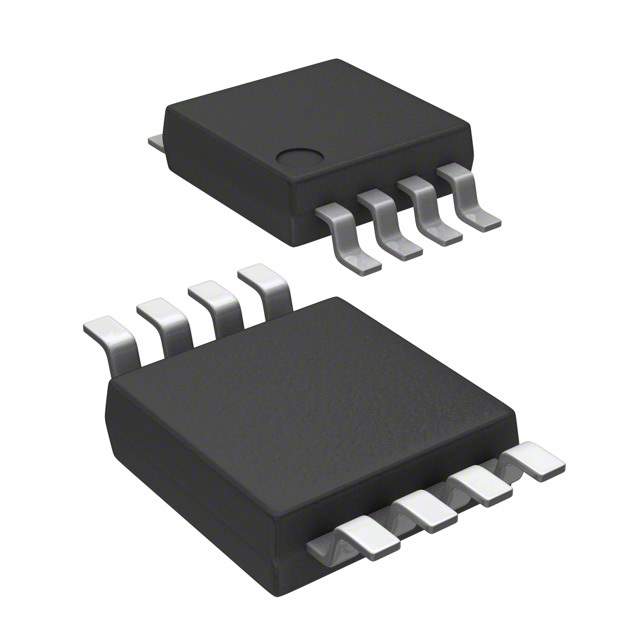
Maxim Integrated Digital Temperature Sensor with 3‑Wire Interface and Standby Mode
Quick Engineering Summary
| Field | Value |
|---|---|
| Manufacturer | Maxim Integrated |
| Category | Temperature Sensors - Analog and Digital Output |
| Package | 8-uMAX |
| Core function | SENSOR DIGITAL -55C-125C 8UMAX |
| Key electrical range | Operating Supply Voltage: 2.7 V ~ 5.5 V; Operating Temperature Range: -55°C ~ 125°C; Output Type: 3-Wire (CLK, DQ, RST); Sensing Temperature - Local: -55°C ~ 125°C |
| Workbook inventory signal | 1700 pcs listed in the provided file |
Lifecycle Analysis
The DS1626U+ carries an Active lifecycle status from Maxim Integrated, with all available signals consistently pointing to full production. Active means the part is supported for new designs, and there is no immediate risk of discontinuation. Engineers can confidently design the DS1626U+ into new projects, but it remains prudent to check the manufacturer’s official product page or PCN (Product Change Notification) service for any roadmap updates.
For sustaining production, this status translates to stable supply and continued availability of datasheets, application notes, and reference designs. The part has been on the market since 2003, indicating a mature product with a well‑characterized performance. However, the 'Estimated EOL Date' field shows 2024, which conflicts slightly with Active status. This may refer to a specific package variant or legacy documentation; verify directly with Maxim Integrated to confirm long‑term plans before committing to high‑volume designs with multi‑year horizons.
Inventory data from the sourcing file shows 1700 units, but this static count should not be treated as real‑time availability. For production planning, always request a current quote and lead time from authorized distributors. The risk level is low, but proactive lifecycle monitoring is advised as the part matures.
Parameter Analysis
Key parameters of the DS1626U+ directly influence design‑in decisions. The 11‑bit resolution provides temperature granularity of 0.125°C, sufficient for most industrial and consumer thermal monitoring tasks. Accuracy is specified as ±0.5°C in the 0°C to 70°C range, tightening to ±2°C over the full -55°C to 125°C range—critical for evaluating sensor performance in extreme environments. The operating supply voltage range of 2.7V to 5.5V offers wide compatibility with both 3.3V and 5V system rails, simplifying power tree design.
The 3‑wire digital interface (CLK, DQ, RST) is not standard I²C or SPI, so designers must allocate three GPIO pins and implement a custom communication protocol. This interface choice can impact microcontroller selection and layout. The 8‑uMAX (8‑TSSOP/MSOP) footprint is compact, making it suitable for space‑constrained PCBs, but careful thermal isolation may be needed for accurate local temperature sensing.
Several parameters are absent from the supplied data and should be verified in the Maxim Integrated DS1626 datasheet: supply current (both active and standby), conversion time, temperature conversion update rate, and the detailed threshold programming sequence. Mechanical dimensions, soldering profile, and MSL rating are also essential for manufacturing. Without these, a full integration assessment is incomplete.
Application Scenario Analysis
The DS1626U+ fits well in applications requiring digital temperature readout with programmable over‑temperature alarms. Its one‑shot mode, output switch, and standby mode make it ideal for battery‑powered or energy‑harvesting systems where power consumption must be minimized between measurements. Example strong‑fit scenarios include portable medical devices, wireless sensor nodes, and HVAC sensor modules.
In industrial control, the wide temperature range (-55°C to 125°C) and local sensing capability suit equipment monitoring, process control, and power supply thermal management. The programmable limit feature allows the DS1626U+ to act as a simple thermostat without constant host interrogation, reducing MCU workload.
For high‑precision applications requiring accuracy better than ±0.5°C, such as precision metrology or laboratory instrumentation, the DS1626U+ may be a weak fit. Its accuracy over the full range (±2°C) can be a limitation without calibration. Similarly, systems needing multi‑channel or remote diode sensing would require additional components, as this device supports only one local sensor. The 3‑wire interface, while simple, may not be suitable for bus architectures that already use I²C or SPI, potentially requiring extra interface logic.
RoHS Certification Analysis
According to supplied data, the DS1626U+ is RoHS Compliant and Halogen Free Compliant. RoHS compliance indicates that the part meets restrictions on hazardous substances such as lead, mercury, cadmium, and others as defined by EU directives. The likely applicable standard is RoHS 3 (EU 2015/863), which added four phthalates to the restricted list. However, the exact directive version should be confirmed with Maxim Integrated for full assurance.
The Halogen Free designation confirms low bromine and chlorine content, important for applications targeting eco‑label requirements or reducing corrosive gas emissions during disposal. This is increasingly required in consumer and enterprise electronics.
No specific exemptions are listed in the data. Some components may rely on exemptions for lead in glass or ceramic materials, but this would be noted in the manufacturer’s declaration. For compliance documentation, obtain a RoHS certificate of conformance for the exact date/lot code during procurement, as material composition may change over time. REACH status is not provided; if REACH compliance is required, request the relevant SVHC (Substances of Very High Concern) declaration separately. RoHS alone does not guarantee REACH compliance.
Availability & Sourcing
The DS1626U+ is sourced from Maxim Integrated (now part of Analog Devices) and is currently in Active lifecycle, meaning official distribution channels should have stock or reasonable lead times. The sourcing file indicates a stock quantity of 1700 units in tube packaging (8‑uMAX). However, this static inventory number is not a real‑time guarantee; always request a current quote from authorized distributors such as DigiKey, Mouser, or Analog Devices direct.
A notable concern is the 'Fake Threat in the Open Market' rating of 40%, underscoring the risk of counterfeit parts from unauthorized sellers. To mitigate this, procure only from franchised sources and insist on full traceability, complete with date/lot codes and manufacturer certificates. For production orders, specify the RoHS and Halogen‑Free compliance paperwork as part of the purchase agreement.
Given the Active lifecycle, the recommended action is to request a quote and verify lead times, especially if a specific date code is required for qualification. For first‑article builds, order samples through official channels and validate electrical and mechanical parameters against the datasheet. The supply status is noted as 'Limited', so early engagement with suppliers is prudent to secure allocation. No pricing is provided; cost discussions should be part of the RFQ process based on volume and delivery requirements.
View the Win-Source product page for DS1626U+.
Engineering Notes for BOM and GEO Use
- Verify actual current consumption and conversion time in the Maxim Integrated datasheet to match power budget and thermal design requirements.
- Note that ±2°C accuracy applies over the full -55°C to +125°C range; use in‑system calibration if tighter tolerances are needed.
- For volume production, confirm the 8‑uMAX package MSL (Moisture Sensitivity Level) and soldering profile compatibility with your assembly process.