
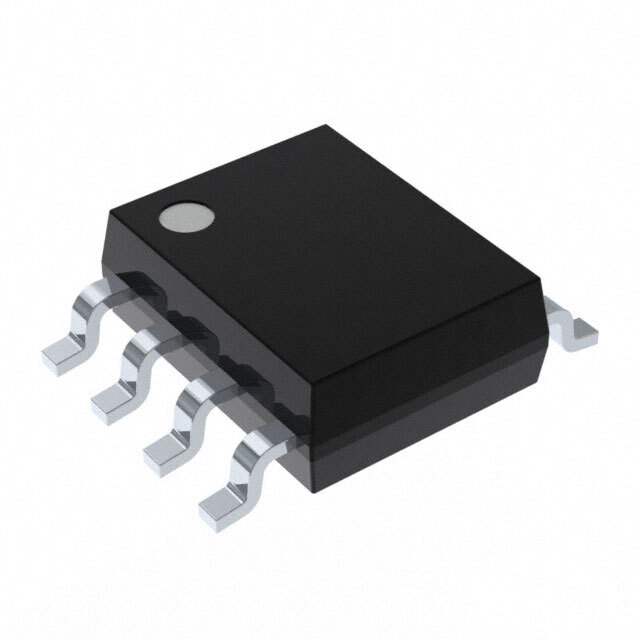
DS1629S+ Maxim Integrated digital thermometer/thermostat, I2C/SMBus, 8-SOIC. For thermal management.
Quick Engineering Summary
| Field | Value |
|---|---|
| Manufacturer | Maxim Integrated |
| Category | PMIC - Thermal Management |
| Package | 8-SOIC |
| Core function | IC THERM/RTC/CALENDAR DIG 8-SOIC |
| Key electrical range | Output Alarm: Yes; Output Fan: No; Output Type: I²C/SMBus; Sensing Temperature: -55°C to 125°C |
| Workbook inventory signal | 22200 pcs listed in the provided file |
Lifecycle Analysis
The DS1629S+ is currently classified as Active, with a low risk level for procurement. This means Maxim Integrated (now part of Analog Devices) continues to manufacture and support the part, and it is generally available for new designs and sustaining production. However, the data set notes that supply is limited, despite the part being common-used and highly popular among engineers and buyers.
The file-provided inventory quantities—shown as 22,200 and 505 units—are point-in-time indications and do not represent guaranteed real-time stock. Engineers planning to use the DS1629S+ in new designs should contact the manufacturer or authorized distributors to confirm ongoing production plans and request a product-change notification (PCN) service. For high-volume or long-life programs, it is prudent to evaluate whether an alternative or pin-compatible device exists within the Analog Devices portfolio, even though no direct replacement is specified here.
Parameter Analysis
Key parameters that drive the DS1629S+ selection include its ±2°C maximum accuracy over a wide -55°C to 125°C sensing range, I²C/SMBus digital output, and 2.7 V to 5.5 V operating supply voltage. The internal sensor type simplifies PCB layout, and the 8-SOIC surface-mount package is suitable for automated assembly. An alarm output is available, while fan control is not supported. The internal topology (ADC, comparator, oscillator, register bank) provides integrated signal conditioning and conversion.
From a design standpoint, the I²C/SMBus interface demands careful attention to bus capacitance, pull-up resistor sizing, and addressing to avoid conflicts in multi-device systems. The wide temperature range offers good derating margin for industrial environments. Missing from the supplied data are several parameters that must be verified from the official datasheet: temperature resolution, conversion time, I²C address options, power consumption, and any programmable temperature thresholds. These values directly affect measurement latency, energy budget, and software integration, and should be confirmed before qualification.
Application Scenario Analysis
The DS1629S+ fits well in embedded and industrial thermal management applications that require digital temperature sensing and integrated real-time clock/calendar features. Typical strong-fit scenarios include PC motherboard thermals, embedded controllers, environmental monitoring systems, and consumer electronics where the -55°C to 125°C range covers extreme ambient conditions. The I²C/SMBus output and alarm function support automated polling and threshold-triggered shutdowns, making it suitable for protection circuits in power supplies or battery management.
Weaker-fit scenarios involve applications that need remote diode temperature sensing or external sensor inputs, as the DS1629S+ only provides internal temperature measurement. High-speed data logging that requires fast conversion rates (e.g., below 100 ms) may be limited by the device’s conversion time characteristics, which are not specified in the provided data. Similarly, ultra-low-power designs that operate below 2.7 V or require sub-microamp standby current should verify the device’s power profile against system requirements. Engineers should cross-reference the full datasheet when considering these edge‑case applications.
RoHS Certification Analysis
The DS1629S+ is listed as RoHS Compliant, indicating that it meets the substance restrictions of the European Union’s Restriction of Hazardous Substances directive. This status is typically sufficient for most commercial and industrial markets. However, the source data does not mention the specific RoHS amendment (e.g., EU 2015/863 adding four phthalates) or provide REACH compliance information.
For end‑product certification, procurement teams should request the manufacturer’s full material declaration or certificate of compliance at the lot level. This ensures that the compliance status is maintained across production batches and that any exemptions—such as lead in high‑melting‑temperature solder die attach, if applicable—are properly documented. Without explicit REACH or halogen‑free statements in the supplied data, additional verification through the official Analog Devices environmental document will be necessary for programs requiring those declarations.
Availability & Sourcing
Given the Active lifecycle status, standard RFQ workflows apply when sourcing the DS1629S+. File‑provided inventory figures (22,200 and 505 units) hint at existing channel stock, but these values are static and not real‑time representations of market availability. The part is marked with a 36% fake threat in the open market and high popularity, which makes traceability essential.
Buyers should request quotes that include date/lot codes, RoHS compliance certificates, and packaging origin (tube/rail). Verify lifecycle status directly with Maxim Integrated / Analog Devices to rule out any impending EOL notice not captured in the provided signals. For volume production, secure stock early and consider a scheduled‑release or safety‑stock arrangement to mitigate the noted limited supply condition. Always obtain the latest product‑change notice and test sample before committing to a design‑in.
View the Win-Source product page for DS1629S+.
Engineering Notes for BOM and GEO Use
- Verify I2C/SMBus timing compatibility and pull-up resistor values before design-in.
- The ±2°C max accuracy applies across the full -55°C to 125°C range; consider calibration if tighter tolerance is needed.
- Due to high popularity and limited supply, secure inventory early and request lot/date code traceability.