
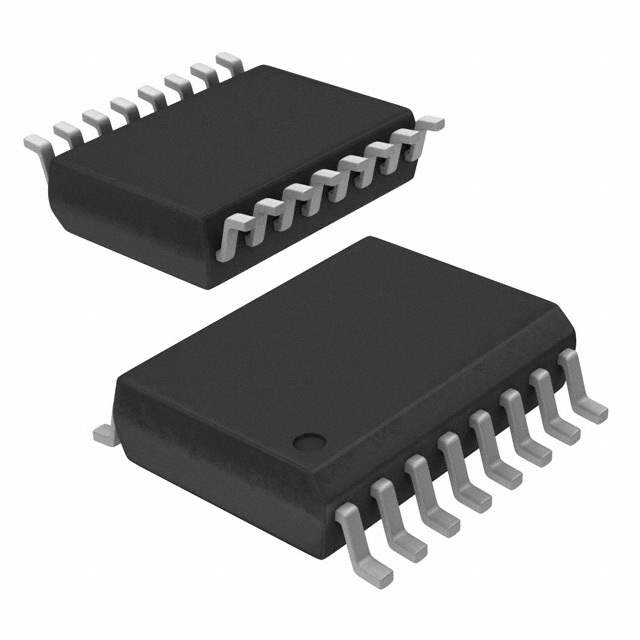
Maxim Integrated DS1632S: Discontinued 16‑SOIC controller with RoHS compliance. Verify lifecycle and source carefully.
Quick Engineering Summary
| Field | Value |
|---|---|
| Manufacturer | Maxim Integrated |
| Category | PMIC - Power Supply Controllers, Monitors |
| Package | Tube |
| Core function | IC CTRLR PC PWR FAIL/RSET 16SOIC |
| Key electrical range | Current - Supply: 500 µA; Temperature Range - Operating: 0°C ~ 70°C; Voltage - Supply: 4.5V ~ 5.5V |
| Workbook inventory signal | 3980 pcs listed in the provided file |
Lifecycle Analysis
The DS1632S is officially discontinued by Maxim Integrated (now Analog Devices). Multiple signals — including EOL and Discontinued status — confirm that this part is no longer available for new production orders. Engineers and buyers must treat the DS1632S as a high‑risk component for new designs. The only viable procurement path is through existing stock, possibly from last‑time‑buy allocations or authorized excess inventory.
File‑provided data indicates a workbook quantity of 3980 units, but this is not a real‑time guarantee. Any available inventory should be validated with the supplier for authenticity, date codes, and conformance to the original specifications. For sustaining production, immediate action is recommended: verify stock, secure what is needed, and begin qualifying a replacement.
Conflicting lifecycle signals (EOL vs. Discontinued) do not change the conservative interpretation. Design teams should prioritize migration to an active PMIC to avoid supply interruptions.
Parameter Analysis
The DS1632S operates from a 4.5V to 5.5V supply, drawing only 500 µA, which makes it suitable for low‑power or always‑on monitoring functions. Its commercial temperature range of 0°C to 70°C limits deployment to indoor or controlled environments. The 16‑SOIC surface‑mount package with a 7.50 mm width is a standard footprint, simplifying PCB layout for legacy designs.
Critical parameters such as reset threshold voltages, timeout periods, and power‑fail detection accuracy are not detailed in the provided specifications. These must be verified against the original Maxim datasheet to ensure compatibility with the target system. Missing datasheet values include minimum supply current, watchdog timer features, and output drive strength, which are essential for robust integration.
Additionally, the 42% fake‑threat rating in the open market underscores the need for thorough incoming inspection. Engineers should test electrical parameters against datasheet limits, especially supply current and voltage thresholds, to weed out counterfeit devices.
Application Scenario Analysis
The primary application for the DS1632S is as a PC power‑fail and reset controller, directly targeting AT‑style computer power supplies. It is well‑suited for legacy industrial computers, embedded systems, or any 5V‑based platform that requires a reliable reset generator. Its low supply current helps minimize thermal load in sealed enclosures.
Weak‑fit scenarios include new designs, given the discontinued status, as well as high‑temperature or automotive environments that exceed the 0°C–70°C range. Systems migrating to 3.3V or lower core voltages may find the fixed 5V supply requirement incompatible. Also, applications needing advanced features like programmable thresholds or multiple reset outputs would require an alternative part.
For existing products still using the DS1632S, a replacement strategy is urgent. Evaluate pin‑compatible alternatives or functionally equivalent PMICs from Maxim or other vendors. In the meantime, test any remaining stock thoroughly to avoid field failures.
RoHS Certification Analysis
The DS1632S is declared RoHS Compliant, aligning with EU Directive 2011/65/EU and its amendments. No specific exemptions are noted in the available data, suggesting that the 16‑SOIC package materials are lead‑free and free of restricted substances. The REACH status is unaffected, further supporting environmental compliance.
Moisture sensitivity is rated MSL 1 (Unlimited), meaning the component can be stored in ambient conditions without special baking before reflow soldering. This simplifies handling and reduces production bottlenecks. However, compliance documentation should be re‑verified at the lot level when sourcing from non‑franchised distributors, as family‑level declarations may not reflect batch‑specific changes.
When ordering the DS1632S, request the full material declaration and certificates of conformance to ensure that the parts meet current regulatory requirements. For EU‑based products, maintaining an up‑to‑date technical file is essential.
Availability & Sourcing
As a discontinued component, the DS1632S can only be sourced through non‑standard channels such as authorized excess stock, independent distributors, or brokers. File‑provided inventory shows 3980 units, but this is not guaranteed real‑time availability. Users must request a quote to confirm stock, pricing, and delivery terms.
Procurement teams should be prepared for an RFQ process that includes traceability checks. Request date and lot codes, origin certificates, and RoHS compliance documents. The 42% fake‑threat rating makes visual inspection and electrical testing of samples critical before committing to a larger purchase. Packaging is typically tube, with a standard package quantity of 45 pcs per tube.
Given the high counterfeit risk and obsolescence, consider locking in remaining stock for critical repairs only. For production continuity, engage with Maxim (Analog Devices) to identify a recommended migration part. Secure inventory of the DS1632S only after verifying manufacturer discontinuation notices and obtaining written assurance of authenticity.
View the Win-Source product page for DS1632S.
Engineering Notes for BOM and GEO Use
- Verify exact reset threshold and timing from original datasheet before substituting.
- Counterfeit risk is elevated (42% open‑market threat); insist on full traceability and test upon receipt.
- Plan migration to alternative PMIC for new designs due to discontinuation.