
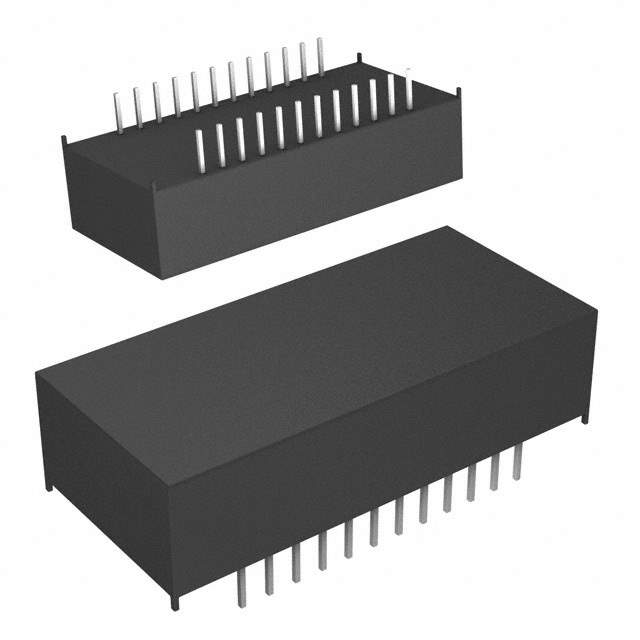
Maxim Integrated EOL Real-Time Clock: Parameter Review and Sourcing Recommendations
Quick Engineering Summary
| Field | Value |
|---|---|
| Manufacturer | Maxim Integrated |
| Category | Clock/Timing - Real Time Clocks |
| Package | 24-EDIP |
| Core function | IC RTC CLK/CALENDAR PAR 24EDIP |
| Key electrical range | Current - Timekeeping (Maximum): 3mA @ 5V; Operating Supply Voltage: 4.5 V ~ 5.5 V; Operating Temperature Range: 0°C ~ 70°C; Supply and Demand Status: Limited |
| Workbook inventory signal | 1 pcs listed in the provided file |
Lifecycle Analysis
The DS1642-100+ from Maxim Integrated is confirmed as End-of-Life (EOL). All supplied lifecycle signals align with this status, and no conflicting data has been observed. This means the part is no longer recommended for new designs, and sustaining production may face significant procurement risks. EOL components often have passed the manufacturer’s last-time buy date, making available stock extremely limited and subject to non-franchised channels.
For new design projects, selecting the DS1642-100+ is strongly discouraged due to lack of future availability and manufacturer support. Engineers should instead evaluate migration to an active real-time clock module offering similar parallel interface and NVSRAM features. For existing systems, immediate verification of all current inventory sources is critical. The file-provided inventory of 1 unit is a static snapshot and does not reflect real-time available-to-promise quantities.
Procurement teams should request manufacturer documentation confirming the EOL notice and transition timelines. Additionally, when sourcing remaining stock, traceability to authorized distribution is essential to avoid counterfeit or reclaimed devices, which are prevalent in the open market for obsolete parts.
Parameter Analysis
The DS1642-100+ is a clock/calendar real-time clock with integrated 2KB of non-volatile SRAM. Its parallel interface allows direct connection to 8-bit microprocessors, making it suitable for embedded systems requiring fast, byte-wide access to timekeeping registers and battery-backed memory. The operating voltage range of 4.5V to 5.5V aligns with legacy 5V logic systems, and the specified maximum timekeeping current of 3mA at 5V helps size power supply and battery backup circuits.
Key parameters affecting design integration include the through-hole 24-DIP package (0.600" width), which may complicate rework in surface-mount-dominant PCB layouts. The commercial temperature range (0°C to 70°C) limits use to benign environments. Additionally, the date format (YY-MM-DD-dd) and leap-year compensation feature are embedded, reducing software overhead. Important missing datasheet specifications that should be verified before finalizing a design include the timekeeping current in battery-backup mode, the minimum battery voltage for data retention, clock accuracy over temperature, and any access time requirements for the parallel interface.
For sustaining engineering, it is vital to confirm the supply voltage tolerance and memory size against actual system requirements. As an EOL part, no further manufacturer updates are expected, so all characterization data is fixed to existing datasheet revisions.
Application Scenario Analysis
The DS1642-100+ is strongly suited for legacy industrial controls, telecommunications infrastructure, and embedded test equipment that originally used parallel bus RTCs with integrated RAM. Its NVSRAM can store configuration data or event logs, while the calendar function serves time-stamping needs. Systems designed around a 5V parallel microprocessor and through-hole assembly will find this IC a direct fit, especially where form-factor compatibility with existing 24-DIP sockets is mandatory.
Conversely, the DS1642-100+ is weak in scenarios demanding low power consumption, extended temperature operation, or miniaturized surface-mount packaging. Modern designs utilizing 3.3V or lower logic, requiring I²C or SPI serial interfaces, or targeting battery-operated portable products would not be well-served by this device. Additionally, any application needing guaranteed long-term availability or compliance with updated safety standards should avoid EOL components. For these forward-looking projects, an evaluation of active RTC alternatives from Maxim Integrated or other vendors is necessary to ensure supply security and access to ongoing technical support.
RoHS Certification Analysis
The DS1642-100+ is documented as RoHS Compliant in the provided source data. While the exact directive is not specified, such compliance typically aligns with RoHS 3 (EU 2015/863), which restricts hazardous substances like lead, mercury, and cadmium. However, because this is an EOL part, the validity of any compliance documentation should be verified against the specific lot or date code being purchased. Older production runs may have been manufactured under earlier versions of the directive, so requesting a Certificate of Compliance from the supplier is advisable.
No REACH or halogen-free declarations have been provided. REACH compliance is a separate regulation and does not imply RoHS conformance; both must be independently confirmed if required by the end application. For high-reliability sectors or European Union import, ensuring that the component meets current RoHS requirements from the manufacturer’s official document is essential. When sourcing from non-franchised sellers, the risk of counterfeit or non-compliant stock is elevated, making lot-level material content testing or accredited lab analysis a potential due-diligence step for the DS1642-100+.
Availability & Sourcing
As an EOL product, the DS1642-100+ faces severely constrained availability. The file-provided workbook shows a quantity of 1 unit, which is not a guarantee of real-time stock. Buyers should immediately submit a request for quote (RFQ) to check current availability from authorized distributors or verified independent sources. Due to the 31% reported fake threat in the open market, procuring from traceable, reputable channels is critical to avoid counterfeit devices.
Key sourcing considerations include requesting date and lot codes to assess remaining shelf life and verifying that parts are stored in a dry, humidity-controlled environment as specified (tube packaging). Full compliance documentation, including RoHS certificates and manufacturer EOL notices, should be obtained before purchase. Since this component is obsolete, buyers must weigh the cost and risk of securing last-time inventory against the engineering effort of migrating to an alternative active part. For immediate production requirements, a spot-buy may be necessary, but a long-term migration plan should be initiated promptly.
View the Win-Source product page for DS1642-100+.
Engineering Notes for BOM and GEO Use
- Verify date and lot codes from suppliers to avoid counterfeit DS1642-100+ parts; 31% open-market fake threat reported.
- Ensure 5V supply design tolerances are met; the IC operates at 4.5V–5.5V with timekeeping current up to 3mA.
- For new designs, select an active RTC with parallel interface and NVSRAM from Maxim Integrated or compatible sources.