
Discontinued, high-risk part. Verify lifecycle before procurement. Limited inventory file-provided.
Quick Engineering Summary
| Field | Value |
|---|---|
| Manufacturer | Maxim Integrated |
| Category | Clock/Timing - Real Time Clocks |
| Package | Tube |
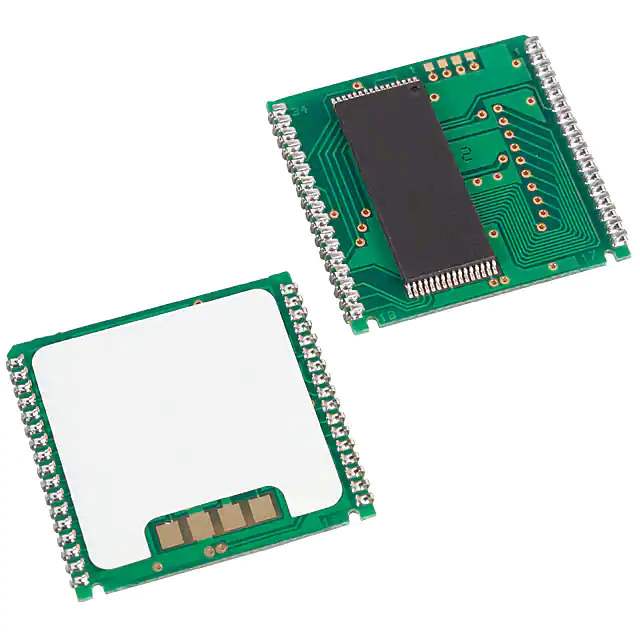
| Core function | IC RTC CLK/CALENDAR PAR 34PCM |
| Key electrical range | Current - Timekeeping (Max): 3mA @ 5V; Temperature Range - Operating: 0°C ~ 70°C; Voltage - Supply: 4.5V ~ 5.5V; Voltage - Supply, Battery: 3V |
| Workbook inventory signal | 1 pcs listed in the provided file |
Lifecycle Analysis
The DS1643P-70 from Maxim Integrated is a discontinued real-time clock (RTC) with high procurement risk. Multiple lifecycle signals are present: the Excel datasource lists EOL, while Lifecycle Status and Product Status both state Discontinued. A conservative interpretation treats this part as fully discontinued—not recommended for new designs and requiring immediate action for existing products.
For sustaining production, engineering teams should validate remaining inventory through authorized distributors and plan for a migration path or last-time-buy if available. The file-provided quantity of 1 unit is not a real-time stock level and should not be relied upon without confirmation. A 54% fake threat probability in the open market elevates the urgency of traceability and authenticity verification.
Manufacturer revalidation is advised: contact Maxim Integrated (now Analog Devices) for formal product obsolescence notices and any available qualification data for potential replacements. The high risk level demands careful sourcing only through verified channels.
Parameter Analysis
The DS1643P-70 integrates a clock/calendar with 8KB of NVSRAM in a 34-PowerCap module. Key parameters include a parallel interface, 4.5V to 5.5V supply voltage, 3mA maximum timekeeping current at 5V, and a 3V backup battery input. The date format is YY-MM-DD-dd, and features include leap-year compensation. These specs define compatibility with legacy 5V bus systems and applications requiring non-volatile timekeeping memory.
From an integration standpoint, the parallel interface demands careful PCB layout and timing analysis, especially when interfacing with modern microcontrollers. The 3mA active current must be considered for thermal and power budgets, while the battery backup current (not specified) should be verified from the datasheet to estimate shelf-life. The 0°C to 70°C operating temperature range limits use to commercial environments.
Missing from the provided data are critical parameters such as timekeeping accuracy (ppm), oscillator characteristics, backup current consumption, and detailed interface timing. Engineers should obtain the original datasheet to verify these values and assess suitability for high-reliability or extended-temperature applications.
Application Scenario Analysis
The DS1643P-70 targets embedded systems needing a parallel real-time clock with integrated non-volatile storage. Strong-fit scenarios include legacy industrial controllers, telecom infrastructure, medical devices, and server motherboards where the 8KB NVSRAM provides configuration or event log retention across power cycles. The commercial temperature range (0–70°C) suits indoor equipment.
Weak-fit scenarios arise in low-power or portable designs—the 3mA active timekeeping current is relatively high for battery-operated devices. Modern designs predominantly use I²C or SPI RTCs with smaller footprints and lower power. Additionally, the 34-PowerCap module form factor may pose mechanical challenges in dense layouts.
Given its discontinued status, this part is only appropriate for maintaining existing systems where redesign is not feasible. For new deployments, a more current RTC with comparable functionality should be selected. When used in repairs, ensure full compliance with original design specifications.
RoHS Certification Analysis
The DS1643P-70 is reported as RoHS Compliant, indicating conformity with EU Directive 2011/65/EU and amendments. No specific exemptions are listed; however, the REACH Affected status suggests the presence of one or more Substances of Very High Concern (SVHC) above the threshold. REACH compliance does not substitute for RoHS—both must be independently verified.
The part carries an MSL rating of Level 3 (168 hours), necessitating proper handling to prevent moisture-related damage during soldering. Packaging is tube, with a standard package quantity of 40 pieces. Lot-level compliance can vary; procurement teams should request current certificates of conformance (CoC) and material declarations.
For applications with strict environmental requirements (e.g., medical, aerospace), a deeper analysis of the REACH SVHC and potential halogen content is recommended. The 54% counterfeit risk reinforces the need to trace compliance documentation back to the original manufacturer.
Availability & Sourcing
This discontinued Maxim Integrated part is in limited supply. The file-provided inventory shows only 1 piece; actual availability must be confirmed via RFQ. Sourcing from unauthorized channels carries a 54% counterfeit risk, making traceability and supplier vetting critical.
For existing production, secure inventory immediately while evaluating migration to an alternative RTC. Request a formal quote, and verify date/lot codes, packaging integrity, and compliance documentation. Ensure that the parts are from a franchised source to minimize authenticity concerns.
If no authorized stock is found, consider last-time-buy programs or certified aftermarket suppliers with full test history. For new designs, avoid this part entirely and select an active, next-generation RTC with similar or improved features. Always cross-check manufacturer notifications for final discontinuation dates.
View the Win-Source product page for DS1643P-70.
Engineering Notes for BOM and GEO Use
- Discontinued lifecycle means no new designs; verify remaining stock and plan for alternate sourcing or redesign.
- Parallel interface and 8KB NVSRAM; critical to assess bit- and timing-compatibility if substitution is attempted.
- Fake threat 54% in open market; ensure traceability and authenticity verification when sourcing.