
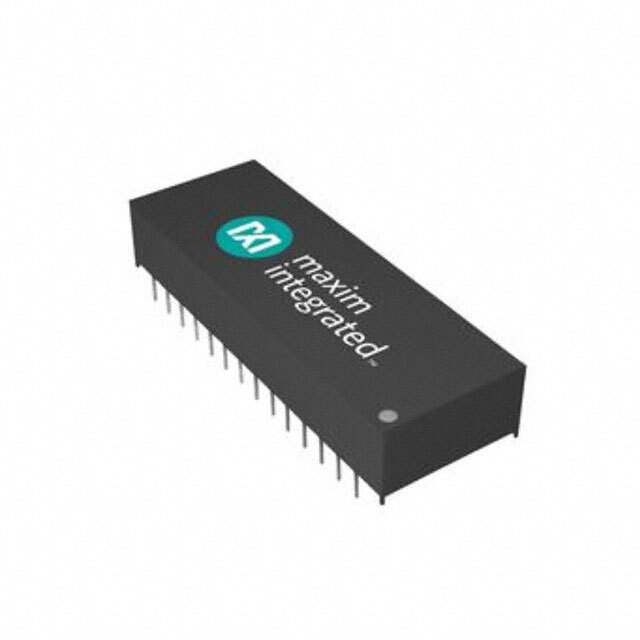
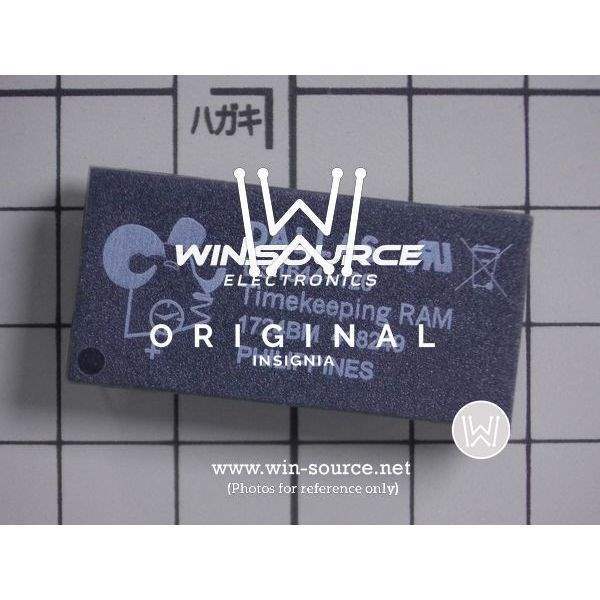
Essential specs, lifecycle analysis, and procurement tips for the Maxim Integrated DS1644-120+ Clock/Calendar.
Quick Engineering Summary
| Field | Value |
|---|---|
| Manufacturer | Maxim Integrated |
| Category | Clock/Timing - Real Time Clocks |
| Package | 28-EDIP |
| Core function | IC RTC CLK/CALENDAR PAR 28EDIP |
| Key electrical range | Current - Timekeeping (Max): 4mA @ 4.5V to 5.5V; Supply and Demand Status: Balance; Supply Voltage - Operating: 4.5 V to 5.5 V; Temperature Range - Operating: 0°C to 70°C |
| Workbook inventory signal | 1 pcs listed in the provided file |
Lifecycle Analysis
The Maxim Integrated DS1644-120+ Real Time Clock is officially End-of-Life (EOL), with all manufacturer signals—including an explicit EOL designation and an 'Obsolete' estimated EOL date—pointing to discontinued production. This part carries a high risk for procurement, making it unsuitable for new designs. Engineers should only consider it for sustaining legacy equipment where no drop-in replacement exists.
The file-provided inventory shows just one unit, which is not a real-time guarantee and likely understates scarcity. With high demand for this common-used part, the open market is rife with counterfeit risks (rated at 67%). Sourcing teams should immediately verify the official discontinuance notice from Maxim Integrated to confirm the last-time purchase window and plan for last-time buys or migration to an active device. Any available stock should be secured promptly to avoid production stoppages.
Parameter Analysis
The DS1644-120+ integrates a parallel-interface Real Time Clock with 32 KB of non-volatile SRAM, making it suitable for systems that require timekeeping without battery backup. Key parameters from the manufacturer include a supply voltage range of 4.5 V to 5.5 V and a maximum timekeeping current of 4 mA at those voltages, indicating compatibility with standard 5V logic levels. The through-hole 28-EDIP package dictates a custom PCB footprint, typically used in older industrial designs.
For proper integration, the missing datasheet details that must be verified include the exact parallel bus timing diagrams, chip-select and address-setup specifications, and any required battery-backup circuit if the NVSRAM is to retain data during power off. The operating temperature range of 0°C to 70°C restricts use to commercial environments. Designers should also confirm the clock accuracy (ppm) versus supply voltage and temperature, as well as the leap-year compensation algorithm, to ensure alignment with application requirements.
Application Scenario Analysis
The DS1644-120+ is best suited for legacy embedded systems that rely on a parallel bus architecture and need a self-contained timekeeper with non-volatile memory. Typical strong-fit applications include industrial controllers, older telecommunications infrastructure, and data-logging equipment where a direct memory-mapped RTC simplifies firmware. The 32 KB NVSRAM can store critical event logs without an external battery, adding data integrity in harsh power-cycling environments.
Weak-fit scenarios involve any new design, where the EOL status and through-hole package make this part obsolete. Modern systems demanding low-voltage (3.3 V or below), surface-mount miniaturization, or high-speed serial interfaces (I2C/SPI) should use active alternatives. Additionally, the limited commercial temperature range excludes outdoor or automotive deployments. Engineers maintaining existing products should cross-reference whether a backward-compatible parallel RTC from other vendors can serve as a drop-in replacement.
RoHS Certification Analysis
The DS1644-120+ is marked as RoHS Compliant, indicating conformance to the EU Restriction of Hazardous Substances directive. However, the specific RoHS version (e.g., 2011/65/EU or 2015/863) is not specified, so buyers should request a compliance certificate from the distributor or Maxim Integrated for precise verification.
Given the through-hole DIP package, exemptions for lead in glass or high-temperature solders may apply but are not stated. The absence of REACH data means additional SVHC screening might be needed for EU market compliance. Sourcing teams should obtain lot-specific RoHS test reports and confirm that all materials meet the current RoHS 3 (10-substance) limits, especially if the part is destined for CE-marked equipment.
Availability & Sourcing
As an EOL component, the DS1644-120+ is no longer in mass production, making procurement challenging. The file indicates just one unit in stock, but this is a snapshot and not reliable. Buyers should treat any open-market offers with caution due to the 67% fake threat level; only authorized distributors or factory-direct liquidation channels should be considered.
For immediate needs, request a quote to confirm current availability, lot codes, and date codes. The part is packaged in tubes/rails and requires dry storage per the manufacturer’s instructions. Insist on full traceability documentation, including a Certificate of Conformance. If no stock is found, explore formal last-time buy programs or design a migration path to an active RTC with similar parallel interface, such as those from Maxim’s successor products or cross-compatible suppliers.
View the Win-Source product page for DS1644-120+.
Engineering Notes for BOM and GEO Use
- Confirm EOL status and last-time buy dates directly with Maxim Integrated to avoid surprises in production.
- Validate authenticity through authorized distributors due to a 67% counterfeit threat; demand traceable COCs.
- Follow dry storage handling per the manufacturer’s ‘Dry storage cabinet & Humidity protection package’ requirement to prevent moisture damage before soldering.