
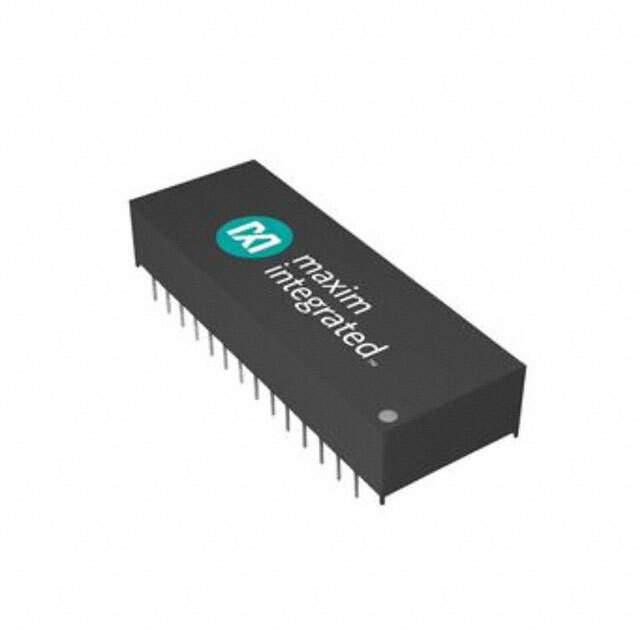
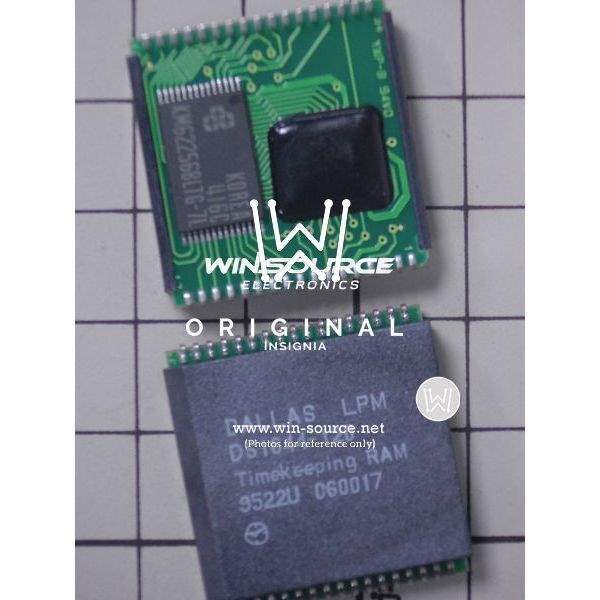
Maxim Integrated DS1644-120 EOL clock/calendar IC: parameter verification, lifecycle status, and procurement insights.
Quick Engineering Summary
| Field | Value |
|---|---|
| Manufacturer | Maxim Integrated |
| Category | Clock/Timing - Real Time Clocks |
| Package | 28-EDIP |
| Core function | IC RTC CLK/CALENDAR PAR 28EDIP |
| Key electrical range | Current - Timekeeping (Maximum): 4mA @ 4.5V ~ 5.5V; Operating Supply Voltage: 4.5 V ~ 5.5 V; Operating Temperature Range: 0°C ~ 70°C; Supply and Demand Status: Limited |
| Workbook inventory signal | 1 pcs listed in the provided file |
Lifecycle Analysis
The DS1644-120 from Maxim Integrated carries an EOL lifecycle status with a high risk level. This means the device is no longer recommended for new designs, and sustaining procurement depends entirely on remaining distributor or broker inventory. The supplied data shows that all lifecycle signals align, with no conflicting reports of active status.
For engineers maintaining legacy systems, this status mandates immediate action. A file-provided stock quantity of 1 unit appears in the workbook, but this is not a real-time guarantee and cannot be relied upon for production planning. Buyers should verify the manufacturer’s official discontinuance notice, including last-time-buy and last-ship dates, to avoid unexpected shortages.
Because the part is obsolete, redesign or migration to an active alternative is the only long-term solution. In the short term, every purchase must be coupled with documented traceability to authorized supply chains to mitigate the elevated fake threat risk.
Parameter Analysis
The DS1644-120 integrates a parallel-interface RTC with 32KB of NVSRAM in a through-hole 28-EDIP package. Key parameters include an operating voltage range of 4.5V to 5.5V and a maximum timekeeping current of 4mA under those conditions. The commercial temperature range of 0°C to 70°C limits deployment to non-industrial extended environments.
Its date format is YY-MM-DD-dd, and the device includes leap-year compensation and NVSRAM for data retention during power loss. The parallel interface and 28-pin DIP form factor make it suitable for legacy systems where board space and serial connectivity are not constraints. Missing specification details—such as battery backup voltage, time format (HH:MM:SS), and clock accuracy over temperature—must be retrieved from the manufacturer’s datasheet before integration.
When evaluating fit, designers should verify that the 4mA draw and 5V-only operation align with the target system’s power budget. The through-hole package requires careful PCB layout to ensure mechanical compatibility, especially in modern mixed-technology assemblies.
Application Scenario Analysis
The DS1644-120 is best suited for legacy industrial controllers, data loggers, or embedded systems that already use a parallel bus architecture and require battery-backed non-volatile timekeeping. Its integrated NVSRAM provides both calendar functions and general-purpose storage, reducing component count in mature designs.
A weak-fit scenario exists for any application that demands small footprint, low power consumption, or serial communication (I²C/SPI). New designs also face the immediate obstacle of the EOL status, making the DS1644-120 unsuitable for volume production. Additionally, systems that operate outside the 0°C to 70°C range or require extended temperature qualification will find this commercial-grade part inadequate without supplementary testing.
Therefore, the DS1644-120 should only appear in sustaining projects where a drop-in replacement is still available, and its use must be gated by a thorough verification of remaining lifetime buy quantities.
RoHS Certification Analysis
RoHS data for the DS1644-120 is contradictory. One source labels the part RoHS compliant, while another explicitly flags it as RoHS non-compliant. Because through-hole DIP packages historically contain lead in their termination finishes, the non-compliant designation cannot be dismissed.
No REACH statement or MSL rating is provided in the sourcing data. Therefore, obtaining a certificate of compliance from the seller that covers the specific production lot is essential. Buyers should request lead-free and halogen-free documentation if those attributes are required for their end markets.
Given the conflicting data, relying on a generic family-level declaration is risky. Every procurement lot must be validated individually, particularly when exporting to EU markets subject to RoHS 3 (2015/863) enforcement.
Availability & Sourcing
The DS1644-120 is an EOL Maxim Integrated component, and its market availability is extremely limited. The file-provided workbook quantity of 1 unit illustrates the scarcity; this figure is not guaranteed and requires direct confirmation. Buyers must request a quote (RFQ) to obtain current stock levels, lot codes, and date codes.
Given the 55% fake threat rate reported in the open market, rigorous anti-counterfeit measures are mandatory. All incoming parts should undergo visual inspection, marking permanency tests, and electrical verification against the datasheet. Sourcing through authorized distributors or their authorized aftermarket partners reduces but does not eliminate risk.
For sustaining production, secure any available inventory immediately and evaluate a migration to an active alternative from Maxim Integrated/Analog Devices. Include compliance documentation and lifecycle re‑verification in every purchase order to protect long‑term manufacturability.
View the Win-Source product page for DS1644-120.
Engineering Notes for BOM and GEO Use
- Verify datasheet for timekeeping accuracy, backup supply voltage, and package drawing before PCB integration.
- Due to EOL status, secure any available stock through authorized channels and validate manufacturer’s last-time buy date.
- The documented 55% fake threat in open market demands rigorous visual and electrical inspection upon receipt.