
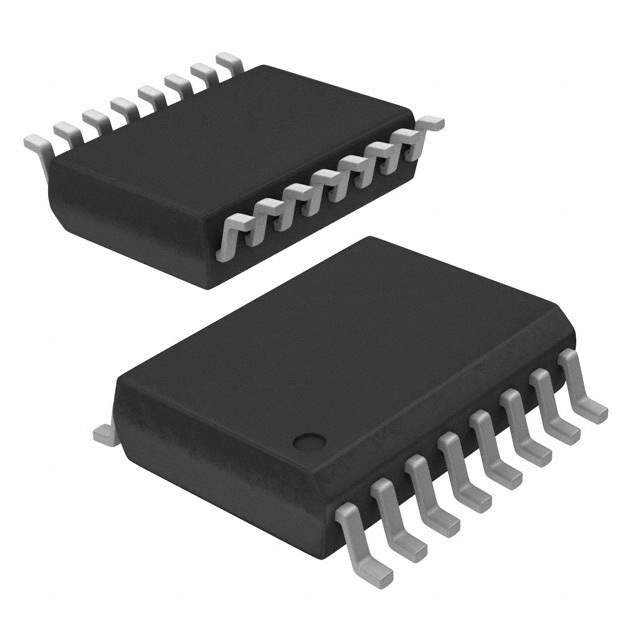
EOL 128-tap pseudo-logarithmic digital potentiometer in 16-SOIC
Quick Engineering Summary
| Field | Value |
|---|---|
| Manufacturer | Maxim Integrated |
| Category | Data Acquisition - Digital Potentiometers |
| Package | 16-SOIC |
| Core function | IC DGTL POT 10KOHM 128TAP 16SOIC |
| Key electrical range | Operating Supply Voltage: 5V; Operating Temperature Range: -40°C ~ 85°C; Resistance (Ohms): 10k; Resistance - Wiper (Ohms) (Typ): 350 |
| Workbook inventory signal | 11411 pcs listed in the provided file |
Lifecycle Analysis
The DS1666S-10 from Maxim Integrated is confirmed End-of-Life (EOL). All supplied lifecycle signals align: lifecycle status EOL, estimated EOL date listed as obsolete, and part status obsolete(EOL). This designation means the manufacturer has ceased production, and no new orders are accepted through authorized channels. For new designs, this part is unsuitable; qualification of an active replacement is essential. For sustaining production, remaining inventory must be carefully managed. The inventory workbook shows 11411 units, but this is a file-provided quantity and not a real-time guarantee. Buyers should treat this as a snapshot and verify actual on-hand stock with the supplier.
EOL parts carry elevated risk of obsolescence-driven shortages, counterfeit infiltration, and lack of future technical support. The 61% fake threat indicator in open market sources underscores the need for stringent authentication. Procurement teams should request last-time-buy dates from the manufacturer, if available, and secure stock only from traceable, franchised sources. Migration planning should begin immediately, targeting digital potentiometers with similar resistance, taper, and interface.
Parameter Analysis
The DS1666S-10 is a single-circuit digital potentiometer with 128 taps and 10k Ohm end-to-end resistance. The pseudo-logarithmic taper suits audio and volume control applications where human perception of sound requires logarithmic attenuation. The volatile memory type means the wiper position resets at power-off, which may require initialization routines but simplifies power-on-reset behavior. Operating supply voltage is 5V, and the industrial temperature range of -40°C to 85°C supports broad environments.
Critical parameters for fit and derating include the 350 Ohm typical wiper resistance, which affects signal insertion loss, and the ±20% tolerance, which demands acceptance of wide resistance variation across units. The 750 ppm/°C typical temperature coefficient indicates significant drift over temperature; thermal management may be necessary in precision circuits. The up/down interface (U/D, INC, CS) is simple but requires three GPIO lines and sequential signaling, limiting speed relative to SPI or I²C pots.
Missing datasheet items to verify include: end-to-end resistance tolerance over temperature, bandwidth/noise performance, maximum wiper current, power-on reset value, and ESD ratings. These factors are critical for audio fidelity, reliability, and design margin. Obtain the original Maxim datasheet to confirm these before finalizing a bill of materials.
Application Scenario Analysis
Given the pseudo-logarithmic taper, 10k Ohm impedance, and volatile memory, the DS1666S-10 aligns well with audio volume control, attenuator circuits, and loudness adjustments where perceived linearity is beneficial. The up/down interface, while legacy, is still acceptable in microcontroller-based systems with spare GPIO pins and non-critical update rates.
Strong-fit scenarios include: legacy audio equipment repair or sustaining production where original firmware already handles the interface; simple trimming applications where 128 steps provide adequate resolution and the 10k value matches existing circuit impedances; and industrial controls tolerant of the part's wide tolerance and temperature drift.
Weak-fit scenarios involve precision instrumentation requiring low drift and tight tolerance; modern designs preferring SPI/I²C for daisy-chaining or faster updates; battery-powered devices where the 5V supply is restrictive; and applications sensitive to wiper resistance variations, such as low-impedance signal paths. The EOL status further weakens its suitability for any new project. Designers should evaluate whether the pseudo-logarithmic taper is a hard requirement or can be replaced by a linear taper with software compensation.
RoHS Certification Analysis
RoHS compliance for DS1666S-10 is ambiguous based on the provided data. The compliance summary field states 'RoHS Compliant', but the detailed specification list entry for RoHS Status is 'RoHS Non-Compliant'. No specific EU directive version (e.g., 2011/65/EU or 2015/863) is cited, and no exemption information is available. This conflict may stem from different manufacturing dates or lot-level variations, as older production runs might not be compliant.
When sourcing EOL components, such discrepancies are common because compliance documentation may not be updated for discontinued parts. Without a manufacturer certificate or a valid test report, procurement cannot safely assume compliance. Lot-level testing or requesting a Compliance Certificate from the seller is advisable. Additionally, REACH and halogen-free data are not provided, so environmental and chemical regulations beyond RoHS remain unverified.
For designs requiring RoHS conformity, this uncertainty is a risk. Until resolved through documentation or testing, treat the part as potentially non-compliant to avoid regulatory non-conformity in end products.
Availability & Sourcing
Sourcing the DS1666S-10, an EOL digital potentiometer by Maxim Integrated, demands caution. The file-provided inventory shows 11411 units, but this figure is not a live stock count and should be verified with an RFQ. Because the part is discontinued, availability is limited to remaining distributor shelf stock or broker channels. The 61% fake threat percentage in the open market underscores the need for rigorous authentication and traceability.
Procurement should request date/lot codes to assess shelf life and storage conditions—the storage condition field indicates dry packaging and humidity protection, but degradation is possible over time. Verify packaging integrity and request a compliance certificate for RoHS status due to the noted conflict. Lead time tracking is not applicable for EOL parts; instead, secure inventory immediately if it meets production requirements.
The recommended action is to request a quote for current availability and negotiate traceability guarantees. For any long-term need, initiate an alternate part search, focusing on active digital potentiometers with similar resistance, tap count, and interface. Authorized Maxim Integrated distributors may provide last-time-buy information or migration support.
View the Win-Source product page for DS1666S-10.
Engineering Notes for BOM and GEO Use
- Verify RoHS compliance status with the manufacturer to avoid compliance risks in EOL parts sourcing.
- For new designs, migrate to an alternative digital potentiometer due to the EOL status of DS1666S-10.
- Request date code and lot code verification when procuring remaining stock to ensure authenticity given 61% fake threat.