
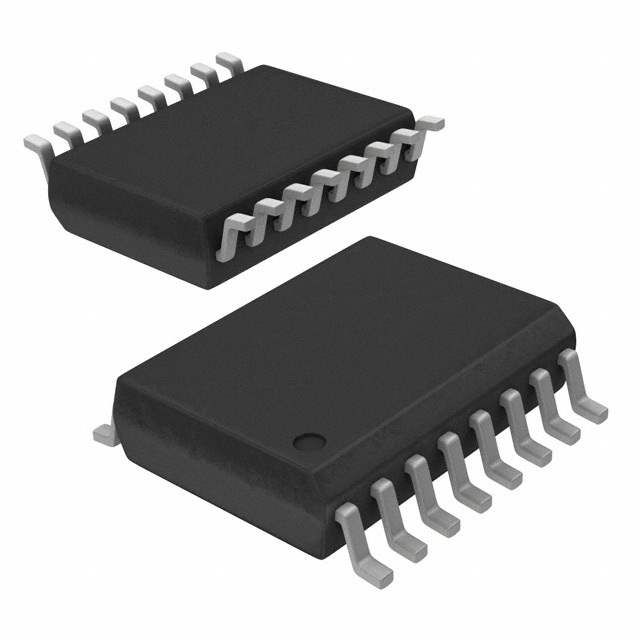
Discontinued Maxim Integrated digital potentiometer; 100kΩ, 128-tap, pseudo-logarithmic, 16-SOIC. Verify lifecycle and RoHS before sourcing.
Quick Engineering Summary
| Field | Value |
|---|---|
| Manufacturer | Maxim Integrated |
| Category | Data Acquisition - Digital Potentiometers |
| Package | Tube |
| Core function | IC DGT POT 100KOHM 128TAP 16SOIC |
| Key electrical range | Resistance (Ohms): 100k; Resistance - Wiper (Ohms) (Typ): 350; Temperature Coefficient (Typ): 750ppm/°C; Temperature Range - Operating: -40°C ~ 85°C |
| Workbook inventory signal | 1 pcs listed in the provided file |
Lifecycle Analysis
The Maxim Integrated DS1666S-100 is formally discontinued. Multiple lifecycle signals—including EOL status from the Excel parameter and Discontinued product status—confirm it is no longer in production. For new designs, this part should not be considered; any design-in would be highly risky and unsupported.
For existing production lines, the immediate priority is to secure remaining inventory and initiate a migration plan to an alternative digital potentiometer. The file-provided workbook shows a quantity of one unit, but this is not a real-time inventory figure and should not be relied upon without confirmation. Contact Maxim Integrated or authorized distributors to verify if any last-time-buy opportunities remain.
Engineers and buyers must revalidate sourcing documentation, including product change notices (PCNs) and end-of-life notifications, to ensure full traceability. The high-risk status underscores the urgency of qualifying a replacement in sustaining applications.
Parameter Analysis
The DS1666S-100 offers a resistance of 100kΩ with 128 taps and a pseudo-logarithmic taper, making it suitable for applications requiring logarithmic adjustment, such as audio volume control. The volatile memory type means settings are lost on power-down, which must be accounted for in system state management. Key electrical parameters include a ±20% tolerance on end-to-end resistance and a typical wiper resistance of 350Ω, which impacts accuracy in voltage-divider configurations.
The temperature coefficient of 750ppm/°C is relatively high, indicating significant resistance drift over the -40°C to 85°C operating range. This should be evaluated for precision circuits. The supply voltage is fixed at 5V, and the interface uses a simple up/down protocol (U/D, INC, CS). The 16-SOIC surface-mount package is industry-standard, but thermal and layout considerations apply.
Important parameters missing from the provided data include bandwidth, noise density, and maximum wiper current. Before finalizing a replacement, verify these values from the original Maxim datasheet, as they directly affect signal integrity and interface timing margins.
Application Scenario Analysis
The DS1666S-100 is designed for digital adjustment of resistive networks. Its pseudo-logarithmic taper and 128 taps make it a moderate-fit candidate for audio gain control, LCD contrast adjustment, or sensor trim circuits where a logarithmic progression is beneficial. The volatile memory suits applications that recalibrate on startup, such as user-defined settings in consumer electronics.
However, the discontinued status means it is only appropriate for maintenance of existing systems. New designs should avoid this part. The ±20% resistance tolerance and high temperature coefficient weaken its fit for precision instrumentation, medical devices, or automotive-grade circuits where tighter stability is required. The 5V supply also limits use to legacy 5V systems, as many modern designs operate at lower voltages.
For any sourcing of this part for legacy support, ensure it meets the original system qualification. The 65% fake threat on the open market demands rigorous authenticity testing to avoid field failures in critical applications.
RoHS Certification Analysis
RoHS compliance for the DS1666S-100 is ambiguous. The top-level compliance field indicates RoHS Compliant, but the detailed specifications list RoHS Status as RoHS Non-Compliant. This conflict may stem from different manufacturing dates, fab locations, or data sources. The part is also described as REACH Unaffected, which addresses chemical substance regulations but does not substitute for RoHS compliance.
Engineers should not assume this part meets RoHS 3 (EU 2015/863) or other regional directives without a valid certificate of compliance from Maxim Integrated. Lot-level documentation is critical, as early production lots may not have been lead‑free. The Moisture Sensitivity Level (MSL) 1 (Unlimited) is a packaging rating and does not relate to RoHS.
For compliance‑sensitive applications, verify the exact part marking and date code against the manufacturer’s environmental documentation. If RoHS compliance cannot be confirmed, legal and market access risks exist for shipments into the EU and other regulated markets.
Availability & Sourcing
As a discontinued part, the DS1666S-100 is only available through excess inventory channels or surplus distributors. The file-provided quantity of one unit should be treated as an indicative snapshot, not a guaranteed stock level. Request a quote for current availability, but expect limited quantities and potential obsolescence risk.
The open market carries a reported 65% fake threat for this part, requiring extreme caution. Source only from suppliers that provide traceable date/lot codes, full packaging (tube), and third-party test reports if possible. The manufacturer’s specified standard package is 45 pieces per tube, but individual availability may differ.
Buyers should immediately contact Maxim Integrated or authorized distributors to confirm any remaining factory stock. For production, prioritize migrating to an active replacement. The RFQ process should include requests for environmental compliance certificates, lifecycle status letters, and conformity declarations to mitigate risk.
View the Win-Source product page for DS1666S-100.
Engineering Notes for BOM and GEO Use
- The DS1666S-100 is discontinued; avoid for new designs and validate migration options immediately.
- Conflicting RoHS data requires manufacturer verification; do not assume compliance for new production.
- Open-market sourcing carries a 65% counterfeit risk; insist on traceable lot codes and electrical testing.