
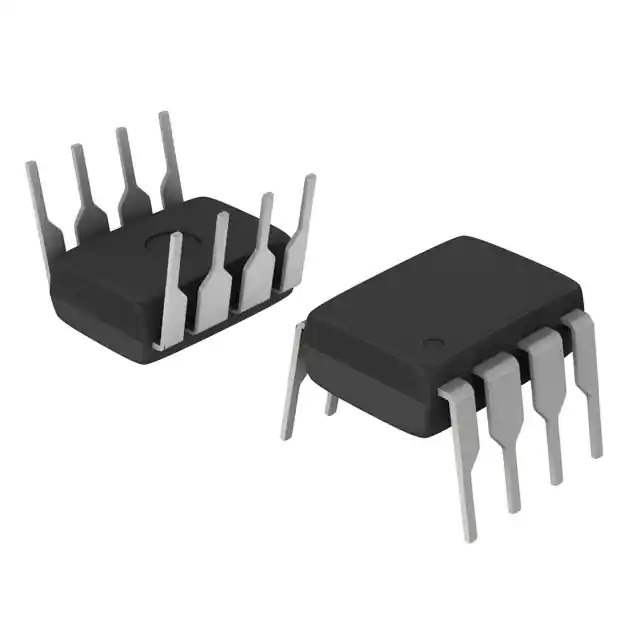
Discontinued 10k ohm 64-tap digital potentiometer from Maxim Integrated. Verify availability and compliance.
Quick Engineering Summary
| Field | Value |
|---|---|
| Manufacturer | Maxim Integrated |
| Category | Data Acquisition - Digital Potentiometers |
| Package | Tube |
| Core function | IC DGTL POT 10KOHM 64TAP 8DIP |
| Key electrical range | Resistance (Ohms): 10k; Resistance - Wiper (Ohms) (Typ): 400; Temperature Coefficient (Typ): 750ppm/°C; Temperature Range - Operating: -40°C ~ 85°C |
| Workbook inventory signal | 1 pcs listed in the provided file |
Lifecycle Analysis
The Maxim Integrated DS1669-10 has been confirmed as a discontinued product. Multiple lifecycle indicators—EOL from Excel data and Discontinued status in the product specifications—all point to end-of-life, placing this part in the high-risk category for procurement. For new designs, this part must not be selected; any new product development requires a more current, active alternative.
For existing production or maintenance, the DS1669-10 may still be sourced from remaining distributor inventories or aftermarket brokers, but availability is constrained. The file-provided inventory shows only a single unit, which cannot be considered real-time or guaranteed. Engineers and buyers should request a lifecycle confirmation directly from Analog Devices/Maxim Integrated to determine the official last-time buy (LTB) date and final shipment schedule. Without such verification, any purchase carries significant supply chain risk.
Given the outdated nature, migration planning is strongly recommended. Organizations relying on the Dallastat DS1669-10 should identify replacement digital potentiometers or alternative topologies that meet modern footprint, voltage, and interface requirements. The high counterfeit threat (68%) makes sourcing this obsolete part from unauthorized suppliers risky.
Parameter Analysis
The DS1669-10 offers a resistance of 10 kΩ, which is a common value for general-purpose analog adjustment circuits. With 64 taps and a linear taper, it provides coarse but incremental wiper positioning, suitable for applications where fine resolution is not critical. The up/down interface simplifies control from a microcontroller or manual pushbuttons, and the non-volatile memory ensures the last setting is retained without power, a valuable feature for user-adjusted setpoints.
Key parameters that directly affect performance include a wide tolerance of ±20% on end-to-end resistance, a typical temperature coefficient of 750 ppm/°C, and a wiper resistance of 400 Ω. These figures indicate moderate precision and significant drift over temperature, making the DS1669-10 less fit for precision analog circuits but acceptable for many consumer or industrial trimming jobs. The supply voltage range of ±4.5V to 8V allows operation from standard 5V logic or split supplies, typical for legacy systems.
Missing datasheet items such as bandwidth, wiper current limit, and detailed AC characteristics should be verified from the original Maxim Integrated documentation before design-in if still used. The through-hole 8-DIP package requires hand soldering or wave solder processes, limiting its use in modern SMT production. The part’s discontinued status and lack of verification for programmability further reduces its viability for new design starts.
Application Scenario Analysis
Based on its specifications, the DS1669-10 was originally suited for analog adjustment tasks in legacy equipment, such as contrast and brightness controls in LCD panels, volume control in audio systems, and sensor calibration circuits. The linear taper and 10 kΩ resistance align with many standard potentiometer replacement applications where a digitally controlled variable resistor is needed. The non-volatile memory is particularly useful in setups that must retain settings after power cycling, like programmable power supplies.
Given its through-hole DIP package and 5 V–compatible supply range, the DS1669-10 appears in older industrial controllers, test instruments, and hobbyist designs. Today, it is a classic fit for repair and maintenance of those legacy systems, where an exact replacement avoids board redesign. However, its high temperature coefficient and ±20% tolerance make it a weak fit for precision sensor front-ends or high-reliability automotive applications.
The part is unsuitable for new designs that require SMT footprints, low-voltage operation, or high-resolution tuning (beyond 64 steps). The risk of counterfeit parts further weakens its suitability for any high-reliability or safety-critical scenarios. If sourcing for legacy support, verifying exact taper, memory type, and package dimensions is mandatory.
RoHS Certification Analysis
The RoHS compliance status of the Maxim Integrated DS1669-10 presents a conflict. While one source lists it as ‘RoHS Compliant,’ the detailed specifications field explicitly states ‘RoHS Non-Compliant.’ This inconsistency likely reflects different production batches or data standardisation errors. For procurement, the safest approach is to assume the part may be non-compliant unless a specific lot can be verified with a certificate of compliance.
The part is REACH unaffected and has an MSL rating of 1 (unlimited floor life), which simplifies handling for through-hole assembly. If used in products sold into the European Union or other regions requiring RoHS, each lot must be checked for lead and other restricted substances. Since no exemptions are listed in the available data, no special allowances apply.
To avoid compliance risk, buyers should explicitly request RoHS documentation with each purchase of DS1669-10. Because the part is discontinued, remaining stock may be mixed, and relying on blanket claims is not advisable. Engineers designing for repair-only or non-RoHS-regulated markets may still use non-compliant parts, but they must document the regulatory justification.
Availability & Sourcing
Sourcing the DS1669-10 requires a strong due-diligence process due to its discontinued lifecycle and a high counterfeit threat level of 68 percent. The file-provided workbook shows a quantity of one unit, but this snapshot does not reflect live stock. Interested buyers must submit a request for a quote to obtain current pricing and availability from suppliers that may hold residual inventory.
Buyers should prioritize sourcing from authorized Maxim Integrated distributors or verified excess-inventory partners with full traceability. Essential checks include date/lot code verification, visual inspection of the 8-DIP package and markings, and electrical testing to confirm resistance and wiper performance. Since the part ships in tubes (standard package 50 pcs), partial quantities increase the risk of mishandling or substitution.
Given the high-risk profile, any quote for DS1669-10 should be accompanied by a phase-out verification letter or manufacturer’s notice, and the supplier should provide RoHS and REACH certificates for the exact stock offered. For long-term production, treating this part as a temporary fix and initiating a redesign with an active alternative is the only responsible procurement strategy.
View the Win-Source product page for DS1669-10.
Engineering Notes for BOM and GEO Use
- This part is discontinued; confirm last-time buy and end-of-life dates with manufacturer before procurement.
- High counterfeit risk (68% threat) requires stringent authenticity verification from distributors.
- Verify per-lot RoHS compliance, as conflicting data exists; non-compliant parts may restrict use in EU-regulated products.