
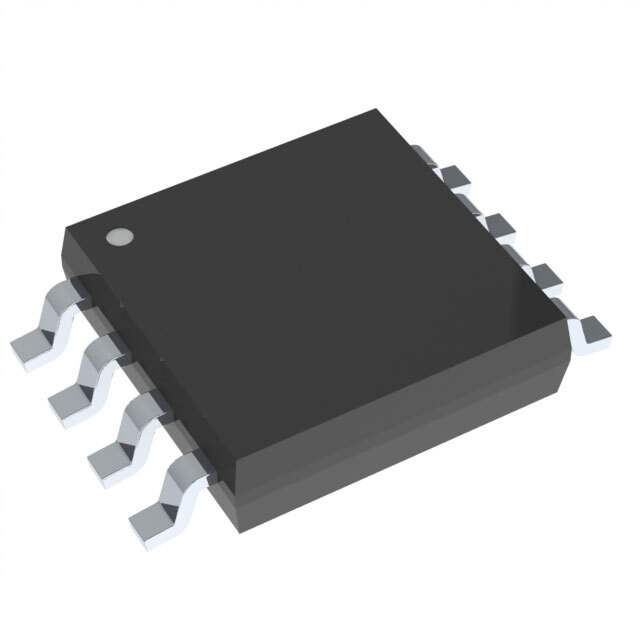
Maxim Integrated | 10kΩ, 64-Tap, Linear Taper, 8-SOIC | End-of-Life
Quick Engineering Summary
| Field | Value |
|---|---|
| Manufacturer | Maxim Integrated |
| Category | Data Acquisition - Digital Potentiometers |
| Package | 8-SOIC |
| Core function | IC DGTL POT 10KOHM 64TAP 8SOIC |
| Key electrical range | Resistance (Ohms): 10k; Resistance - Wiper (Ohms) (Typ): 400; Supply and Demand Status: Limited; Supply Voltage - Operating: ±4.5 V to 8 V |
| Workbook inventory signal | 1 pcs listed in the provided file |
Lifecycle Analysis
The DS1669S-10 is confirmed End-of-Life (EOL) by all supplied lifecycle signals—Excel lifecycle param, Lifecycle Status, and Status all align on EOL/Obsolete(EOL). This means Maxim Integrated has discontinued production, and no new lots will be manufactured.
For new designs, the DS1669S-10 must be avoided. Engineering teams should immediately select an active alternative digital potentiometer with similar resistance, tap count, and package. For existing production, the only prudent path is to secure remaining inventory through a last-time buy, then execute a redesign or bridge-buy to cover transition.
File-provided inventory shows just 1 unit, which is not a real-time guarantee. Any procurement must include direct verification with the supplier, confirmation of shelf-life and storage conditions, and a review of the manufacturer’s discontinuation notice to understand final shipment dates and support timelines.
Parameter Analysis
The DS1669S-10 integrates a single 10kΩ potentiometer with 64 taps and a linear taper. Total resistance tolerance is ±20%, and the typical wiper resistance is 400Ω. The device operates from a symmetrical supply of ±4.5V to 8V across an industrial temperature range of -40°C to 85°C.
Key parameters for design qualification include the temperature coefficient of 750 ppm/°C, which influences resistance stability over temperature, and the supply voltage range that must match the application’s analog rail. The 8-SOIC package provides a standard footprint for automated assembly, and the wiper resistance may affect accuracy in low-impedance nodes.
Important datasheet parameters not supplied here include the interface protocol (up/down contact closure), memory type (non‑volatile), power‑on reset to known start‑up value, bandwidth, and noise performance. Engineers should verify these directly from the Maxim Integrated DS1669 datasheet before finalizing a design or evaluating a substitute.
Application Scenario Analysis
As a 64‑tap, 10kΩ linear digital potentiometer, the DS1669S-10 is suited for general‑purpose adjustment functions such as programmable gain, offset nulling, LCD contrast control, and sensor calibration. The ±20% resistance tolerance and 750 ppm/°C tempco make it acceptable for applications where absolute resistance is not critical, and where periodic recalibration or end‑of‑line trimming is feasible.
Strong‑fit scenarios remain in legacy industrial, instrumentation, and consumer products that already use the DS1669S-10 and require exact form‑fit‑function replacements for repair or ongoing production. Weak‑fit scenarios include new designs, high‑reliability systems, or applications demanding tight resistance accuracy, very low tempco, or a digital interface other than the contact‑closure up/down control.
Given its EOL status, the DS1669S-10 should only be considered for maintenance of existing equipment. For any new project, a current‑production digital potentiometer from Maxim Integrated or an alternate supplier will provide better long‑term availability and often improved performance.
RoHS Certification Analysis
RoHS compliance data for the DS1669S-10 is conflicting. The top‑level compliance object states “RoHS Compliant,” while a specification field lists “RoHS Non‑Compliant.” This inconsistency can arise from mixed inventory of different date codes or from a manufacturer transition that made later lots RoHS‑compliant while earlier lots were not.
No REACH, MSL, or halogen‑free declarations are provided in the source data, so those aspects cannot be confirmed. Exemptions, if any, are unknown and would need to be clarified with the supplier on a per‑lot basis.
For EU or other regulated markets, lot‑level certification is essential before purchase. Buyers should request full material declarations or certificates of conformance from the distributor, and where possible cross‑reference the manufacturer’s official PCN documentation to determine which production dates achieved RoHS compliance.
Availability & Sourcing
The DS1669S-10 is EOL and supply‑and‑demand status is listed as limited. File‑provided quantity shows only 1 piece, which should not be treated as available stock without direct confirmation. A 40% counterfeit threat is noted, and the part is flagged as commonly used, heightening sourcing risk.
For any remaining demand, an RFQ should be submitted with explicit requirements for date/lot codes, tube/rail packaging, and storage condition verification (dry cabinet/humidity protection as indicated). Authorized distribution or directly from Maxim Integrated (now Analog Devices) is the safest channel. Avoid unknown brokers, especially when the last‑time‑buy window may have closed.
Procurement teams must verify lifecycle status with the manufacturer and obtain compliance documentation before purchasing. For production, prioritize a redesign to an active digital potentiometer that meets the original design requirements; existing DS1669S-10 inventory should only bridge the transition.
View the Win-Source product page for DS1669S-10.
Engineering Notes for BOM and GEO Use
- Verify RoHS compliance at the lot level due to conflicting data—compliance statements may vary by date code.
- Counterfeit risk is flagged at 40% in the open market; insist on traceable, authorized distribution when sourcing remaining DS1669S-10 units.
- Begin redesign now: the DS1669S-10 is EOL and file inventory is only 1 unit, with no guarantee of future availability.