
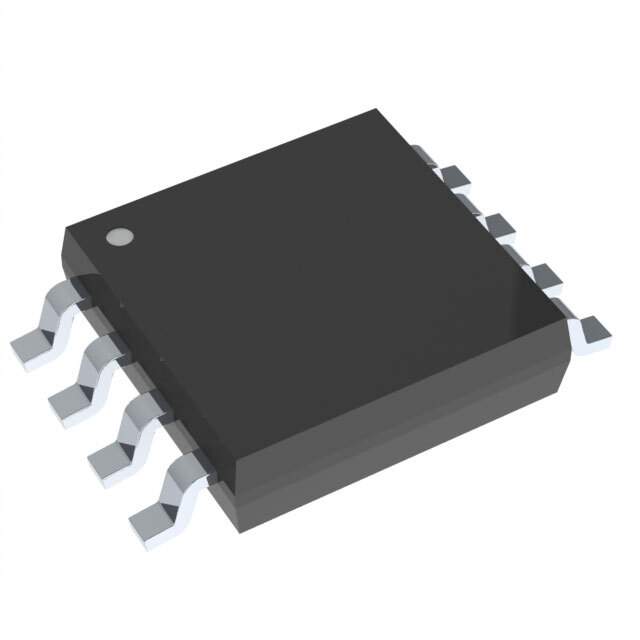
End-of-life digital potentiometer with non-volatile memory and simple up/down interface – verify last-time-buy options.
Quick Engineering Summary
| Field | Value |
|---|---|
| Manufacturer | Maxim Integrated |
| Category | Data Acquisition - Digital Potentiometers |
| Package | 8-SOIC |
| Core function | IC DGTL POT 100KOHM 64TAP 8SOIC |
| Key electrical range | Operating Supply Voltage: ±4.5 V ~ 8 V; Operating Temperature Range: -40°C ~ 85°C; Resistance (Ohms): 100k; Resistance - Wiper (Ohms) (Typ): 400 |
| Workbook inventory signal | 1 pcs listed in the provided file |
Lifecycle Analysis
The DS1669S-100 is officially end-of-life (EOL) with all supplied lifecycle signals aligning on this status. This means Maxim Integrated (now Analog Devices) has ceased production, and no new orders are accepted. Engineers and buyers must treat this part as unavailable for new design-in and should immediately assess remaining stock for sustaining existing products. The last-time-buy window, if any, has likely passed, so procurement plans must rely on existing distributor or open market inventory.
For sustaining production, the primary risk is supply continuity. The file-provided inventory shows only 1 unit, which is insufficient for production runs and not a real-time guarantee. Additionally, the open market carries a 67 percent counterfeit risk, elevating the chance of receiving non-functional or relabeled parts. Any sourced units must undergo rigorous authenticity testing, including date code verification and electrical parameter screening against the datasheet.
A formal migration plan to a functional replacement or redesign is strongly advised. Given the part’s age (introduced in 1996), any available stock may exhibit degraded solderability or moisture sensitivity, requiring baking per MSL guidelines before assembly. Contact authorized distributors to confirm any residual factory inventory and negotiate certification of compliance.
Parameter Analysis
The DS1669S-100 is a single-channel digital potentiometer with 64 taps, providing a nominal end-to-end resistance of 100kΩ and a typical wiper resistance of 400Ω. The large ±20% tolerance means the absolute resistance can vary from 80kΩ to 120kΩ, so designs must not rely on a precise value unless trimmed. The 100kΩ value suits moderate-impedance voltage divider or reference adjustments, but higher than 100kΩ demands may introduce noise sensitivity.
Temperature coefficient is specified at 750 ppm/°C typical, translating to a 75-ohm change per degree for 100kΩ. Over the -40°C to 85°C range, resistance can shift by over 7%, adding to the intrinsic tolerance. This level of drift may be acceptable in less critical applications but could be problematic for precision circuits. The non-volatile memory retains wiper settings across power cycles, simplifying startup, but write endurance limits should be checked from the full datasheet.
The up/down interface uses two digital pins (UP and DN) to increment or decrement the wiper position, without a serial protocol—this simplicity eases implementation but lacks a read-back capability. Supply voltage range of ±4.5V to 8V allows dual-supply operation, but verify the actual analog signal range does not exceed the rails. Missing datasheet parameters to validate include wiper current rating, bandwidth, and absolute maximum ratings for wiper-to-end voltages.
Application Scenario Analysis
The DS1669S-100 is a digital alternative to mechanical potentiometers in applications needing occasional adjustment of analog parameters. Its non-volatile memory and simple push-button interface make it well-suited for manual user controls, such as audio volume, backlight dimming, or contrast adjustment in industrial panels, where the 64-step resolution provides adequate granularity. The ±20% tolerance and modest temperature drift are acceptable for such human-interface functions.
In automatic calibration circuits, it can serve as a one-time set-and-forget resistor to trim offsets or gains in sensor signal chains, particularly where the system can tolerate an initial calibration step. The up/down control scheme eliminates the need for a microcontroller, allowing a low-cost rotary encoder or two buttons to directly adjust wiper position. However, the lack of position feedback requires the system to keep track of current tap location, typically by counting pulses from a known startup position.
Weak fits include precision instrumentation requiring better than 1% initial accuracy or low drift, high-frequency attenuators where parasitic capacitance of the potentiometer may limit bandwidth, and applications demanding frequent wiper changes that could exceed the non-volatile memory’s endurance. For new designs, consider more modern digital pots with I2C/SPI interfaces and tighter specifications.
RoHS Certification Analysis
The DS1669S-100 is listed as RoHS Compliant, and the specifications also indicate Halogen Free compliance. This means that, as originally manufactured, the part meets the substance restrictions of EU RoHS (likely RoHS 3, 2015/863) and does not exceed hazardous substance thresholds. However, because the part is EOL and production ceased years ago, the available documentation might reflect older standards.
Buyers should request a certificate of compliance (CoC) or test report for the specific lot being purchased to confirm that no non-RoHS materials were used. Additionally, while REACH compliance is not documented in the supplied data, it is often assumed for RoHS-compliant parts from major manufacturers, but explicit verification is recommended.
For aerospace, military, or medical applications, a full material declaration may be required beyond basic RoHS. Any stock held in uncontrolled environments may have absorbed moisture, potentially compromising the moisture sensitivity level rating. Sourcing from authorized channels ensures that the provided RoHS status is genuine and traceable to Analog Devices’ environmental policies.
Availability & Sourcing
The DS1669S-100 is in EOL status, and manufacturing has ceased. Any available inventory is limited to existing stock at distributors or on the open market. The file-provided quantity of just 1 unit highlights the extreme scarcity; this number is not a real-time guarantee and likely represents a single residual asset. Engineers should engage with authorized sources first to explore if any end-of-life buy inventory was preserved by Analog Devices or their partners.
Given the 67 percent fake threat indicator, extreme caution is warranted when procuring from non-authorized sellers. Insist on traceable date codes, lot codes, and full compliance documentation (RoHS, MSL, and country of origin). Request detailed photos to verify package marking consistency with known Maxim Integrated parts. The tube packaging specified (8-SOIC) should be inspected for proper sealing and dry storage, as mis-handled tubes can cause lead oxidation or bent pins.
To secure components for legacy systems, initiate a formal RFQ through win-source or similar platforms with clear requirements for authenticity verification and compliance certificates. Plan for a longer lead time and higher scrutiny. For any volume beyond samples, consider a redesign using an active alternative rather than relying on dwindling, risky EOL stock.
View the Win-Source product page for DS1669S-100.
Engineering Notes for BOM and GEO Use
- The EOL status and 67% counterfeit risk demand authenticity screening on all procured units; obtain date codes and compare to known Maxim Integrated markings.
- The ±20% tolerance and 750 ppm/°C tempco are significant; verify circuit performance across the full temperature range using worst-case resistance values.
- For new designs, migrate to an active digital potentiometer with a serial interface and tighter specs; the up/down interface and limited resolution are outdated.