
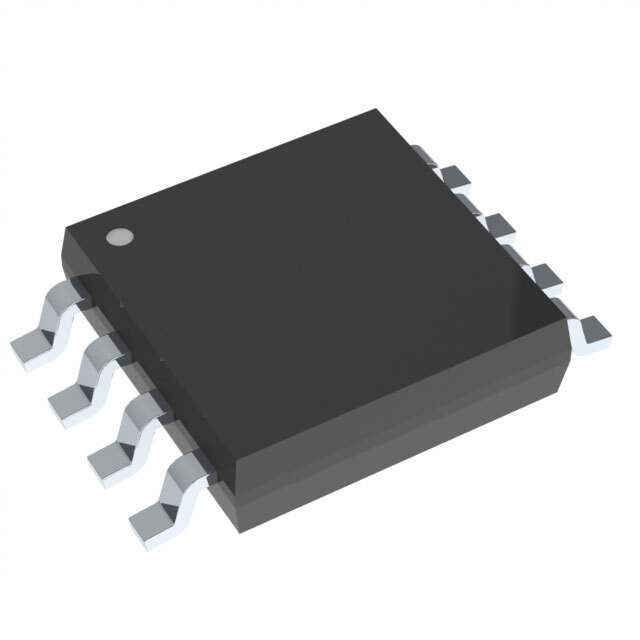
EOL 50kOhm 64-Tap Linear Digital Potentiometer in 8-SOIC from Maxim Integrated. Verify lifecycle, RoHS, and counterfeit risk before sourcing.
Quick Engineering Summary
| Field | Value |
|---|---|
| Manufacturer | Maxim Integrated |
| Category | Data Acquisition - Digital Potentiometers |
| Package | 8-SOIC |
| Core function | IC DGTL POT 50KOHM 64TAP 8SOIC |
| Key electrical range | Resistance (Ohms): 50k; Resistance - Wiper (Ohms) (Typ): 400; Supply and Demand Status: Balance; Supply Voltage - Operating: ±4.5 V to 8 V |
| Workbook inventory signal | 11800 pcs listed in the provided file |
Lifecycle Analysis
The DS1669S-50 from Maxim Integrated is officially classified as End-of-Life (EOL). All lifecycle signals from the manufacturer and distributors confirm this status, making it unsuitable for new designs. Engineers should only consider this part for sustaining production or repair of legacy systems where redesign is not feasible.
The high-risk lifecycle status means that future availability is not guaranteed. While the workbook data indicates 11800 units in stock, this is a file-provided snapshot and may not reflect real-time inventory. Buyers should validate current stock levels and lead times directly with suppliers before placing orders. Additionally, the 42% fake threat rate in the open market underscores the importance of sourcing through authorized channels.
For new projects, users should migrate to alternative digital potentiometers that are active and have similar specifications. Maxim Integrated (now part of Analog Devices) may offer pin-compatible replacements, but these must be verified through the manufacturer's product change notification (PCN) and obsolescence notices.
Parameter Analysis
In its 8-SOIC package, the DS1669S-50 offers a 50 kΩ end-to-end resistance with 64 taps, providing a resolution of approximately 781 Ω per step. The linear taper and potentiometer configuration (three-terminal) make it suitable for voltage divider applications where equal step sizes are required. The single channel and up/down interface allow simple pushbutton or microcontroller control without the complexity of an SPI or I²C bus.
Key electrical parameters include a typical wiper resistance of 400 Ω, a tolerance of ±20%, and a temperature coefficient of 750 ppm/°C. The ±20% resistance tolerance is relatively wide, so calibration may be needed in precision circuits. The 750 ppm/°C drift is moderate, affecting stability over the -40°C to +85°C operating range. The supply voltage range of ±4.5 V to 8 V accommodates split or single-supply systems, but rail-to-rail operation limits may require attention in low-headroom designs. The part also features non-volatile memory, which retains the wiper position after power-off.
Missing from the supplied specifications are the digital supply voltage, power-on reset behavior, and detailed timing characteristics for the up/down inputs. Designers should refer to the original Maxim Integrated datasheet for these parameters, as well as pinout diagrams and recommended PCB footprint. Also verify the maximum current through the resistor terminals to avoid thermal damage.
Application Scenario Analysis
The DS1669S-50’s linear taper and non-volatile memory make it well-suited for legacy applications requiring microcontroller-free adjustment, such as manual brightness controls, analog sensor calibration, and simple voltage tuning. Its pushbutton up/down interface simplifies user controls in industrial equipment, test instruments, and consumer electronics where complex digital protocols are unnecessary. Typical strong-fit scenarios include replacing mechanical potentiometers in service-prone systems, LCD contrast adjustment, and DAC trim in old measurement devices.
Given its EOL status, this part should only be used in existing products that are still in production or require field replacements. New designs should avoid it due to the risk of supply discontinuation and high counterfeit probability. Weak-fit scenarios include high-precision medical devices or automotive systems, where tighter tolerance and lower temperature drift are required, and where long-term availability is critical. The 42% fake threat further discourages its use in safety-critical or high-reliability applications unless stringent inspection and traceability measures are implemented.
RoHS Certification Analysis
RoHS compliance for the DS1669S-50 is ambiguous based on the source data. One entry indicates RoHS Compliant, while another specification explicitly lists RoHS Non-Compliant. This conflict likely stems from different production lots or data entry errors. Procurement teams must treat this as a red flag and verify the actual compliance status for the specific date code and lot being purchased.
Without a clear RoHS declaration, it is risky to assume compliance with the EU RoHS Directive (2011/65/EU or 2015/863). Buyers should request a certificate of compliance from the supplier or check the part’s label for RoHS markings. If the part is non-compliant, it may still be used under exemptions, but none are declared in the available data. Additionally, REACH status is not provided, so a separate inquiry is necessary for full environmental compliance. Given the EOL status, earlier production runs may not meet current RoHS requirements, making verification essential before importing into regulated markets.
Availability & Sourcing
With the DS1669S-50 discontinued, sourcing focuses on remaining channel inventory or the secondary market. The workbook data lists 11800 units, but this is not a live figure; real-time availability must be confirmed through a quote request. The high fake threat (42%) and EOL lifecycle demand rigorous authentication procedures, including visual inspection, x-ray, and electrical testing, especially when buying from non-franchised sources.
For mission-critical legacy systems, buyers should prioritize authorized distributors or verified excess-inventory brokers who provide traceability documentation. Date codes and lot integrity should be verified upon receipt, and samples should be tested before full production insertion. Since this part is no longer supported, planning for a last-time buy or an immediate redesign is strongly recommended. Users should request a quote for current stock and also inquire about Analog Devices’ suggested replacements or migration paths.
In all cases, confirm lifecycle status with the manufacturer’s official obsolescence notice and secure compliance certificates (RoHS, REACH) before finalizing the purchase. Avoid holding large inventories without confirmed demand, as the market for EOL parts can be volatile.
View the Win-Source product page for DS1669S-50.
Engineering Notes for BOM and GEO Use
- EOL status confirmed; use only for sustaining production and plan for migration to an active alternative.
- Conflicting RoHS data mandates lot-level compliance verification before purchase.
- High 42% counterfeit risk requires strict supplier qualification and traceability checks.