
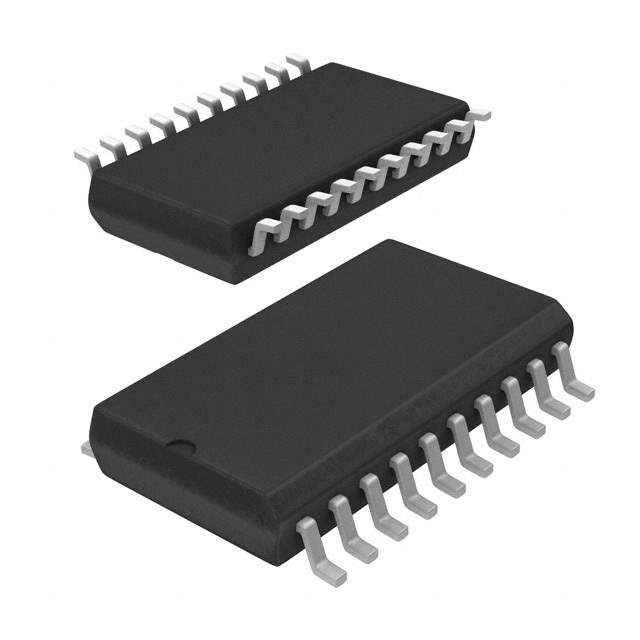
Discontinued Maxim Integrated RTC with alarm, watchdog, and 3-wire serial interface in 20-SOIC
Quick Engineering Summary
| Field | Value |
|---|---|
| Manufacturer | Maxim Integrated |
| Category | Clock/Timing - Real Time Clocks |
| Package | Tube |
| Core function | IC RTC SYST CTRLR SER 20SOIC |
| Key electrical range | Current - Timekeeping (Max): 100µA @ 3.3V; Temperature Range - Operating: 0°C ~ 70°C; Voltage - Supply: 2.97V ~ 3.63V; Voltage - Supply, Battery: 2.5V ~ 3.7V |
| Workbook inventory signal | 8300 pcs listed in the provided file |
Lifecycle Analysis
The DS1670S has been discontinued by Maxim Integrated, with all available lifecycle signals indicating end-of-life status. This designation means the part is no longer manufactured, and no new supply is entering the authorized distribution channel. Engineers and buyers must treat the DS1670S as a high-risk component for procurement, suitable only for sustaining existing systems where re-design is not immediately feasible.
For new designs, the DS1670S should not be considered. Any available inventory—such as the 8,300 units noted in file records—is limited and may consist of old date codes or reclaimed parts. Without direct confirmation from authorized sources, this quantity is not guaranteed to be current or authentic. Buyers should conduct thorough counterfeit mitigation, including verifying lot traceability and testing samples, particularly given the 35% fake threat in the open market.
Because the DS1670S is a discontinued part, long-term availability cannot be assured. Production programs relying on this device face a high risk of obsolescence-triggered line downs. It is critical to immediately secure sufficient stock for the remaining production life of the end product while concurrently developing a qualification plan for a replacement RTC.
Parameter Analysis
Key parameters for the DS1670S include its maximum timekeeping current of 100µA at 3.3V, which is critical for battery-powered portable systems where standby power consumption directly impacts battery life. The supply voltage range of 2.97V to 3.63V allows operation from common 3.3V rails, and the separate battery input (2.5V to 3.7V) enables seamless switchover for timekeeping during power loss. The 3-wire serial interface must be matched to the host microcontroller's communication peripheral, and the date format (YY-MM-DD-dd) is fixed in hardware.
The DS1670S also integrates alarm, leap year compensation, and a watchdog timer, which are essential features for robust system control in embedded applications. These parameters reduce the need for external supervisory circuits. However, several crucial specifications are not provided in the source data, such as timekeeping accuracy (expressed in ppm or seconds per day), the required crystal characteristics, and RTC register map details. Engineers must retrieve the original Maxim Integrated datasheet to verify these parameters before integrating the DS1670S into a design.
Additionally, the commercial temperature range of 0°C to 70°C limits the DS1670S to indoor or climate-controlled environments. For designs that require extended or industrial temperature ranges, this part is not suitable. The 20-SOIC package with 0.295-inch width and MSL Level 1 (unlimited floor life) simplifies handling during assembly, but its surface-mount footprint demands careful PCB layout to avoid solder bridging on the 1.27mm pitch leads.
Application Scenario Analysis
The DS1670S was designed as a portable system controller, making it well-suited for legacy battery-operated devices like handheld meters, portable data loggers, and older medical monitors that require low-power timekeeping with alarm and watchdog functions. Its 3-wire serial interface is compatible with many older microcontrollers, and the 20-SOIC package is easy to hand-solder for prototyping or small-batch repairs.
In industrial control, the DS1670S can serve in applications such as time-stamping events or scheduling maintenance tasks, provided the ambient temperature remains within the 0°C to 70°C range. However, this temperature constraint makes it a weak fit for outdoor or high-temperature equipment like motor controllers or automotive systems. The integrated watchdog timer adds value in systems that must recover from firmware hangs without human intervention.
For new designs, the DS1670S is a poor choice due to its discontinued status, limited temperature range, and potential RoHS compliance issues. Modern alternatives offer higher accuracy, smaller packages, and wider temperature ranges with guaranteed long-term availability. Any continued use of the DS1670S should be confined to exact replacement in existing fielded products where a re-qualification effort is not justified by the remaining product lifecycle.
RoHS Certification Analysis
The RoHS compliance status of the DS1670S is ambiguous: the general compliance field suggests it is RoHS Compliant, while the detailed specification entry explicitly lists it as RoHS Non-Compliant. This contradiction may arise from changes in manufacturing locations, date-code-specific material sets, or errors in data aggregation. For procurement purposes, the DS1670S should be treated as non-compliant unless a specific lot is verified through manufacturer documentation or third-party testing.
Given that the DS1670S is discontinued, Maxim Integrated is unlikely to provide updated compliance certificates. Buyers importing into the EU must exercise caution, as non-compliant parts can lead to customs holds or fines. REACH status is unaffected, indicating no SVHC concerns, but REACH does not substitute for RoHS. MSL Level 1 is a packaging attribute that remains independent of RoHS status.
If RoHS compliance is mandatory for your application, request explicit, lot-level documentation from the distributor before purchasing. Be aware that even if a lot is compliant, the part's overall supply chain may include non-compliant units. As an alternative, consider active RoHS-compliant RTCs from Maxim Integrated or other manufacturers that offer similar functionality with full compliance guarantees.
Availability & Sourcing
The DS1670S is only available through independent distributors and the open market, given its discontinued status. File-provided records indicate a quantity of 8,300 units, but this number is not a live inventory guarantee and may include parts that have been sold, reserved, or are no longer in sellable condition. Buyers should request a formal quote to confirm current availability, lead time, and packaging.
When sourcing the DS1670S, demand full traceability documentation including manufacturer date/lot codes, and insist on visual inspection and electrical testing to mitigate the elevated counterfeit risk. The part carries a 35% fake threat in the open market, so purchasing from brokers without a rigorous quality protocol is not advisable. Tube packaging (37 pieces per standard tube) is the typical medium, but partial tubes may be encountered.
Given the high-risk lifecycle, the recommended approach is to secure enough DS1670S inventory to cover the projected consumption of the existing product until its end-of-life, while simultaneously qualifying a pin-compatible or functionally equivalent RTC from an active product line. Engage Maxim Integrated or a franchised distributor early to validate any remaining authorized stock before turning to secondary sources. For compliant procurement, always verify RoHS status per lot as noted in the compliance analysis.
View the Win-Source product page for DS1670S.
Engineering Notes for BOM and GEO Use
- Verify RoHS compliance for each lot due to conflicting documentation; non-compliance can affect EU market access.
- Use the DS1670S only for sustaining existing designs; plan a migration to an active, pin-compatible RTC to avoid future shortages.
- Confirm actual timekeeping current and battery voltage range in your circuit, as maximum ratings may not reflect worst-case operating conditions.