
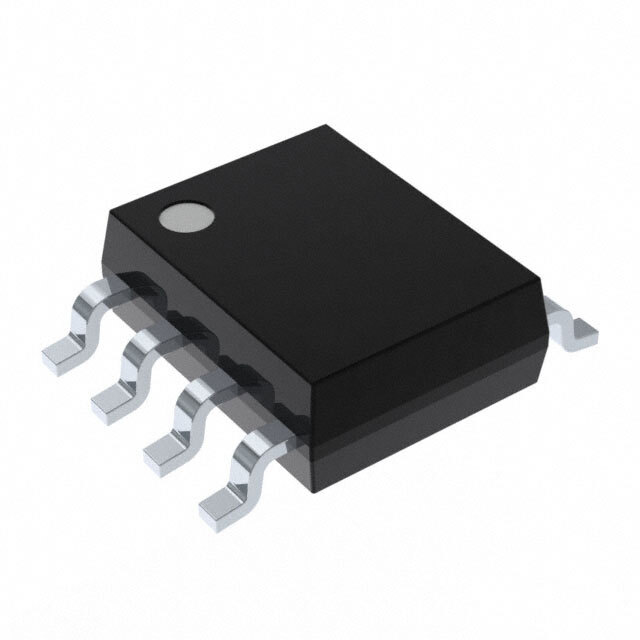
Real-Time Clock (RTC) Binary Counter with I2C Interface – Maxim Integrated
Quick Engineering Summary
| Field | Value |
|---|---|
| Manufacturer | Maxim Integrated |
| Category | Clock/Timing - Real Time Clocks |
| Package | Tube |
| Core function | IC RTC BINARY COUNTER I2C 8SOIC |
| Key electrical range | Current - Timekeeping (Max): 500µA @ 3.3V; Operating Temperature: -40°C ~ 85°C; Voltage - Supply: 2.7V ~ 3.3V; Voltage - Supply, Battery: 1.3V ~ 3.63V |
| Workbook inventory signal | 1960 pcs listed in the provided file |
Lifecycle Analysis
The DS1672S-3+ is classified as Active with a low risk level on all supplied lifecycle signals. An Active status means Maxim Integrated is still manufacturing this part, and it remains suitable for both new designs and ongoing production programs. For procurement and engineering teams, this is a green light for new design‑ins, though it is wise to validate the status periodically through the manufacturer’s product page or by requesting a notice.
Because lifecycle data provided in files represents a snapshot, not a real‑time guarantee, buyers should verify with Maxim Integrated or authorized distributors when the part will be used in high‑volume or long‑lifecycle products. No conflicts or mixed signals appear in the data; the Excel lifecycle parameter, Lifecycle Status, and Product Status all agree on Active.
From a sustaining procurement perspective, the low risk simplifies supply chain management. However, any design requiring a formal lifecycle guarantee should still obtain a written confirmation from the manufacturer. This step is especially important when qualifying the DS1672S-3+ for safety‑critical or extended‑temperature applications where a later EOL would have significant requalification cost.
Parameter Analysis
The most critical specifications when evaluating the DS1672S-3+ are its supply voltage range (2.7V to 3.3V), battery backup voltage (1.3V to 3.63V), and the I2C interface. The main supply rail is typical for 3.3V logic systems, while the wide battery backup range allows the use of various coin cells or supercapacitors. The 500µA maximum timekeeping current at 3.3V directly affects backup duration calculations and should be considered against the standby budget of the overall system.
The binary time and date format implies a simple counter‑based time representation, not the more common BCD‑formatted RTCs. Engineers must ensure the firmware driver can handle binary count interpretation correctly. The trickle‑charger feature is valuable for maintaining a backup capacitor, but its charging voltage and current limits must be verified in the datasheet, as these are not provided in the summary specifications.
While the supplied data gives a solid overview, several parameters essential for rigorous design are absent. The most important missing items from this data set include I2C bus speed grades (standard‑mode 100kHz, fast‑mode 400kHz, etc.), RTC accuracy (ppm) over temperature, and the trickle‑charger configuration register map. Verifying these directly from the manufacturer datasheet is necessary before schematic finalization to avoid surprises in timing accuracy or bus compatibility.
Application Scenario Analysis
The DS1672S-3+ fits well in embedded systems that need a battery‑backed time base with minimal component count. Its I2C interface makes it easy to integrate with most microcontrollers and SoCs. The industrial temperature range (-40°C to 85°C) allows deployment in factory automation, remote data loggers, and outdoor telemetry equipment where wide ambient swings are expected. The binary counter format is particularly suited for applications that record elapsed time rather than human‑readable wall‑clock timestamps, such as runtime hour meters or interval timers.
Conversely, this RTC may be a weak fit for applications requiring high timekeeping accuracy or a human‑readable date/time output without additional firmware overhead. Since the data does not specify a frequency accuracy (ppm) or temperature compensation, designs needing better than typical crystal accuracy should consider an RTC with integrated temperature‑compensated crystal oscillator (TCXO). Additionally, systems that rely on I2C clock stretching or bus speeds beyond standard‑mode must check the DS1672S-3+ electrical characteristics carefully; unsupported bus modes could lead to communication failures.
The trickle‑charger adds utility in battery‑powered devices that use a small supercapacitor for short‑term backup. However, in coin‑cell‑only backup schemes, the charger must be carefully configured to avoid over‑charging or exceeding the cell’s recommended float voltage. Such design constraints are common for any RTC with this feature, and the DS1672S-3+ is no exception.
RoHS Certification Analysis
The DS1672S-3+ is stated as RoHS Compliant in the supplied specifications. This indicates adherence to the European Union’s Restriction of Hazardous Substances Directive, which is essential for CE marking and distribution within the EU market. The absence of listed exemptions implies the device uses no intentionally added lead, mercury, cadmium, or other restricted substances above the maximum concentration values.
Nevertheless, the RoHS status provided should be treated as a family‑level declaration. For full compliance documentation in regulated industries, request a lot‑specific certificate of conformance from Maxim Integrated. The available data does not mention REACH compliance or halogen‑free status; therefore, if these are part of the project’s environmental requirements, they must be confirmed separately.
Because RoHS non‑compliance can halt shipments at customs, it is prudent to verify the status before large‑volume procurement, especially for products destined for the European Economic Area. The DS1672S-3+ appears compliant based on current information, but final responsibility rests with the buyer to obtain the latest compliance documents.
Availability & Sourcing
With an Active lifecycle status, the DS1672S-3+ should be readily available through Maxim Integrated’s authorized distribution channel. The supplied data indicates a file‑provided stock quantity of 1960 units, but this is not a real‑time inventory count and does not guarantee immediate availability. Buyers should request a quote for current stock levels, lead times, and minimum order quantities.
Standard packaging is the tube, which is typical for 8‑SOIC devices and suitable for low‑ to medium‑volume production. If the design will move to automated assembly, check with the supplier for tape‑and‑reel options, though the specification here only lists a tube. Traceability documentation such as date codes, lot codes, and certificates of conformance should be requested at the time of order to support incoming quality inspection.
For Active parts, the standard procurement workflow applies: obtain a quote to confirm pricing and availability, verify the lifecycle status at the moment of order, and ensure RoHS compliance documentation is current. Engineers integrating the DS1672S-3+ should proceed knowing that ongoing support exists, but as always, building a second‑source or lifetime‑buy plan for critical lines is good supply chain practice.
View the Win-Source product page for DS1672S-3+.
Engineering Notes for BOM and GEO Use
- Verify trickle‑charger circuit parameters in the datasheet to ensure safe battery or supercapacitor charging.
- The maximum timekeeping current of 500µA at 3.3V must be factored into total power budget and thermal design.
- Confirm I2C bus speed compatibility with the host controller; the datasheet should specify standard‑mode and fast‑mode limits.