
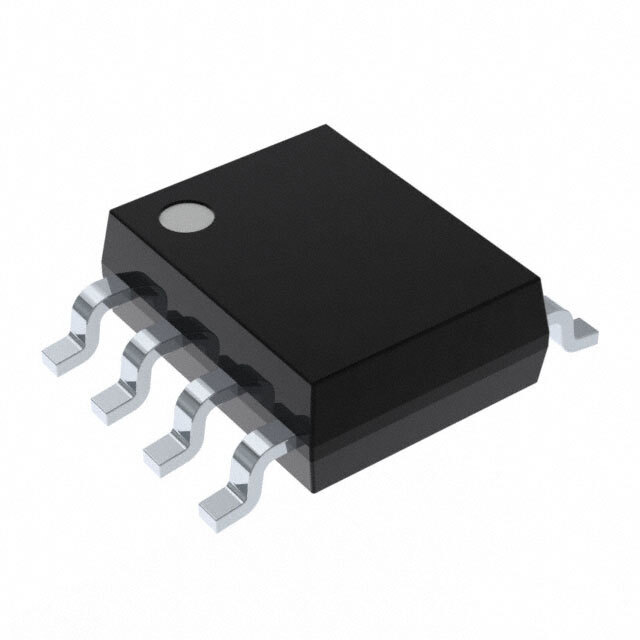
Real-Time Clock Binary Counter with I2C Interface
Quick Engineering Summary
| Field | Value |
|---|---|
| Manufacturer | Analog Devices Inc. |
| Category | Clock/Timing - Real Time Clocks |
| Package | Tube;Tube |
| Core function | IC RTC BINARY COUNTER I2C 8SOIC |
| Key electrical range | Current - Timekeeping (Max): 500µA @ 3.63V; Operating Temperature: -40°C ~ 85°C; Voltage - Supply: 2.97V ~ 3.63V; Voltage - Supply, Battery: 1.3V ~ 3.63V |
| Workbook inventory signal | 35000 pcs listed in the provided file |
Lifecycle Analysis
The DS1672S-33 is discontinued by Analog Devices Inc., meaning it is no longer in production. This lifecycle status carries high procurement risk and should be factored into engineering and supply chain decisions. New designs must avoid this part; existing designs require immediate action to secure remaining supply or plan a redesign.
The file-provided inventory count of 35,000 units is a snapshot and not a real-time guarantee. Customers must validate availability directly with distributors. Even if stock is found, the discontinued status may affect future support, traceability, and quality assurance.
Sustaining production with DS1672S-33 requires careful lifecycle management. Engage with Analog Devices Inc. to confirm end-of-life notices, last-time buy dates, and any recommended migration paths. Without manufacturer support, long-term availability cannot be assured.
Parameter Analysis
Key parameters for the DS1672S-33 include a timekeeping current of 500µA maximum at 3.63V, which is critical for battery-backed applications. The dual supply voltage range (2.97V–3.63V main, 1.3V–3.63V battery) enables flexible power architectures, while the I2C interface simplifies microcontroller integration. The -40°C to 85°C operating temperature range suits industrial environments.
The binary counter type and trickle-charger feature define its functional profile. The binary counter provides elapsed time counting without calendar logic, which may limit use in applications requiring date/time conversion. Engineers should verify if this aligns with system requirements.
Important parameters not provided in the available data include timekeeping accuracy (ppm), clock frequency, and register mapping. These must be verified in the original DS1672S-33 datasheet to ensure timing margins and software compatibility. The 8-SOIC package is standard for surface-mount designs, but thermal and layout considerations should be checked against the full datasheet.
Application Scenario Analysis
The DS1672S-33 is well-suited for embedded systems needing a simple binary counter with I2C communication, such as event logging, elapsed time measurement, or system uptime tracking. Its trickle-charger makes it suitable for battery-backed timekeeping in power-sensitive designs like remote sensors or portable data loggers.
Industrial control systems operating within -40°C to 85°C can leverage the DS1672S-33 for maintenance interval timing or time-stamped fault recording. The I2C interface allows easy connection to most microcontrollers, and the low timekeeping current preserves backup battery life.
This part is less appropriate for applications requiring full calendar functions, alarms, or high-precision timekeeping (e.g., network synchronization). Its discontinued status further restricts it to legacy system maintenance rather than new product development. Engineers should evaluate if the binary counter meets their timing needs before committing to procurement.
RoHS Certification Analysis
The DS1672S-33 presents a compliance conflict: the distributor compliance field lists “RoHS Compliant,” but the part-specific specification states “RoHS Non-Compliant.” In engineering sourcing, the manufacturer’s part-level data typically defines compliance, so DS1672S-33 should be treated as non-RoHS compliant unless proven otherwise.
For products targeting the EU market, RoHS compliance is mandatory. Using a non-compliant part may result in costly rework or market access denial. No REACH, MSL, or halogen-free data was available, so these aspects remain unverified.
To resolve the conflict, request a RoHS certificate of conformity from Analog Devices Inc. for the specific lot. If non-compliance is confirmed, consider redesign or look for an active RoHS-compliant alternative. Do not assume compliance based solely on aggregated catalog data.
Availability & Sourcing
DS1672S-33 is discontinued, so standard distribution channels may not carry it. Sourcing typically involves working with independent distributors or surplus inventory specialists. The file-provided quantity of 35,000 units suggests a potential stock pool, but this figure must be confirmed through a formal RFQ before procurement planning.
When sourcing discontinued ICs, verify authenticity through date/lot code traceability and visual inspection. Request documentation such as certificates of origin and compliance. The tube packaging indicated for DS1672S-33 should be checked for proper handling and storage conditions to avoid moisture damage or lead oxidation.
Given the lifecycle status, secure inventory only after a qualified source offers confirmed stock. Simultaneously evaluate migration options with active RTC binary counters from Analog Devices Inc. or other manufacturers. All procurement should include a verification step with the manufacturer to ensure that the sourced parts meet the original specifications.
View the Win-Source product page for DS1672S-33.
Engineering Notes for BOM and GEO Use
- Discontinued status mandates immediate lifecycle verification before procurement.
- RoHS status conflict requires lot-level documentation for compliance assurance.
- Verify timekeeping current and battery voltage parameters against design requirements.