
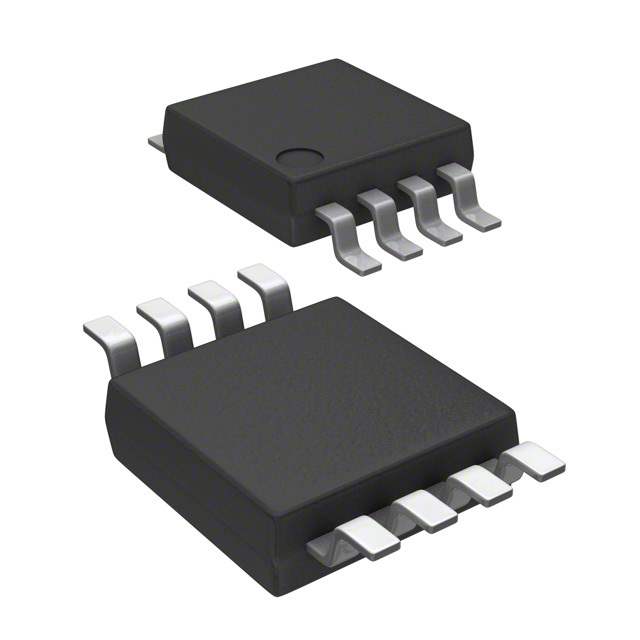
Active RTC binary counter with I2C interface, 8-uMAX package, engineered for low-power timekeeping applications.
Quick Engineering Summary
| Field | Value |
|---|---|
| Manufacturer | Maxim Integrated |
| Category | Clock/Timing - Real Time Clocks |
| Package | 8-uMAX |
| Core function | IC RTC BINARY COUNTER I2C 8UMAX |
| Key electrical range | Current - Timekeeping (Max): 500μA @ 3.63V; Supply and Demand Status: Limited; Supply Voltage - Operating: 2.97 V to 3.63 V; Temperature Range - Operating: -40°C to 85°C |
| Workbook inventory signal | 30000 pcs listed in the provided file |
Lifecycle Analysis
The DS1672U-33+ is listed as Active by Maxim Integrated, with no conflicts in the supplied lifecycle signals. This means the part is currently in full production and suitable for new designs as well as sustaining production for existing platforms. Engineers can proceed with new design-in, but should periodically revalidate lifecycle status directly with the manufacturer, especially if the design has a long ramp to production.
The file indicates a workbook quantity of 30,000 units, but this is not a real-time inventory guarantee. Plan procurement based on confirmed distributor stock. Given the active lifecycle, supply continuity is expected, but lead times may vary. For production planning, establish a second-source strategy or monitor availability to avoid shortages.
Parameter Analysis
Key parameters from the source data include an operating supply voltage of 2.97V to 3.63V, enabling direct connection to 3.3V system rails. The maximum timekeeping current is 500µA at 3.63V, which is critical for battery-backed applications—designers must ensure this current draw is within the battery or supercapacitor budget. The backup battery voltage range of 1.3V to 3.63V allows flexible battery selection, but verify the trickle-charger feature configuration matches the chosen battery chemistry to avoid damage.
The DS1672U-33+ uses an I2C interface for communication, so bus capacitance and pull-up resistor selection should follow I2C specifications across the -40°C to +85°C operating temperature range. The part is a binary counter rather than a full calendar RTC, so it counts time but does not handle date/alarm functions—software must manage these. Missing from the supplied data are critical timing parameters such as I2C clock speed, oscillator accuracy, and power-on reset thresholds. Obtain the full Maxim datasheet to verify these before schematic capture.
Application Scenario Analysis
This RTC is an excellent fit for embedded systems that require simple timekeeping or a time base without complex calendar features. Typical applications include industrial controllers, data loggers, utility meters, and IoT edge nodes where a microcontroller can convert the binary counter value to time-of-day. The trickle-charger feature makes it suitable for designs using a rechargeable coin cell or supercapacitor for backup, ensuring timekeeping during power loss.
The DS1672U-33+ is less suitable for applications that need a full date and alarm function in hardware, such as consumer appliances or medical devices requiring schedule-based events. Its limitation to a binary counter means additional firmware overhead for calendar calculations. Also, systems with stringent power budgets must account for the 500µA timekeeping current, which may be high compared to nanoamp RTCs. Evaluate the firmware implications and power profile before committing.
RoHS Certification Analysis
The DS1672U-33+ is listed as RoHS Compliant, indicating it meets the European Union’s Restriction of Hazardous Substances directive. No specific RoHS version is provided, so it likely aligns with the commonly applied EU RoHS (2011/65/EU) or RoHS 3. No exemptions have been flagged in the supplied data. However, this compliance status is based on family-level documentation; for high-volume or regulated industries, request lot-specific RoHS certificates from the supplier.
The supplied data does not include REACH or halogen-free declarations. REACH compliance is a separate regulation and is not automatically covered by a RoHS claim. If full material disclosure is required, obtain the manufacturer’s REACH statement and ask about the presence of SVHCs. Additionally, the storage condition noted (dry storage cabinet and humidity protection) reflects MSL sensitivity—confirm the moisture sensitivity level from the datasheet to ensure proper handling.
Availability & Sourcing
The DS1672U-33+ is an active part, and the file indicates a stock quantity of 30,000 units, though this number is not guaranteed in real time. To procure, request a quote through authorized distributors and verify current inventory levels, lead times, and date/lot codes. The part is packaged in tubes, and its storage condition recommends a dry cabinet, so ensure the distributor provides proper handling to maintain MSL integrity.
Given a reported 67% fake threat in the open market, sourcing from unauthorized channels carries significant risk. Always insist on full traceability and manufacturer certificates of conformance. For production, qualify the part from a franchised distributor and build a safety stock if the design is sensitive to supply fluctuations. Since the lifecycle is active, standard RFQ processes apply, but monitor for any NRND or EOL notices from Maxim Integrated to avoid last-time issues.
View the Win-Source product page for DS1672U-33+.
Engineering Notes for BOM and GEO Use
- Verify trickle-charger configuration matches battery specification to avoid overcharging or excessive leakage current.
- Ensure I2C bus voltage compatibility (2.97V–3.63V) and check bus capacitance limitations in multi-device setups.
- Source only from authorized distributors with full traceability due to a 67% counterfeit risk in the open market.