
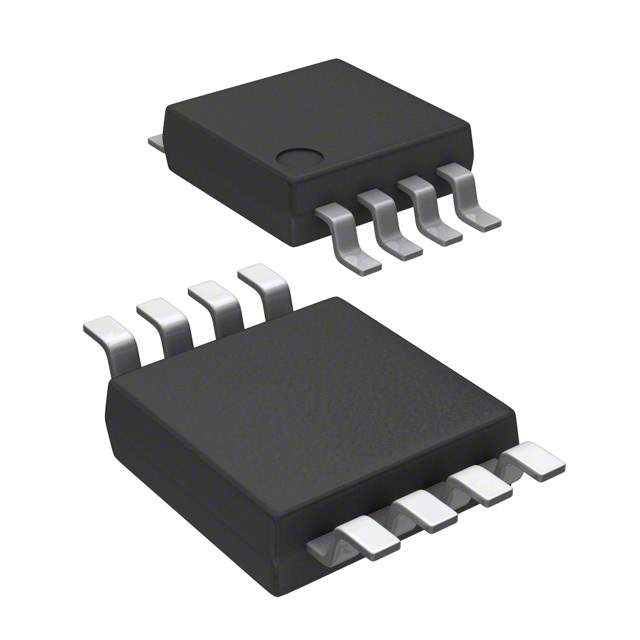
Obsolete part with conflicting RoHS data - secure remaining stock or migrate
Quick Engineering Summary
| Field | Value |
|---|---|
| Manufacturer | Maxim Integrated |
| Category | Clock/Timing - Real Time Clocks |
| Package | 8-TSSOP, 8-MSOP |
| Core function | IC RTC BINARY COUNTER I2C 8UMAX |
| Key electrical range | Current - Timekeeping (Maximum): 500μA at 3.63V; Supply and Demand Status: Balance; Supply Voltage (V): 2.97V ~ 3.63V; Temperature Range - Operating: -40°C ~ 85°C |
| Workbook inventory signal | 30000 pcs listed in the provided file |
Lifecycle Analysis
The DS1672U-33 is listed as Obsolete (End Of Life) according to the part status provided in the specifications. No active lifecycle signals from the manufacturer are present in the available data, which creates uncertainty. In practice, this means the part should not be used in new designs, and buyers must treat it as discontinued for procurement planning. Any file-provided inventory quantity, such as the 30,000 units noted here, is not a real-time guarantee and must be requoted.
For sustaining existing production, engineers should immediately secure any available stock and begin evaluating migration paths to active alternatives. Direct verification with Maxim Integrated (now Analog Devices) is essential to confirm the official lifecycle status, possible last-time-buy dates, and any remaining authorized distribution channels. Without manufacturer revalidation, assuming availability is risky.
Parameter Analysis
The DS1672U-33 is an I2C binary counter RTC operating from a 2.97V to 3.63V supply, with a timekeeping current of up to 500µA at maximum voltage. It features a trickle charger for external backup, and supports battery voltage from 1.3V to 3.63V. The industrial temperature range of -40°C to 85°C makes it suitable for harsh environments. The device is packaged in an 8-uMax/TSSOP SMD footprint.
Key missing specifications that engineers should verify from the original datasheet include clock accuracy (ppm drift over temperature), backup current consumption, I2C bus speed compatibility (standard or fast mode), and power-on reset behavior. The timekeeping current of 500µA is relatively high by modern standards, which may affect battery life in low-power applications. For new designs, these parameters are critical for design margin analysis and should be confirmed before any alternate selection.
Application Scenario Analysis
This part fits legacy systems that require a simple binary counter with I2C interface and industrial temperature tolerance. Typical applications include embedded data loggers, utility meters, and older industrial controllers that need time-stamping without complex calendar functions. The trickle charger feature is beneficial for designs using a discrete backup capacitor or battery.
It is less suited for new designs demanding low power consumption, high clock accuracy, or extended battery operation. The relatively high timekeeping current and missing precision specifications limit its use in battery-powered wearables or IoT edge nodes. For any new application, alternatives with lower current draw and precise ppm ratings should be evaluated. The available inventory might service repair and maintenance of existing equipment, but not volume production.
RoHS Certification Analysis
There is conflicting information regarding RoHS compliance. A top-level compliance field indicates 'RoHS Compliant', while a detailed specification entry explicitly states 'RoHS Non-Compliant'. This discrepancy may stem from legacy data versus current status or from different sources. Buyers cannot rely on either claim without lot-level documentation.
The MSL level is rated 1 (Unlimited), which indicates no moisture sensitivity concerns for assembly, but this does not substitute for RoHS certification. To ensure compliance with EU RoHS directives, request a full compliance certificate or test report for the specific date/lot code before purchase. If RoHS compliance is mandatory for your market, consider selecting a confirmed compliant alternative, as using a potentially non-compliant part carries regulatory risk.
Availability & Sourcing
As an obsolete part, sourcing the DS1672U-33 requires extra diligence. The file-provided inventory quantity of 30,000 units suggests that some stock may still exist in the open market, but this is not a real-time guarantee. Use RFQ workflows to confirm current availability, pricing, and date codes. Request traceability documentation to mitigate the risk of counterfeit components, especially given a reported 32% fake threat rate in the open market.
Given the EOL status, secure inventory promptly if this part is critical for sustaining production. Verify manufacturer lifecycle notices and any authorized distributor stock. For new designs, strongly consider migrating to active alternatives. When purchasing, request a Certificate of Conformance and RoHS compliance for the exact lot, as the compliance status is ambiguous. Always require a valid date code and full manufacturer warranty to protect against degraded or reclaimed parts.
View the Win-Source product page for DS1672U-33.
Engineering Notes for BOM and GEO Use
- Verify lifecycle status with Maxim Integrated/ADI, as the part is listed Obsolete despite no formal signal.
- Resolve RoHS compliance conflict between 'Compliant' and 'Non-Compliant' markings before procurement.
- For new designs, consider active alternatives; for legacy, validate inventory authenticity due to 32% fake threat.