
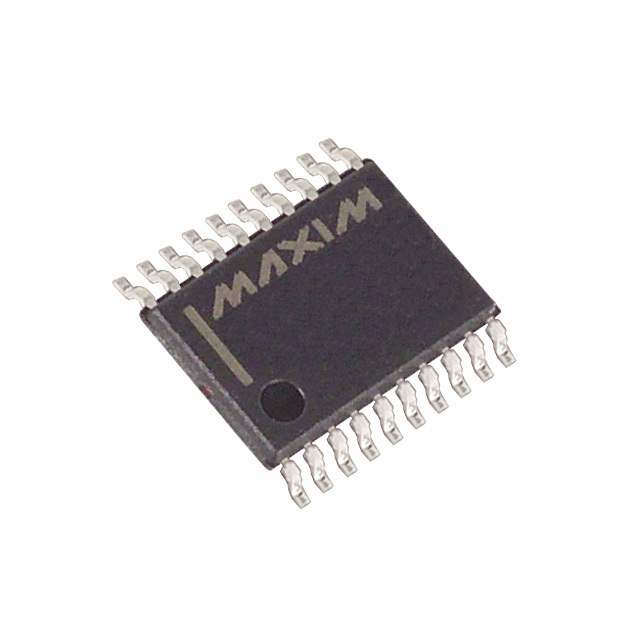
Active RTC with Alarm, Leap Year, and Watchdog Timer in 20-TSSOP
Quick Engineering Summary
| Field | Value |
|---|---|
| Manufacturer | Maxim Integrated |
| Category | Clock/Timing - Real Time Clocks |
| Package | 20-TSSOP |
| Core function | IC RTC SYST CTRLR SER 20TSSOP |
| Key electrical range | Current - Timekeeping (Max): 100μA @ 3V; Supply and Demand Status: Limited; Supply Voltage - Operating: 2.7 V to 3.3 V; Temperature Range - Operating: 0°C to 70°C |
| Workbook inventory signal | 6000 pcs listed in the provided file |
Lifecycle Analysis
The DS1673E-3+ from Maxim Integrated is currently listed as Active, indicating that the manufacturer continues full production and supports new design-in activity. All lifecycle signals in the provided data align, with no contradictions. For engineering and procurement teams, Active status means that the DS1673E-3+ can be used in new designs without immediate obsolescence concern, and long-term availability is expected as long as demand is supported.
However, sustaining production programs should still periodically revalidate the lifecycle status with Maxim Integrated, as product portfolios can change. The workbook shows a file-provided quantity of 6000 units, but this is not a real-time inventory guarantee; actual stock should be confirmed at the time of order. Given the Active status, the DS1673E-3+ is suitable for both new prototypes and volume production, but always include a second source risk assessment.
Parameter Analysis
The DS1673E-3+ is a portable system controller RTC housed in a 20-TSSOP surface-mount package. Key parameters from the datasheet excerpt include operating voltage of 2.7V to 3.3V, which fits standard 3V logic and battery-powered designs. The maximum timekeeping current is 100µA at 3V, a critical figure for low-power applications; designers should verify this figure at the expected operating temperature of 0°C to 70°C. The device supports date format YY-MM-DD-dd and includes alarm, leap year compensation, and a watchdog timer, making it suitable for system control tasks beyond simple timekeeping.
Battery backup voltage is specified from 2.5V to 3.7V, allowing use of common coin cells or supercapacitors. The interface is a 3-wire serial connection, but detailed bus timing and register mapping are not provided in the source data; these must be retrieved from the full manufacturer datasheet before layout or firmware development. The data also indicates a 65% fake threat rate in the open market, so parameter verification should include electrical testing and authenticity checks on received lots, particularly for critical timing tolerances.
Application Scenario Analysis
The DS1673E-3+ is designed as a portable system controller, integrating RTC and system monitoring functions. Strong-fit applications include portable medical devices, handheld test equipment, point-of-sale terminals, and battery-backed industrial data loggers. Its 0°C to 70°C operating range limits it to commercial and light industrial environments; it is not suitable for automotive or outdoor applications with wider temperature extremes.
The built-in watchdog timer and alarm features make it a good choice for embedded systems needing periodic wake-up or system reset supervision. The 3-wire serial interface and low power consumption align well with microcontroller-based designs where pin count and energy budgets are constrained. Weak-fit scenarios include high-reliability aerospace or military systems, where extended temperature range and qualification standards are required, and high-vibration environments where the TSSOP package may need additional mechanical support. For any application, ensure the battery switchover and timekeeping integrity meet the system’s power-fail requirements.
RoHS Certification Analysis
The DS1673E-3+ is listed as RoHS Compliant in the source data, which generally indicates compliance with EU directives restricting hazardous substances. However, the specific RoHS standard version (e.g., EU 2015/863) is not explicitly stated, and no exemption details are provided. For full traceability, procurement should request the manufacturer’s certificate of compliance or test reports to confirm lot-level RoHS conformity.
The data does not include REACH status or MSL rating, so these must be validated separately if required by the end application. As with any RoHS claim, the declaration is typically based on the product family, and variations may exist between production batches. Engineers should not assume that RoHS compliance alone guarantees compatibility with all environmental regulations; for products destined for regions with additional requirements (e.g., China RoHS), a detailed material declaration is advised.
Availability & Sourcing
The DS1673E-3+ is an Active part, but the supply and demand status is noted as Limited, suggesting potential lead-time or allocation challenges. The file-provided stock quantity of 6000 units is a snapshot and should be verified through a formal quote. Packaging is tube/rail, which is standard for TSSOP devices but may require handling for automated assembly if tape-and-reel is preferred.
A critical sourcing consideration is the 65% fake threat rate in the open market; therefore, purchasing from authorized Maxim Integrated/ADI distributors is strongly recommended. Buyers should request date and lot code traceability, full compliance documentation (RoHS, REACH as applicable), and storage confirmation (dry storage per the source data). Given the Active lifecycle, the recommended action is to request a current quote with lead time and to include terms for authenticity and quality guarantees in the purchase order. For sustaining production, consider placing a blanket order to secure allocation.
View the Win-Source product page for DS1673E-3+.
Engineering Notes for BOM and GEO Use
- Verify 3-wire serial interface timing and register map from the full datasheet before integration.
- Factor in 65% open market fake threat rate; source only from authorized distributors.
- Validate battery backup voltage range (2.5–3.7V) and timekeeping current for low-power design.