
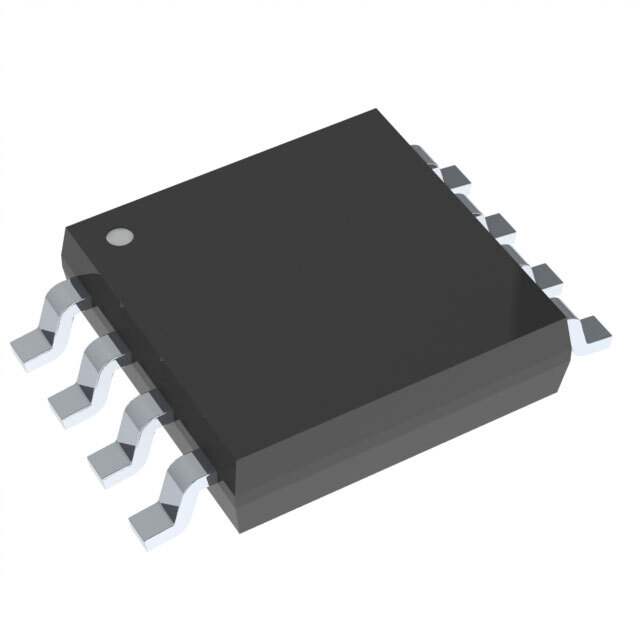
Engineering guide covering lifecycle, key parameters, application fit, RoHS compliance, and procurement insights for the DS1678S+ time event recorder.
Quick Engineering Summary
| Field | Value |
|---|---|
| Manufacturer | Maxim Integrated |
| Category | Clock/Timing - Real Time Clocks |
| Package | 8-SO |
| Core function | IC RTC TIME EVENT REC I2C 8SOIC |
| Key electrical range | Supply and Demand Status: Limited; Supply Voltage - Operating: 4.5 V to 5.5 V; Temperature Range - Operating: -40°C to 85°C; Voltage - Supply, Battery: 2.6 V to 3.5 V |
| Workbook inventory signal | 204 pcs listed in the provided file |
Lifecycle Analysis
The DS1678S+ from Maxim Integrated carries an Active lifecycle status, confirmed by multiple supply chain signals with no conflicts. This classification means the part is in full production and is generally appropriate for new PCB designs and ongoing volume procurement. However, the supply-and-demand status is flagged as Limited, and file-provided inventory shows only 204 units, so teams should not assume unlimited off-the-shelf availability. For new design wins, do a final manufacturer documentation check to confirm that no obsolescence notices have been issued. For sustaining production, secure a second-source plan and validate that the Active status is renewed periodically through official Maxim Integrated or distributor channels.
The limited supply signal may reflect niche demand rather than a pending end-of-life, but it still warrants conservative planning. Ask your distributor to provide a non-cancellable, non-returnable schedule if you need long-term coverage. Because the part’s lifecycle appears stable, the primary risk is short-term stock fluctuation rather than silicon obsolescence. Include the DS1678S+ in your approved vendor list with a review cycle every six months to catch any status changes early.
Parameter Analysis
The DS1678S+ is a time event recorder that integrates I2C interface and battery-backed NVSRAM. The supplied operational voltage range of 4.5 V to 5.5 V makes it a good fit for 5V logic systems, but it is not directly compatible with 3.3V-only microcontrollers without level translation. The battery input accepts 2.6 V to 3.5 V, which allows use of a coin cell or supercapacitor for data retention when main power is lost. The industrial temperature range of -40°C to 85°C supports deployment in harsh environments, and the 32-byte NVSRAM provides space for event logs or configuration data.
Important missing specification items that should be verified from the official datasheet include timekeeping current consumption, I2C bus speed support, clock accuracy (ppm), and any internal timestamp resolution or event trigger latency. Also confirm the I2C slave address options and whether the device supports alarm interrupt polarity configuration. Without these parameters, an accurate power budget and timing analysis cannot be completed. The stated date format (YY-MM-DD-dd) and alarm, leap year, Y2K features suggest a fully integrated RTC, but the datasheet must confirm that the time event recorder captures events with a deterministic timestamp latency acceptable for your application.
Application Scenario Analysis
Strong-fit applications for the DS1678S+ include industrial dataloggers, security access panels, utility metering, and network equipment that must record event timestamps during power cycles. The device’s industrial temperature range and battery-backed NVSRAM enable reliable event logging in outdoor or unconditioned spaces, and the I2C interface simplifies integration with 5V microcontrollers. The alarm and leap-year compensation functions further suit it for scheduled maintenance logging and time-stamped fault recording.
A weak-fit scenario would be portable, battery-operated devices where the 4.5 V–5.5 V supply voltage is impractical without a boost converter. Also, applications that require nanosecond-resolution time stamping or high-speed event capture (e.g., waveform digitizer triggers) may exceed the DS1678S+ capabilities. For 3.3V-only systems, designers should evaluate an external level shifter, which adds BOM cost and PCB area. Verify with the datasheet that the I2C bus capacitance and speed options meet your timing requirements before finalizing the design.
RoHS Certification Analysis
The DS1678S+ is listed as RoHS Compliant, which generally indicates conformity with the EU RoHS 3 directive (2015/863) limiting hazardous substances such as lead, mercury, and cadmium. No specific exemption codes are given in the supplied data, so it must be assumed that the part achieves compliance through material engineering rather than an exemption. REACH information is not provided; if your compliance procedure requires REACH SVHC declarations, request a full-material declaration from the supplier.
Since RoHS compliance can vary by production lot, especially for parts manufactured over long periods, it is prudent to request a current compliance certificate with each shipment. For military or aerospace programs that require lead-based solders, note that this compliant part may not be suitable unless an exemption is granted. Always cross-check the datasheet or packaging label for the official RoHS mark and confirm that the manufacturer’s compliance documentation is not expired before accepting delivery.
Availability & Sourcing
Procurement of the DS1678S+ starts with an RFQ to verify real-time stock and lead time, because the workbook quantity of 204 units is a file snapshot and not a live inventory figure. The part is packaged in tubes for 8-SOIC SMD, so be sure your assembly line can handle tube-fed placement or plan for reeling service. With an Active lifecycle, the standard sourcing workflow includes requesting a full compliance package (RoHS certificate, lot traceability) and evaluating authorized distribution channels versus open market sources.
A notable risk factor is the 28% fake threat rate in the open market for this part category; therefore, insist on lot-code, date-code, and manufacturer provenance records from any non-franchised source. Given the limited supply-demand flag, consider placing a buffer stock order to cover design verification and pilot builds. To get current pricing and availability, request a quote directly from Win Source or your preferred distributor, mentioning the DS1678S+ part number and required quantity. This ensures you receive guidance that matches the present supply situation.
View the Win-Source product page for DS1678S+.
Engineering Notes for BOM and GEO Use
- Verify I2C timing characteristics and timekeeping accuracy from the manufacturer datasheet before design-in.
- Ensure 5V system supply; battery backup must stay within 2.6V–3.5V to retain NVSRAM contents.
- Given 28% open market counterfeit risk, source only through authorized channels and request lot traceability.