
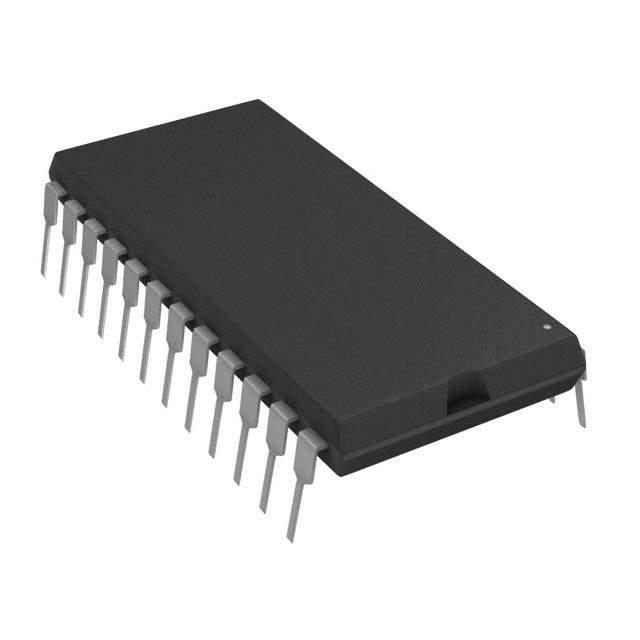
High-risk discontinued part for legacy parallel RTC needs
Quick Engineering Summary
| Field | Value |
|---|---|
| Manufacturer | Maxim Integrated |
| Category | Clock/Timing - Real Time Clocks |
| Package | Tube |
| Core function | IC RTC CLK/CALENDAR PAR 24DIP |
| Key electrical range | Current - Timekeeping (Max): 2mA @ 3V; Temperature Range - Operating: 0°C ~ 70°C; Voltage - Supply: 2.7V ~ 3.7V; Voltage - Supply, Battery: 2.5V ~ 3.7V |
| Workbook inventory signal | 10900 pcs listed in the provided file |
Lifecycle Analysis
The DS1685-3 is officially in a Discontinued lifecycle status, according to both Win Source’s lifecycle records and Maxim Integrated’s product status. This means the part is no longer in active production, and available inventory is limited to residual stock. For engineers and buyers, this represents a high-risk procurement scenario: new designs should not use this component, and sustaining production runs require immediate inventory validation.
Conflicting lifecycle signals appear in internal data—some sources list EOL while others state Discontinued—but the most conservative interpretation applies. The Discontinued designation implies no further manufacturing, making it essential to confirm last-time-buy (LTB) dates and end-of-life notices directly with Analog Devices (which absorbed Maxim). The workbook inventory figure of 10,900 units is file-provided and not a real-time guarantee; actual availability may be lower or subject to vendor allocations.
Any plan to continue using the DS1685-3 must include risk mitigation: secure sufficient stock for project lifetime, implement stringent incoming inspection to screen counterfeits (the open market fake threat is estimated at 37%), and begin evaluating migration paths to active RTC alternatives. Relying on this discontinued part without verified manufacturer documentation exposes designs to supply interruptions and non-conforming components.
Parameter Analysis
Key specifications for the DS1685-3 include its parallel interface, 24-pin DIP through-hole package, and operating voltage range of 2.7V to 3.7V. Timekeeping current is 2mA max at 3V, with a battery backup input that also supports 2.5V to 3.7V, allowing seamless switchover. The device provides 242 bytes of NVSRAM, date format YY-MM-DD-dd, and features like alarm, square wave output, and Y2K compliance. These parameters define its fit in legacy designs where a parallel bus and through-hole mounting are already established.
From an engineering standpoint, the maximum timekeeping current directly affects standby power budgeting; at 2mA, it may be high compared to modern RTCs, necessitating careful thermal and battery life analysis. The specified 0°C to 70°C temperature range limits it to commercial-grade applications, so any industrial or extended-temp requirement would demand verification of derating margins. The DIP-24 package is sizable (15.24mm width), increasing board footprint, but suits prototyping and repair of older equipment.
Missing from the available data are critical timing characteristics: RTC accuracy (ppm deviation over temperature), crystal connection details, timing diagrams for read/write cycles, and power-down mode current. Engineers must retrieve the original Maxim datasheet to confirm these values, as they are essential for qualification and reliable integration. Without them, signal integrity and power-up sequencing cannot be fully assured.
Application Scenario Analysis
The DS1685-3 is a strong fit for legacy embedded systems that already use a parallel real-time clock and require a through-hole DIP package. Applications such as industrial controllers, legacy test equipment, and older data loggers often have board layouts designed for this 24-pin footprint and parallel bus architecture. Its NVSRAM and alarm capabilities also support event logging and time-stamp functions in systems that must retain data during power loss.
In contrast, the part is a weak fit for modern, space-constrained designs where surface-mount packaging and serial interfaces (I²C, SPI) dominate. The relatively high timekeeping current makes it less ideal for battery-operated portable devices, and the 0°C–70°C temperature range excludes extended-temperature or outdoor applications. For new designs, engineers would be better served by active RTCs that offer smaller packages, lower power, and integrated crystal options, thereby improving reliability and simplifying procurement.
When evaluating whether to continue using the DS1685-3, consider that the parallel interface may limit microcontroller selection and consume more GPIOs than serial alternatives. If a redesign is feasible, migration to an active, serial RTC reduces long-term supply risk and aligns with industry trends.
RoHS Certification Analysis
The DS1685-3 is listed as RoHS Compliant, indicating it meets EU Restriction of Hazardous Substances requirements. The specific directive version is not cited in the provided data, so the standard is taken as general EU RoHS. Buyers should request the manufacturer’s Declaration of Conformity (DoC) for the exact lot to confirm compliance with current RoHS exemptions, as component-level declarations may vary with production date.
REACH status is reported as REACH Unaffected, meaning the substance of very high concern (SVHC) threshold is not triggered. However, REACH alone does not equate to RoHS compliance—both regulations have distinct scopes. The MSL (Moisture Sensitivity Level) is 1 (Unlimited), which is typical for through-hole DIP packages and indicates no special handling for moisture during assembly, though this matters less for through-hole processes.
Since the part is discontinued, compliance documentation may be harder to obtain for older stock. It is advisable to perform lot-level verification, especially if sourcing from non-franchised distributors, to avoid inadvertently using non-compliant inventory in products destined for the EU. A dated RoHS certificate from Maxim Integrated (now Analog Devices) should be the benchmark.
Availability & Sourcing
Sourcing the DS1685-3 requires a cautious, verification-heavy approach due to its discontinued status. While the workbook indicates a file-derived quantity of 10,900 units, this is not a live inventory number and cannot be guaranteed. Buyers should immediately request a formal quote from authorized distributors or trusted independent sources to confirm current stock levels, lot codes, and date codes.
For a discontinued part, the standard workflow includes securing sufficient inventory for the remaining production life, validating manufacturer last-time-buy notifications, and implementing incoming inspection protocols to detect counterfeit components. The 37% fake threat in the open market underscores the need for visual inspection, electrical testing, and traceability documentation. Packaging—originally tubes in standard packs of 16—should also be verified to ensure original, unopened manufacturer packaging.
Given the high risk, engineers should simultaneously evaluate migration to an alternative RTC that is in active production, such as a surface-mount, serial-interface device from Analog Devices or other vendors. If the DS1685-3 must be used, all sourcing decisions should be frozen only after lifecycle confirmation from Analog Devices and successful sample qualification. Request a quote now to assess real-time availability and compliance.
View the Win-Source product page for DS1685-3.
Engineering Notes for BOM and GEO Use
- Verify last-time buy notice from Analog Devices/Maxim Integrated before committing to production.
- Parallel interface and DIP package limit new design suitability; consider migration to serial RTCs for modern designs.
- 38% counterfeit threat in open market necessitates rigorous authentication when sourcing.