
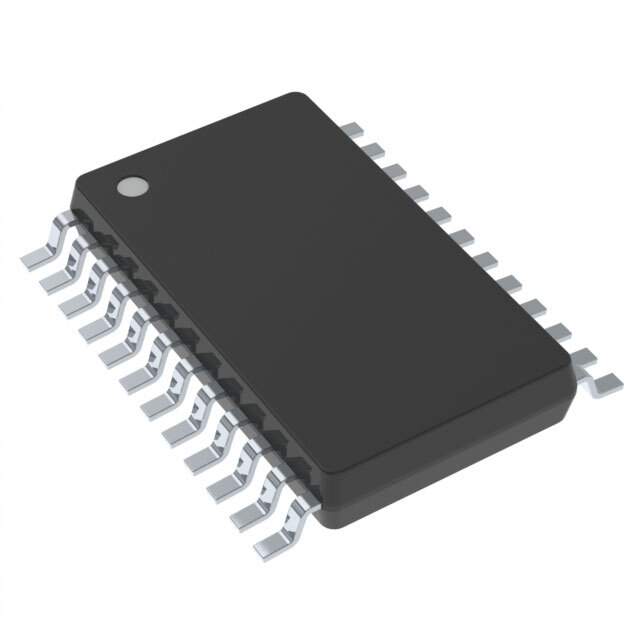
EOL parallel RTC with 242B NVSRAM, alarm, Y2K, 24-TSSOP – sourcing and compliance guide
Quick Engineering Summary
| Field | Value |
|---|---|
| Manufacturer | Maxim Integrated |
| Category | Clock/Timing - Real Time Clocks |
| Package | 24-TSSOP |
| Core function | IC RTC CLK/CALENDAR PAR 24TSSOP |
| Key electrical range | Current - Timekeeping (Maximum): 2mA at 3V; Supply and Demand Status: Balance; Supply Voltage (V): 2.7V ~ 3.7V; Temperature Range - Operating: 0°C ~ 70°C |
| Workbook inventory signal | 4022 pcs listed in the provided file |
Lifecycle Analysis
The DS1685E-3 from Maxim Integrated is classified as End-of-Life (EOL). This lifecycle status indicates that the manufacturer has ceased production and no further factory output is planned. New designs should not incorporate this part, and existing production lines must evaluate last-time buy opportunities and plan for a migration path. EOL parts typically have limited remaining stock held by distributors or aftermarket vendors, and no new wafer starts are expected.
The file-provided inventory quantity of 4022 units should be treated as a non-real-time snapshot and does not guarantee current availability. Procurement teams must confirm live stock levels directly with vendors before placing orders. Additional verification of the EOL notice date from Maxim Integrated is recommended to assess the timeline of availability.
Parameter Analysis
The DS1685E-3 is a parallel-interface real-time clock (RTC) with integrated NVSRAM. Key specifications include a maximum timekeeping current of 2 mA at 3 V, which is a decision-critical parameter for battery-powered designs. The supply voltage range of 2.7 V to 3.7 V and battery backup voltage of 2.5 V to 3.7 V define compatible power architectures. The 242-byte NVSRAM provides nonvolatile storage for time and system data, and the alarm and square wave output features enhance scheduling capabilities.
The 24-TSSOP SMD package with an MSL rating of 1 is suitable for standard surface-mount assembly. However, several parameters essential for design verification are not provided in the available data. The datasheet should be consulted for typical timekeeping current, frequency accuracy, NVSRAM endurance (write cycles), and detailed parallel bus timing constraints. The commercial temperature range of 0°C to 70°C limits usage to controlled environments; designers must ensure thermal margin for any extended-temperature applications.
Application Scenario Analysis
The DS1685E-3 serves well in legacy embedded systems that rely on a parallel bus architecture for processor communication. It is particularly suitable for industrial controllers, medical instruments, and telecommunications equipment originally designed with parallel RTCs. The integrated NVSRAM eliminates the need for external memory, reducing BOM count in space-constrained designs.
Due to its EOL status and the industry trend toward serial interfaces (I2C/SPI), this part is not recommended for new designs. The commercial temperature range and the high counterfeit risk further limit its applicability in safety-critical or harsh-environment applications. Maintenance and repair of existing equipment is the primary viable scenario, provided that genuine stock can be sourced and compliance to original specifications is verified.
RoHS Certification Analysis
There is a conflict between the stated RoHS compliance fields in the available data: one source indicates RoHS Compliant, while another specification lists RoHS Non-Compliant. This discrepancy could stem from differences in RoHS revision applicability or errors in source aggregation. The part is an older design (EOL), and early production lots may not have been compliant to later RoHS directives such as EU 2015/863.
Procurement teams must request the manufacturer’s official Certificate of Compliance or a lab test report for the specific lot to clarify the DS1685E-3’s RoHS status. REACH documentation was not provided and should be separately verified if needed for EU market access. The MSL rating of 1 (unlimited floor life) simplifies handling but does not replace material compliance verification. Treat the RoHS status as uncertain until validated.
Availability & Sourcing
As an EOL component with a reported 64% counterfeit threat in the open market, sourcing the DS1685E-3 requires extreme caution. The file-provided stock quantity of 4022 units is not a real-time inventory guarantee and must be confirmed through an RFQ process. Authorized Maxim Integrated distributors or reputable excess-inventory brokers with rigorous traceability practices are the only recommended channels.
Buyers should request date/lot codes and ensure that packaging remains in original tube format to prevent damage or tampering. Since this part is obsolete, securing inventory for ongoing maintenance needs is urgent, but any purchase should be contingent on compliance verification and functional testing. For new production, migrating to an active, pin-compatible RTC from Maxim Integrated or Analog Devices is strongly advised to avoid supply chain disruptions.
View the Win-Source product page for DS1685E-3.
Engineering Notes for BOM and GEO Use
- EOL status requires immediate inventory assessment and migration planning to avoid production stops.
- Verify RoHS compliance with manufacturer due to conflicting datasheet signals; do not rely on aggregated data alone.
- High counterfeit risk (64%) necessitates traceable sourcing from authorized channels with date/lot code verification.