
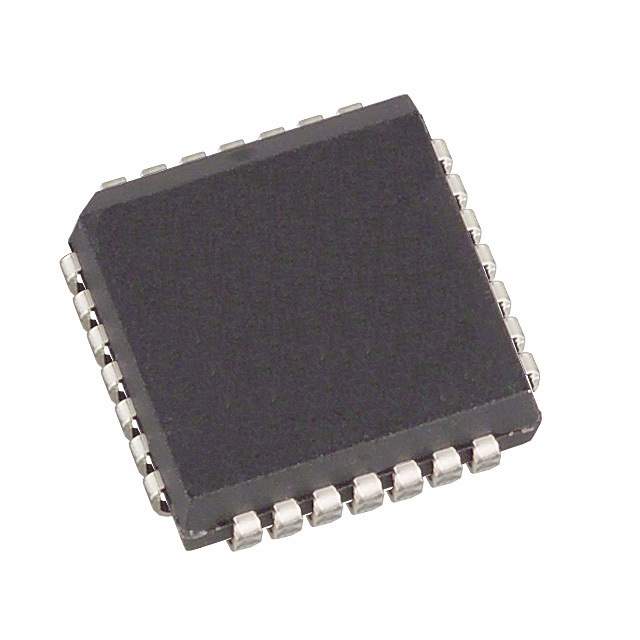
Discontinued Maxim Integrated real-time clock with parallel interface, 242B NVSRAM, and alarm. Check availability and verify lifecycle.
Quick Engineering Summary
| Field | Value |
|---|---|
| Manufacturer | Maxim Integrated |
| Category | Clock/Timing - Real Time Clocks |
| Package | Tube |
| Core function | IC RTC CLK/CALENDAR PAR 28PLCC |
| Key electrical range | Current - Timekeeping (Max): 2mA @ 3V; Temperature Range - Operating: 0°C ~ 70°C; Voltage - Supply: 2.7V ~ 3.7V; Voltage - Supply, Battery: 2.5V ~ 3.7V |
| Workbook inventory signal | 1 pcs listed in the provided file |
Lifecycle Analysis
The DS1685Q-3 is listed as discontinued, indicating it is no longer manufactured. This high-risk lifecycle status demands immediate attention for any design currently using this Maxim Integrated RTC. New designs should not incorporate this part, and existing board spins must plan for a verified substitute.
Conflicting lifecycle signals (EOL and Discontinued) appear in the sourcing data, reinforcing that the part is obsolete. Use a conservative procurement stance: treat all available stock as end-of-life inventory and avoid assuming stable supply. Attempting to qualify this part for new production is not recommended.
Engineers should contact the manufacturer or authorized distributors to confirm the exact discontinuance date, last-time-buy windows, and any suggested replacements. The file-provided quantity of one unit is not a real-time stock guarantee and should be independently verified before purchase.
Parameter Analysis
Key parameters for the DS1685Q-3 include supply voltage (2.7V to 3.7V), battery backup voltage (2.5V to 3.7V), and a maximum timekeeping current of 2mA at 3V. These values define the power budget and dictate battery selection for non-volatile operation. The parallel interface and 242B NVSRAM are essential for compatibility in legacy microcontroller systems that require direct bus access to clock registers and user memory.
Additional features such as alarm, square wave output, and Y2K compliance add functional value. The device is housed in a 28-PLCC surface-mount package with MSL 1, simplifying board assembly by eliminating moisture sensitivity concerns. The operating temperature range of 0°C to 70°C restricts use to commercial environments.
Several parameters are not specified in the available data, including timekeeping accuracy (ppm), oscillator load capacitance requirements, battery switchover threshold, and write-cycle endurance for NVSRAM. Engineers should consult the official Maxim Integrated datasheet to obtain these missing details before committing to a design or replacement evaluation.
Application Scenario Analysis
The DS1685Q-3 fits legacy embedded systems that require a real-time clock with non-volatile storage. Its parallel interface and 242 bytes of NVSRAM make it suitable for data logging, alarm scheduling, and system timestamp applications where the host processor directly accesses time and memory values. The integrated square wave output can serve as a periodic interrupt source.
Weak-fit scenarios include any new design that demands low power, serial interfaces (I²C or SPI), or extended industrial temperature ranges. Modern microcontrollers increasingly favor serial RTCs, and the 0°C to 70°C limit precludes outdoor or rugged use. Additionally, the discontinued status undermines long-term support for any newly developed product.
For sustaining existing equipment, the DS1685Q-3 may still be a viable drop-in replacement, but engineers must weigh the high counterfeit risk and limited availability. Consider parallel RTCs with similar footprints only after thorough validation against the original system firmware and timing requirements.
RoHS Certification Analysis
The DS1685Q-3 is reported as RoHS Compliant, indicating it meets EU hazardous substance restrictions. However, the specific directive version (e.g., RoHS 2 or RoHS 3) is not provided in the sourcing data, so lot-level documentation should be requested to confirm current compliance.
REACH status is listed as REACH Unaffected, meaning no substances of very high concern are present in the device. Additionally, the MSL rating is Level 1 (Unlimited), which eliminates moisture-related bake requirements before reflow soldering, a practical advantage for prototype and small-batch assembly.
Because the part is discontinued, any inventory sourced today may come from older production lots that could have different compliance profiles. Buyers should insist on certificates of conformity and test reports to avoid regulatory issues in end products.
Availability & Sourcing
Sourcing the DS1685Q-3 is challenging due to its discontinued status. The file-provided inventory shows a single piece, but this is not a live stock level and does not guarantee availability. Engineers and buyers must request a quote to obtain current availability and lead time.
The open market carries a 31 percent fake threat rate for this part, making traceability and authenticity verification essential. Insist on date code integrity, original packaging (tube), and authorized distribution documentation. Standard packaging is 37 pieces per tube, which can help assess whether offered quantities align with factory multiples.
For critical legacy systems, explore last-time-buy opportunities or locate approved aftermarket sources that provide compliance certificates (RoHS, REACH, MSL). If no stock can be secured, a pin‑compatible alternative may need evaluation, but none is supplied here; direct manufacturer guidance is recommended.
View the Win-Source product page for DS1685Q-3.
Engineering Notes for BOM and GEO Use
- Verify remaining stock and consider last-time-buy options due to discontinued status.
- Ensure battery voltage compatibility (2.5V–3.7V) for timekeeping retention.
- Watch for counterfeit risk; open market fake threat is 31 percent.