
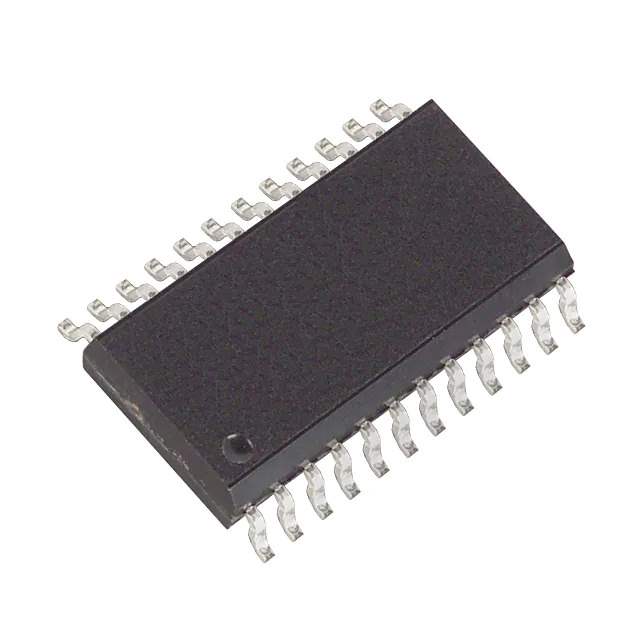
Discontinued Maxim RTC with parallel bus, 242B NVSRAM, alarm, and Y2K in 24-SOIC
Quick Engineering Summary
| Field | Value |
|---|---|
| Manufacturer | Maxim Integrated |
| Category | Clock/Timing - Real Time Clocks |
| Package | Tube |
| Core function | IC RTC CLK/CALENDAR PAR 24SOIC |
| Key electrical range | Current - Timekeeping (Max): 2mA @ 3V; Temperature Range - Operating: 0°C ~ 70°C; Voltage - Supply: 2.7V ~ 3.7V; Voltage - Supply, Battery: 2.5V ~ 3.7V |
| Workbook inventory signal | 2660 pcs listed in the provided file |
Lifecycle Analysis
The DS1685S-3 from Maxim Integrated is officially in a Discontinued lifecycle status, as indicated by multiple sources. Although conflicting signals exist—some data sources list EOL while others specify Discontinued—all point to the same practical outcome: the part is no longer available for new orders from authorized distributors. This carries a high procurement risk, particularly for new designs.
For maintenance of legacy systems, engineers should verify the manufacturer’s last-time-buy (LTB) notice and determine if any end-of-life (EOL) documentation provides a last delivery date. The file-provided inventory quantity of 2660 units offers a snapshot, but it does not guarantee real-time availability.
Given the discontinued status, sourcing this component requires caution; any remaining stock may be from non-authorized channels and could be subject to counterfeiting. The DS1685S-3 should only be procured when absolutely necessary for sustaining existing production, and a migration plan to a current-generation RTC is strongly recommended.
Parameter Analysis
Key parameters for the DS1685S-3 include its parallel interface, 242 bytes of non-volatile SRAM (NVSRAM), and a timekeeping current of 2mA at 3V. The parallel bus interface makes it suitable for legacy microprocessor systems that lack I2C or SPI, but it also means it occupies more GPIO lines and board space.
The NVSRAM can retain critical data during power loss when backed up by a battery within the 2.5V–3.7V range. The operating temperature range of 0°C to 70°C limits the DS1685S-3 to commercial-grade environments; applications requiring industrial or extended temperature ranges will need alternative parts.
Additional features—alarm, square wave output, and Y2K compliance—provide standard RTC capabilities. Important missing datasheet details include timing characteristics such as access time, register map, and crystal oscillator requirements. Engineers evaluating this part should obtain the full Maxim datasheet to verify these parameters, especially the timing compatibility with the host processor and the required external crystal frequency.
Application Scenario Analysis
The DS1685S-3 is best suited for legacy embedded systems where a parallel real-time clock with integrated NVSRAM is already designed in. Typical applications include industrial controllers, point-of-sale terminals, and older telecommunications equipment that require a battery-backed clock and a few hundred bytes of non-volatile storage for configuration or transaction logs.
The parallel interface, while outdated, ensures compatibility with existing microcontroller buses that do not support serial protocols. Conversely, this part is a weak fit for modern designs. New projects should favor I2C or SPI RTCs that offer lower power consumption, smaller packages, and wider temperature ranges.
The device’s 2mA timekeeping current is relatively high for battery-operated portable systems. Additionally, the 0°C–70°C range excludes outdoor or automotive applications. Because the DS1685S-3 is discontinued, even for sustaining engineering, teams should consider a form/fit/function replacement from a current product line to avoid supply chain risks.
RoHS Certification Analysis
The DS1685S-3 carries a RoHS Compliant status according to available data. While the specific directive version is not explicitly stated, the designation typically aligns with EU RoHS (Directive 2011/65/EU or EU 2015/863). The part is also marked as REACH Unaffected, adding to its environmental compliance credentials.
However, compliance is often declared at the family or date-code level, so engineers should request a lot-specific certificate of compliance when purchasing remaining stock. The moisture sensitivity level (MSL) is rated at 1 (Unlimited), indicating no special handling is required for moisture during assembly.
No exemptions are noted, but a full materials declaration from Maxim Integrated would be needed to confirm the absence of any restricted substances. For procurement, insisting on documented RoHS compliance is essential, especially when sourcing from non-authorized channels where traceability may be questionable.
Availability & Sourcing
As a discontinued product, the DS1685S-3 is not available from standard authorized distributors for new orders. The file indicates a stock quantity of 2660 pieces, but this is a static figure that does not reflect current market conditions. Buyers should request a quote to obtain real-time availability and verify the source’s authenticity.
The open market carries a significant counterfeit risk, with a reported 42% fake threat rate for this part. Any procurement must include rigorous incoming inspection, date-code verification, and packaging in original Maxim Integrated tubes. The standard package quantity is 31 units per tube.
To mitigate risk, always request a certificate of conformance and RoHS compliance documentation with each shipment. Due to the Discontinued lifecycle, engineers should consider securing enough inventory to cover the remaining production life of the legacy system and simultaneously evaluate migration to an active RTC with a compatible footprint or functionality. For immediate needs, contact surplus distributors with a formal RFQ, clearly specifying traceability requirements.
View the Win-Source product page for DS1685S-3.
Engineering Notes for BOM and GEO Use
- Verify remaining stock authenticity due to a 42% open-market counterfeit risk.
- The DS1685S-3 is discontinued; secure sufficient inventory for legacy maintenance or begin migration now.
- Request lot-level RoHS and REACH compliance certificates before committing to procurement.