
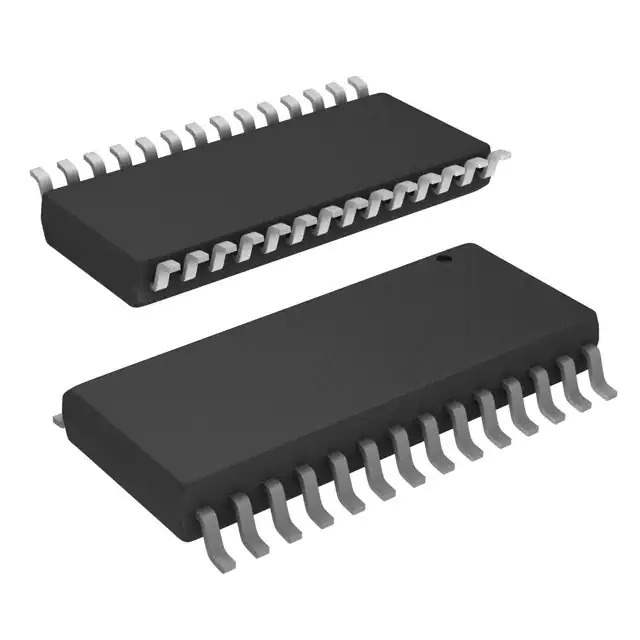
Discontinued Maxim Integrated RTC with parallel interface and NVSRAM. Verify lifecycle before procurement.
Quick Engineering Summary
| Field | Value |
|---|---|
| Manufacturer | Maxim Integrated |
| Category | Clock/Timing - Real Time Clocks |
| Package | Tube |
| Core function | IC RTC CLK/CALENDAR PAR 28SOIC |
| Key electrical range | Current - Timekeeping (Max): 2mA @ 3V, 3mA @ 5V; Temperature Range - Operating: -40°C ~ 85°C; Voltage - Supply: 2.7V ~ 3.3V, 4.5V ~ 5.5V; Voltage - Supply, Battery: 2.5V ~ 3.7V |
| Workbook inventory signal | 9083 pcs listed in the provided file |
Lifecycle Analysis
The DS1689SN from Maxim Integrated is officially designated Discontinued. This status means the manufacturer has ceased all production, and no further fabrication or capacity is planned. For engineers, the immediate implication is a strict prohibition on using this part in new designs. The risk level is high, as any existing inventory is finite and subject to depletion.
The lifecycle data shows conflicting signals—Excel labeling suggests EOL while other fields state Discontinued. Both interpretations converge on an end-of-life condition, and a conservative approach treats the part as unavailable for any forward-looking procurement. Any remaining stock, such as the file-reported 9,083 units, is not guaranteed and must be verified with the distributor. Engineers maintaining legacy systems should secure and authenticate outstanding inventory and begin evaluating alternatives immediately.
Parameter Analysis
Key parameters that drive design-in decisions include the parallel interface, NVSRAM feature, and dual voltage supply ranges. The parallel interface delivers fast access but consumes more I/O lines than serial alternatives, making it suitable for legacy bus architectures. The 114-byte NVSRAM provides non-volatile storage for critical data during power loss, a defining asset for metering and logging applications.
Timekeeping current is specified as 2 mA at 3 V and 3 mA at 5 V, figures that must be budgeted in battery-backed designs. The dual supply range of 2.7–3.3 V and 4.5–5.5 V offers flexibility but requires scrutiny of the datasheet for proper sequencing and decoupling. The device is marked ‘Programmable: Not Verified,’ which may indicate limited on-chip configuration; users should clarify programmability expectations with the original datasheet. Parameters not reported in the source data—clock accuracy, temperature compensation, and ESD rating—must be verified directly from the Maxim Integrated documentation before committing to a design.
Application Scenario Analysis
The DS1689SN fits applications that demand reliable timekeeping with battery-backed SRAM in an established parallel bus environment. Strong-fit scenarios include industrial controllers, PLCs, energy meters, and medical monitors where legacy microcontrollers with external memory or parallel I/O are already in place. The NVSRAM advantage is particularly relevant for power-fail data capture and event logging.
Weak-fit scenarios include modern compact designs that rely on serial interfaces like I²C or SPI. The 28-SOIC package, while robust, may be too large for space-constrained IoT devices that prefer tiny RTC modules with integrated crystals. Additionally, new designs that require guaranteed long-term availability should not consider this part; instead, evaluate active alternatives with similar functionality. If the parallel bus is mandatory, check for pin-compatible or functionally equivalent active RTCs with NVSRAM, but no direct replacement is provided in the source data.
RoHS Certification Analysis
The DS1689SN carries a RoHS Compliant status according to EU directive requirements. Accompanying REACH Unaffected status and MSL Level 1 (unlimited floor life) further support environmental compliance and ease of assembly. These designations apply to the part number as originally manufactured, but for discontinued stock, compliance documentation may correspond to the production batch at the time of fabrication.
Buyers should not assume that all remaining inventory is uniformly compliant. Request lot-specific RoHS certificates to confirm that no restricted substances are present, especially if the stock has been stored for extended periods. The absence of an explicit RoHS version (e.g., RoHS 3) means the declaration should be treated as generic EU RoHS; verify against current exemption lists if your product requires the latest standard.
Availability & Sourcing
As a discontinued part, the DS1689SN is no longer available through standard distribution. The file-provided quantity of 9,083 units reflects a snapshot and is not a live inventory commitment. Buyers should submit a request for quote (RFQ) to validate current availability, date/lot codes, and packaging (tube). Given the high fake threat rate (49 percent) on the open market, traceability documentation is essential.
Acquiring authentic DS1689SN devices requires sourcing from authorized or verified surplus channels with full chain-of-custody records. Ask for manufacturer certificates of conformance, RoHS statements, and photos of the physical marking before purchase. Because this part is discontinued, plan for last-time buys only to cover remaining production. After exhausting inventory, a complete redesign should be expected. Engage with Maxim Integrated or Analog Devices representatives to confirm end-of-life notices and identify any remaining factory stock.
View the Win-Source product page for DS1689SN.
Engineering Notes for BOM and GEO Use
- DS1689SN is discontinued; avoid for new designs and plan migration for existing production.
- Verify remaining stock authenticity; high fake threat (49 pct.) reported in the open market.
- Dual supply voltage (2.7–3.3 V, 4.5–5.5 V) requires careful power sequencing verification in the datasheet.