
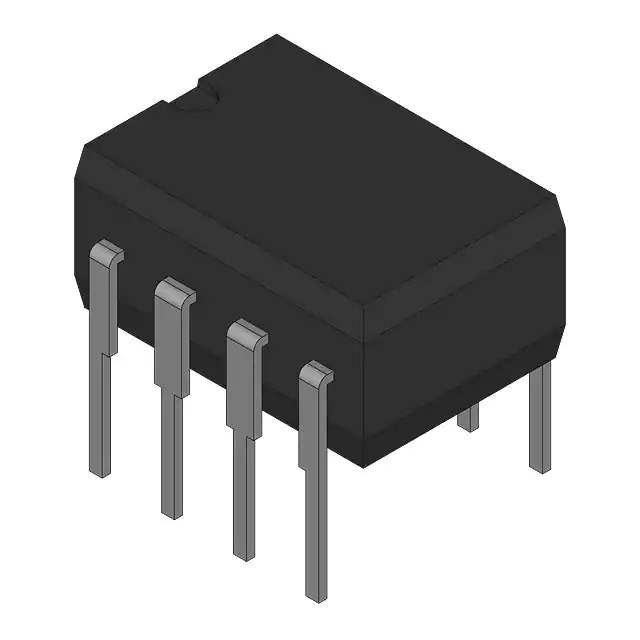
End-of-life half-duplex RS-422/RS-485 transceiver in 8-CDIP – verify lifecycle status and source carefully before use in new production.
Quick Engineering Summary
| Field | Value |
|---|---|
| Manufacturer | National Semiconductor (TI) |
| Category | Interface - Drivers, Receivers, Transceivers |
| Package | Bulk |
| Core function | IC TRANSCEIVER HALF 1/1 8CDIP |
| Key electrical range | Temperature Range - Operating: -55°C ~ 180°C; Voltage - Supply: 4.5V ~ 5.5V |
| Workbook inventory signal | 2300 pcs listed in the provided file |
Lifecycle Analysis
The DS16F95AJA carries a high-risk lifecycle status. Multiple signals in the provided data—the Excel lifecycle parameter and the Lifecycle Status field—explicitly label it as End‑of‑Life (EOL), while one conflicting entry shows Product Status as Active. In procurement practice, such a conflict can often arise from data synchronization delays between manufacturer databases and distributor backends. The safest interpretation is that the part is discontinued by the original manufacturer, National Semiconductor (now Texas Instruments), and should not be considered for new designs.
For existing products that depend on DS16F95AJA, the EOL status means sustaining supply is uncertain. Buyers should immediately verify the current lifecycle state with Texas Instruments’ official product change notifications (PCNs) and, if confirmed EOL, evaluate a last‑time buy or secure remaining channel stock. The file‑provided inventory quantity of 2,300 units is a snapshot and not a guarantee of real‑time availability; actual stock must be verified before order placement. Without a clear active lifecycle, using DS16F95AJA in new production carries substantial supply interruption risk.
Parameter Analysis
Several parameters of the DS16F95AJA directly affect design fit and qualification. It is a half‑duplex transceiver supporting RS‑422 and RS‑485 protocols, with one driver and one receiver. This single‑channel configuration is typical for point‑to‑point or multi‑drop bus nodes where only one transmitter and one receiver are needed per package. The half‑duplex limitation means the bus must be controlled to prevent simultaneous transmission and reception, which influences protocol and termination design.
The supply voltage range of 4.5V to 5.5V indicates a standard 5V logic interface; designers must ensure any connected microcontroller or FPGA I/O is 5V tolerant. Operating temperature from –55°C to +180°C is extremely wide and surpasses most commercial and industrial components, pointing to aerospace or down‑hole applications. Careful thermal derating and PCB design for the through‑hole 8‑CDIP package are required to realize this range. A 50 mV receiver hysteresis provides basic noise rejection, but the missing data rate specification is critical for timing‑sensitive links; it must be obtained from the manufacturer’s original datasheet before finalizing bus topology and cable length.
Application Scenario Analysis
The DS16F95AJA is best suited for ruggedized RS‑485 or RS‑422 networks where extreme temperature tolerance and long‑term reliability are paramount. Its ceramic DIP through‑hole package and –55°C to +180°C rating make it appropriate for defence equipment, avionics, industrial furnace control, or oil‑and‑gas down‑hole instrumentation. The half‑duplex, single‑driver/receiver configuration fits well in simple sensor nodes or remote terminal units on a fieldbus, where board space is not a limiting factor.
Applications that demand high‑speed data rates, full‑duplex simultaneous communication, or compact surface‑mount packaging are not a good match. The lack of a published data rate implies it is not intended for modern high‑speed Profibus or similar fast baud‑rate installations. Also, power‑sensitive battery‑operated designs may find its 5V supply and through‑hole footprint less attractive than newer low‑voltage SMD alternatives. For new designs in harsh environments, engineers should evaluate a direct replacement that matches the wide temperature range and hysteresis, or redesign around a newer TI RS‑485 device with an active lifecycle.
RoHS Certification Analysis
According to the supplied data, the DS16F95AJA is RoHS Compliant. Typically, this implies compliance with the EU directive 2011/65/EU and its later amendments, including RoHS 3 (EU 2015/863) which adds four phthalates to the restricted substance list. However, no specific standard version is stated, so buyers should confirm whether compliance is self‑declared by the manufacturer or supported by third‑party test reports for the exact lot being purchased.
The part is also flagged as REACH Affected. This means it contains a Substance of Very High Concern (SVHC) above the 0.1% weight threshold. While not a RoHS violation, REACH Affected status may impose communication and reporting obligations for downstream users in the European Union. An MSL rating of 1 and the Unlimited classification indicate no moisture sensitivity, which is favorable for high‑temperature through‑hole assembly processes. Even so, a full compliance certificate (FMD, RoHS statement, REACH declaration) covering the intended date and lot code should be requested from the distributor to avoid surprises at incoming inspection.
Availability & Sourcing
As an EOL part, DS16F95AJA availability is inherently constrained. The file‑provided quantity of 2,300 units is a historical snapshot and does not represent live stock; actual on‑hand inventory can change rapidly as remaining channel supplies are consumed. Engineers and buyers should request a quote to obtain current availability, expected lead times, and lot date codes before making procurement decisions.
Given the 30% counterfeit threat level noted in the open market, sourcing from unauthorized or unfamiliar brokers is extremely risky. Obtain full traceability documentation, including manufacturer certificate of conformance and photographs of the physical units, to verify authenticity. Because the part is supplied in bulk packaging with a standard package quantity of 1 piece, each unit should be inspected for batch uniformity. For designs that cannot be redesigned immediately, consider a last‑time buy while stock persists and engage Texas Instruments for a formal EOL notice and any alternate part recommendations. Direct any binding ordering commitments to a verified franchised distributor to minimize quality and continuity risks.
View the Win-Source product page for DS16F95AJA.
Engineering Notes for BOM and GEO Use
- Confirm EOL status directly with Texas Instruments before committing to any production runs; conflicting Active/Discontinued signals require manufacturer revalidation.
- The 30% open‑market counterfeit threat level makes full chain‑of‑custody documentation and authorized distribution sourcing mandatory.
- When migrating from DS16F95AJA, ensure the replacement meets the same -55°C to 180°C operational range and 50 mV hysteresis, especially for legacy industrial or military installations.