
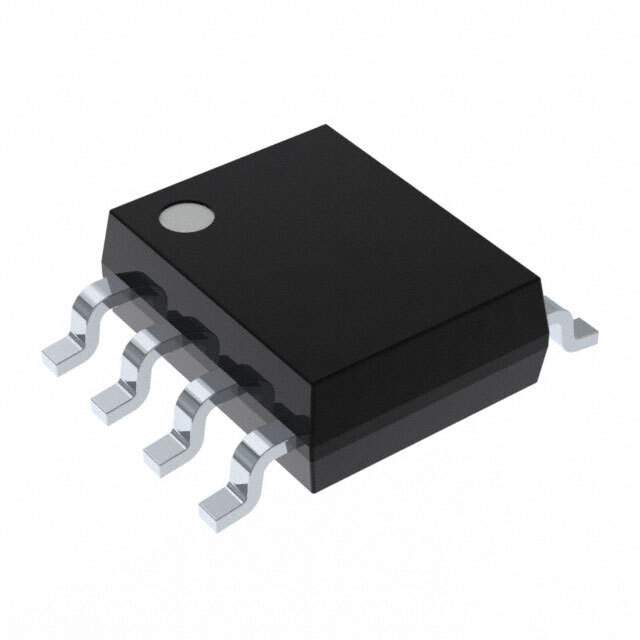
End-of-life single-channel supervisor IC by Maxim Integrated; verify availability, RoHS, and lifecycle before procurement.
Quick Engineering Summary
| Field | Value |
|---|---|
| Manufacturer | Maxim Integrated |
| Category | PMIC - Supervisors |
| Package | 8-SOIC |
| Core function | IC SUPERVISOR 1 CHANNEL 8SOIC |
| Key electrical range | Number of Voltages Monitored: 1; Output: Push-Pull, Totem Pole; Supply and Demand Status: Limited; Temperature Range - Operating: -40°C ~ 85°C |
| Workbook inventory signal | 8100 pcs listed in the provided file |
Lifecycle Analysis
The Maxim Integrated DS1706RESA is categorized as EOL (End-of-Life) per manufacturer status and supplied signals. All available sources confirm this lifecycle stage, with no conflicts among the data points. This means the device is no longer recommended for new designs, and replenishment inventory may not be available from the original manufacturer.
For sustaining production, engineers should immediately evaluate last-time buy (LTB) options and secure required quantities. The file-provided quantity of 8100 units from a distributor database is a snapshot and does not guarantee real-time availability. Any commitment to this part must be accompanied by formal purchase orders and supplier confirmation.
The high-risk lifecycle demands careful component management. Validate the official end-of-life notice, last-time buy date, and any alternative part numbers directly with Maxim Integrated (now Analog Devices). Without such verification, prolonged availability is uncertain.
Parameter Analysis
Key parameters from the supplied data include a threshold voltage of 2.63 V, a single monitored rail, and a simple reset/power-on reset function. The reset output is active low and push-pull, with a minimum reset timeout of 130 ms. The device is packaged in an 8‑SOIC, SMD package, and specified for an operating temperature range of ‑40°C to +85°C.
These parameters define a basic POR supervisor suitable for ensuring microcontroller or processor reset during power-up and brown‑out conditions. However, the dataset omits critical design parameters: supply current, threshold accuracy (hysteresis), reset pulse width variation over temperature, maximum operating voltage, and the presence of a manual reset or watchdog input. Engineers must consult the official Maxim/ADI DS1706 datasheet to obtain these values before integration.
Additionally, the output type (push‑pull/totem‑pole) implies that a pull‑up resistor is not required externally, simplifying layout. The 2.63 V threshold is commonly used in 3.3 V systems; verify compatibility with the target supply rail tolerance and reset timing requirements of the connected digital circuits.
Application Scenario Analysis
The DS1706RESA is best suited for simple power‑on reset and voltage monitoring in legacy designs. A typical strong‑fit scenario is a single‑rail 3.3 V microcontroller or FPGA system where the supervisor asserts a reset for at least 130 ms after the supply rail crosses the 2.63 V threshold. The SOIC‑8 packaging and SMD mounting make it appropriate for space‑constrained PCBs.
Weak‑fit or unsuitable scenarios include new designs due to EOL status, and systems requiring multi‑rail monitoring, adjustable thresholds, watchdog timers, or power‑sequencing. The lack of data on supply current and accuracy means the part may not be suitable for low‑power or precision applications without further datasheet review.
Because the device is a simple reset IC, it does not provide the advanced monitoring features found in modern PMIC supervisors. Sustaining production of existing equipment remains the only reasonable application; all new development should pursue an active, recommended alternative from the manufacturer or a cross‑compatible device.
RoHS Certification Analysis
The RoHS status of the DS1706RESA is contradictory within the supplied data. One catalog field indicates RoHS Compliant, while a product‑specific specification entry states RoHS Non‑Compliant. Lacking clarification from the manufacturer, the conservative engineering assumption is that the part is non‑compliant with EU RoHS directives.
RoHS compliance can be lot‑ or date‑code‑dependent, especially for older end‑of‑life devices. Buyers must request a valid Certificate of Compliance (CoC) or test report from the supplier for the specific batch before procuring. The data does not include REACH or halogen‑free declarations, and the MSL rating is Level 1 (Unlimited), which indicates no special moisture sensitivity handling requirements.
To avoid non‑compliance risk in markets requiring RoHS (EU, China RoHS, etc.), verify the exact manufacturing date and lot code against the manufacturer’s official environmental documentation. If compliance cannot be confirmed, consider sourcing a RoHS‑certified alternative or implementing an exemption process with proper documentation.
Availability & Sourcing
The DS1706RESA is end‑of‑life, and availability is limited by remaining distribution stock. A file‑provided quantity of 8100 units exists in the database, but this is not a live inventory promise. Engineers and buyers should request a quote through an RFQ process to confirm on‑hand stock, lead time, and minimum order quantities.
Given the 49% fake‑threat rating in the open market, authenticity is a serious concern. Insist on traceability to Maxim Integrated/ADI, including date/lot codes and proof of purchase from franchise sources. The standard packaging is tube, and manufacturer pack quantity is 1, so individual units may be sourced. Verify life‑cycle status and RoHS compliance with the seller before finalizing any purchase.
For sustaining production, act quickly to secure inventory and consider a last‑time buy with a franchise distributor if available. For new designs, migrate to a recommended replacement part from the manufacturer. Always obtain a compliance package (RoHS, REACH, MSL) and perform incoming inspection to screen for counterfeits.
View the Win-Source product page for DS1706RESA.
Engineering Notes for BOM and GEO Use
- Verify RoHS compliance at lot level due to conflicting data; request certification from supplier.
- Part is EOL; secure inventory now if needed for sustaining production and plan migration to an active part.
- High counterfeit risk (49% fake threat); validate authenticity through traceability and testing.