
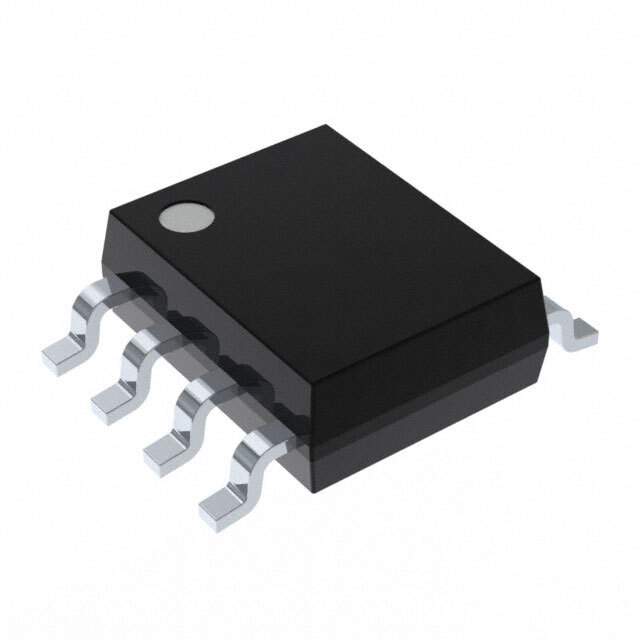
EOL Single-Channel Supervisor with 2.93V Threshold in 8-SOIC – Verify Availability and Compliance
Quick Engineering Summary
| Field | Value |
|---|---|
| Manufacturer | Maxim Integrated |
| Category | PMIC - Supervisors |
| Package | 8-SOIC |
| Core function | IC SUPERVISOR 1 CHANNEL 8SOIC |
| Key electrical range | Operating Temperature Range: -40°C ~ 85°C (TA); Supply and Demand Status: Limited |
| Workbook inventory signal | 1947 pcs listed in the provided file |
Lifecycle Analysis
The DS1706SESA from Maxim Integrated is classified as End-of-Life (EOL) with all supplied lifecycle signals—including an EOL parameter and an Obsolete part status—aligning on this designation. For new designs, EOL means the part is not recommended; engineers should immediately evaluate alternative supervisors or plan a migration. For sustaining production, procurement teams must secure existing inventory while investigating a last-time buy or alternate source.
The file-provided workbook shows a quantity of 1947 units, but this figure is not guaranteed real-time availability. Manufacturers typically issue product change notifications (PCNs) or discontinuation notices for EOL parts; verifying these documents directly with Maxim Integrated is essential before committing. Without a formal end-of-life notice, there may be gray-area stock or unsupported lots, which increases risk.
Because the DS1706SESA is already obsolete, any reliance on this part requires careful lifecycle verification per shipment to avoid counterfeit or non-conforming inventory. Sustaining systems that cannot be redesigned immediately should consider procurement from authorized distributors with traceability back to Maxim Integrated.
Parameter Analysis
Key decision-driving parameters for the DS1706SESA include its single-channel architecture, 2.93 V threshold voltage, push-pull/totem pole output, and a minimum reset timeout of 130 ms. The 2.93 V threshold defines the monitored rail voltage at which the supervisor asserts a reset, making it critical for 3.3 V or 5 V systems where tolerance bands must be matched to the microcontroller’s operating range. The push-pull output ensures a solid logic-high or logic-low level without an external pull-up, simplifying interfacing to reset inputs.
The reset timeout of at least 130 ms guarantees the processor has sufficient time to stabilize before coming out of reset; however, the maximum timeout is not provided in the supplied data and must be confirmed from the manufacturer’s datasheet to avoid timing conflicts. Additional missing but design-relevant parameters include threshold accuracy (percent tolerance), supply current consumption, and reset active level details—though the data suggests active-low reset. The 8‑SOIC package and -40 °C to +85 °C temperature range suit standard surface-mount assembly and industrial temperature environments, but designers should still verify qualification data if used in extended-term or high-reliability applications.
Finally, an MSL rating of Level 1 (Unlimited) indicates no special moisture-handling requirements, which simplifies inventory management. However, for EOL procurement, validating that each lot meets original moisture-sensitivity specifications remains a best practice.
Application Scenario Analysis
The DS1706SESA is primarily designed for microprocessor and digital system supervisory functions. It excels in applications requiring a single, fixed voltage threshold of 2.93 V with a push-pull reset output, such as basic power-on-reset generation in 3.3 V MCU-based IoT gateways, industrial controllers, and consumer electronics. Its 8‑SOIC footprint and industrial temperature range make it a drop-in choice for legacy designs that already have board layouts optimized for this part.
Conversely, the DS1706SESA is a weak fit for applications that demand monitoring of multiple voltage rails, ultra-low quiescent current for battery-saving, or tight tolerances (<1%) over temperature. There is no watchdog timer, manual reset input, or power-fail comparator indicated in the provided data, limiting its use in more complex system health monitoring. Automotive or safety-critical systems requiring AEC-Q100 qualification should not consider this part, as no such certifications are listed.
Given its EOL status, any new application should avoid the DS1706SESA. For sustaining legacy systems, its use may be justified only if no redesign is possible and inventory can be secured with full traceability.
RoHS Certification Analysis
The DS1706SESA carries a RoHS Compliant designation, indicating conformance to EU hazardous substance restrictions such as lead-free soldering requirements. The REACH Unaffected classification further suggests no current SVHC concerns under that regulation. However, because the part is EOL, compliance status may need revalidation on a lot-by-lot basis; older stock might have been manufactured under earlier standards, or compliance documentation may have expired.
No specific RoHS exemptions are mentioned in the supplied data, but a typical supervisor IC of this type would not normally require exemptions. An MSL Level 1 (Unlimited) rating also supports that the packaging is compatible with standard lead-free reflow profiles, but the interaction of moisture sensitivity and RoHS process transitions should be checked if stock dates back several years.
Buyers should request full compliance certificates—including Pb-free and halogen-free declarations—from the supplier for each shipment of DS1706SESA. For systems that mandate a formal EU RoHS 2015/863 compliance file, it is prudent to have the compliance evidence validated by an independent third party, especially when acquiring EOL inventory from non-authorized distributors.
Availability & Sourcing
Procurement of the EOL DS1706SESA should begin with an immediate RFQ to authorized distributors to confirm whether any factory stock remains or if a last-time buy window is still open. The file-provided workbook indicates a quantity of 1947 units, but this is not a real-time guarantee; actual stock may deplete quickly or be concentrated at specific packaging configurations. A supply-and-demand rating of Limited reinforces that inventory is constrained.
Counterfeit risk is a significant concern: the open-market fake threat for this part is rated at 45%, meaning nearly half of non-authorized sources could be illegitimate. Therefore, insist on date/lot code verification, manufacturer’s certificate of conformance, and in-house visual or X-ray inspection. Full traceability documentation is essential to mitigate quality and reliability risks.
To secure the DS1706SESA, request a quotation that includes packaging details (Tube), RoHS certificates, and confirmation of test results per original specifications. Because the part is EOL, no new production orders can be placed; instead, evaluate whether a form-fit-function replacement is available or plan a board respin that accommodates a newer active supervisor IC from Maxim Integrated or a second source.
View the Win-Source product page for DS1706SESA.
Engineering Notes for BOM and GEO Use
- Confirm EOL and last-time buy status directly with Maxim Integrated before sourcing DS1706SESA; file-reported inventory may not be current.
- Validate the 2.93 V threshold tolerance and reset timeout accuracy from the official DS1706 datasheet to ensure system reliability.
- With a 45% counterfeit risk, mandate full traceability, date-code verification, and authenticity testing for all acquired DS1706SESA units.