
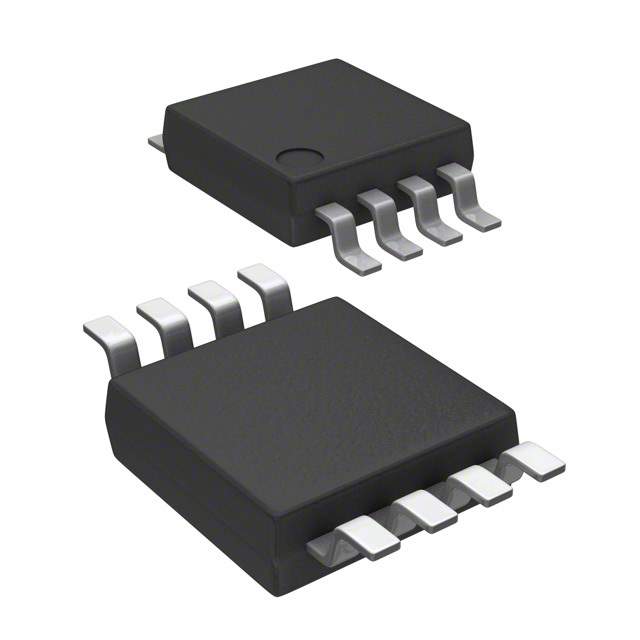
1-Channel Supervisor with 2.93V Threshold, Discontinued Status - Use with Caution in 3.3V Systems
Quick Engineering Summary
| Field | Value |
|---|---|
| Manufacturer | Maxim Integrated |
| Category | PMIC - Supervisors |
| Package | Tube |
| Core function | IC SUPERVISOR 1 CHANNEL 8UMAX |
| Key electrical range | Number of Voltages Monitored: 1; Output: Push-Pull, Push-Pull; Temperature Range - Operating: -40°C ~ 85°C (TA); Voltage - Threshold: 2.93V |
| Workbook inventory signal | 1 pcs listed in the provided file |
Lifecycle Analysis
The DS1708SEUA is officially marked as Discontinued by Maxim Integrated, with inventory signals indicating extremely limited remaining stock. This means the part should not be considered for new designs and is only suitable for maintaining legacy systems where a form-fit-function replacement has not yet been qualified. The provided data shows conflicting lifecycle indicators: the Excel lifecycle parameter states EOL, while both Lifecycle Status and Product Status list Discontinued. A conservative engineering stance treats the device as Discontinued, implying no further factory production and dwindling distributor stock.
Engineers supporting existing products must immediately assess on-hand inventory and begin qualification of alternate supervisors. The file reports only 1 unit in stock, which may be a snapshot and not real-time availability. For any remaining needs, direct communication with Maxim Integrated or authorized distributors is essential to confirm whether any last-time-buy opportunities exist. Given the high risk level, delaying migration could result in supply disruptions.
Parameter Analysis
Key parameters for the DS1708SEUA include a fixed voltage threshold of 2.93V, a minimum reset timeout of 130ms, push-pull output with active high and active low reset capability, and operation over -40°C to 85°C in an 8-uMAX/uSOP surface-mount package. The 2.93V threshold is ideally suited for monitoring 3.3V power rails, providing a typical margin that accounts for supply tolerance. The push-pull output eliminates the need for external pull-up resistors, simplifying board design.
Several important parameters are absent from the provided data: exact threshold accuracy, supply voltage range, supply current, and any additional features such as watchdog timer or manual reset input. Designers should retrieve the full Maxim Integrated datasheet to verify these values, especially tolerance over temperature, to ensure stable reset assertion under worst-case conditions. The thermal performance and PCB land pattern should also be cross-checked with the 8-TSSOP/MSOP footprint before layout.
Application Scenario Analysis
The DS1708SEUA excels in systems requiring a simple power-on reset for a single 3.3V rail. Typical strong-fit applications include 3.3V microcontrollers, FPGAs, and industrial control modules where a reliable reset during power-up and brown-out is critical. The industrial temperature range and small MSOP footprint make it suitable for space-constrained commercial and light industrial equipment.
Weak-fit scenarios include 5V systems where the fixed 2.93V threshold does not correspond to a standard supply margin, battery-operated designs that must tolerate deep discharge below 2.93V, and automotive applications that demand AEC-Q100 qualification or extended temperature ranges beyond 85°C. The active high and active low reset outputs offer flexibility, but designers must confirm logic compatibility with the target processor to prevent inadvertent resets or floating states.
RoHS Certification Analysis
A critical discrepancy exists in the RoHS data for the DS1708SEUA. The primary compliance attribute reports “RoHS Compliant,” yet a specification row within the same source lists “RoHS Non-Compliant.” This contradiction means the part’s actual RoHS status cannot be confirmed without additional documentation. REACH status is recorded as Unaffected, and the moisture sensitivity level is 1, but these do not substitute for RoHS certification.
For EU market deployment, compliance with RoHS 3 (2015/863) is mandatory. Given the conflicting signals, procurement teams must request the full material declaration and any RoHS exemption certificates from the seller before shipment. If the part indeed is non-compliant, it may be limited to repair and maintenance operations under exceptions. Treat any unverified claim with caution and consider alternatives with clearly documented compliance.
Availability & Sourcing
The DS1708SEUA is discontinued, with the provided file indicating only 1 unit on hand. This scarcity, combined with a 52% fake threat rating in the open market, makes sourcing extremely risky. Engineers should avoid purchasing from unauthorized or gray-market channels unless full traceability—including date/lot codes, photos, and distributor certifications—can be provided. Even then, counterfeit detection testing is strongly advised.
For prototype or small-quantity repair needs, verify inventory through a direct RFQ to authorized Maxim Integrated distributors. Expect that stock may no longer be available. For production, the only sustainable path is migration to an active-sourced supervisor with equivalent parameters (threshold, reset behavior, package). Request a quote from the sourcing platform for the displayed 1-unit listing, but plan on immediate redesign to avoid long-term supply gaps.
View the Win-Source product page for DS1708SEUA.
Engineering Notes for BOM and GEO Use
- Verify the RoHS compliance status before finalizing BOM; the part may be non-compliant under current standards.
- With 52% counterfeit threat, insist on full traceability and test a sample before committing to any purchase.
- For new designs, switch to an active, widely sourced supervisor with similar threshold (e.g., 2.93V) and package; consider DS1708 family alternatives or newer Maxim/Microchip parts.