
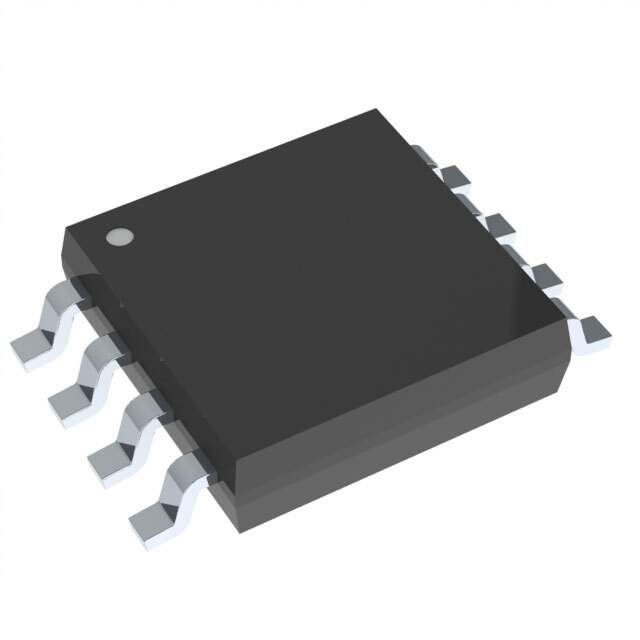
Maxim Integrated - Active lifecycle (not for new designs) – Specs & Sourcing
Quick Engineering Summary
| Field | Value |
|---|---|
| Manufacturer | Maxim Integrated |
| Category | Temperature Sensors - Analog and Digital Output |
| Package | 8-SO |
| Core function | SENSOR DIGITAL -55C-125C 8SO |
| Key electrical range | Output Type: 3-Wire (CLK, DQ, RST); Sensing Temperature - Local: -55°C to 125°C; Supply and Demand Status: Limited; Supply Voltage - Operating: 2.7 V to 5.5 V |
| Workbook inventory signal | 5600 pcs listed in the provided file |
Lifecycle Analysis
The DS1720S+ is listed as Active by Maxim Integrated, but a conflicting signal from Excel data marks it as ‘not suitable for new design’. This discrepancy indicates that while the part remains in production for existing applications, the manufacturer does not recommend adopting it for new projects. The risk level is medium; engineers should not base new designs on this part without confirming the manufacturer’s roadmap. For sustaining production, the part is still procurable, but teams should plan for potential NRND or EOL announcements.
The file-provided inventory shows 5600 units, which suggests current availability for maintenance, repair, and small production runs. However, this is not a real-time stock level and must be verified through a quote. Revalidation with Maxim’s official PCN system is advised to avoid future discontinuation surprises.
Parameter Analysis
Key parameters of the DS1720S+ include a local temperature sensing range of -55°C to 125°C, an accuracy of ±2.5°C, and an 8-bit resolution. The 3-wire serial interface (CLK, DQ, RST) and supply voltage range of 2.7 V to 5.5 V make it compatible with many microcontrollers without extra level shifting. The one-shot, output switch, and standby mode features are critical for power-constrained designs.
Missing from the provided data are details such as maximum conversion time, supply current, and the full timing diagram for the 3-wire protocol. Engineers should consult the official datasheet to verify these parameters and to correctly implement the communication layer. The ±2.5°C accuracy is sufficient for general thermal monitoring but may not meet tight industrial or medical requirements without calibration.
Application Scenario Analysis
The DS1720S+ is well-suited for applications needing a simple digital temperature readout over a wide range, such as environmental monitoring, HVAC systems, industrial controllers, and battery-powered devices using its standby mode. Its one-shot capability allows low-duty-cycle temperature sampling, conserving energy in IoT endpoints.
Weak-fit scenarios include high-precision medical instruments or laboratory calibration, where the ±2.5°C error band might be unacceptable. Also, the 3-wire interface, while straightforward, can be less robust in noisy industrial environments compared to differential or I2C topologies, necessitating careful PCB layout and shielding.
RoHS Certification Analysis
The DS1720S+ is declared RoHS Compliant, meeting EU hazardous substance restrictions. No additional compliance data such as REACH or halogen-free status is provided in the source material. An MSDS is available upon request, which may contain further substance details.
Engineers should note that RoHS certification is often granted at the product family level; for production qualification it is prudent to obtain a lot-specific certificate of compliance, especially for high-reliability sectors. The absence of an explicit RoHS exemption suggests the part is compliant under standard 2015/863 criteria, but this should be confirmed with Maxim’s documentation.
Availability & Sourcing
Supply and demand status for the DS1720S+ is listed as Limited, with a file-provided quantity of 5600 units. This part ships in tube/rail packaging and requires dry storage with humidity protection. The open market carries a 62% fake threat rate, making authorized distribution channels essential.
Buyers should request a quote for real-time availability and insist on date/lot code traceability, along with lifecycle verification. Because of its ‘not for new design’ flag, secure inventory now for critical sustaining needs and evaluate migration paths for any new projects. For Active lifecycle parts used in existing equipment, standard RFQ procedures apply, but always verify compliance documentation before purchase.
View the Win-Source product page for DS1720S+.
Engineering Notes for BOM and GEO Use
- Verify the exact lifecycle status with Maxim before committing to new production designs, as conflicting signals exist.
- The sensor's 3-wire interface requires careful timing and pull‑up resistor design; consult the datasheet for detailed implementation.
- Given the 62% fake threat in the open market, insist on traceable date/lot codes and authorized distribution when sourcing.