
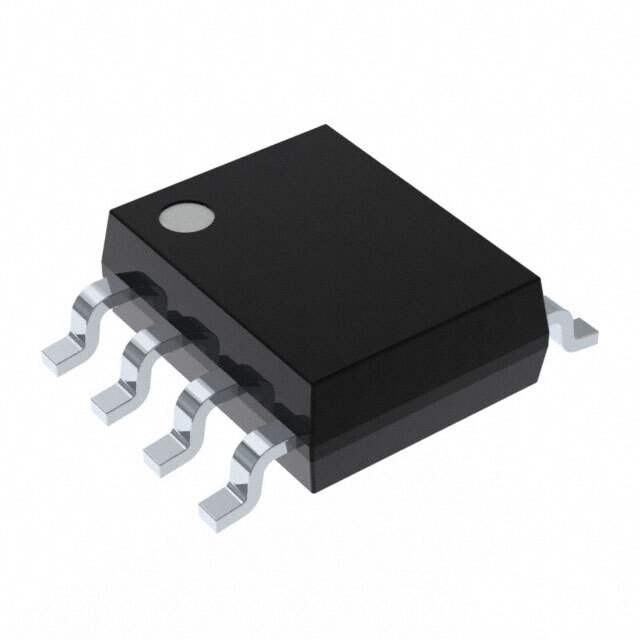
Maxim Integrated Digital I2C Temperature Sensor in 8‑SOIC
Quick Engineering Summary
| Field | Value |
|---|---|
| Manufacturer | Maxim Integrated |
| Category | Temperature Sensors - Analog and Digital Output |
| Package | 8-SOIC |
| Core function | SENSOR DIGITAL -55C-125C 8SOIC |
| Key electrical range | Output Type: I2C; Sensing Temperature - Local: -55°C to 125°C; Supply and Demand Status: Balance; Supply Voltage - Operating: 2.7 V to 5.5 V |
| Workbook inventory signal | 30000 pcs listed in the provided file |
Lifecycle Analysis
The Maxim Integrated DS1721S+ is listed as Active with a low risk level. Active status signals full production support and no near‑term end‑of‑life plans, allowing engineers to confidently use it in new designs and ongoing production. File‑provided inventory shows 30,000 units, but this is not a live stock check; actual availability must be confirmed via quote. Buyers should note that even Active parts can face temporary shortages, so buffer stock and alternate source planning are prudent.
Parameter Analysis
Key specifications for the DS1721S+ include local temperature sensing from -55°C to 125°C with ±1°C accuracy (±2°C maximum) and 11‑bit digital resolution. The I2C output simplifies integration with microcontrollers, while the 2.7 V to 5.5 V supply range accommodates both 3.3 V and 5 V system rails. The 8‑SOIC package suits standard SMD assembly.
Important features like one‑shot conversion, programmable temperature limits, and standby mode enable low‑power operation and alert functionality. However, parameters such as supply current, conversion time, and I2C address options are not provided here; consult Maxim’s official datasheet to confirm these critical values before PCB layout and firmware development.
Application Scenario Analysis
The DS1721S+ is a strong fit for embedded systems requiring digital temperature monitoring over a wide range, such as industrial controllers, HVAC equipment, power supplies, and environmental loggers. Its I2C interface, small 8‑SOIC footprint, and programmable thresholds make it ideal for space‑constrained designs with alert capabilities.
It is a weaker fit for applications demanding sub‑degree precision, ultra‑fast sampling rates, or remote diode sensing. For battery‑powered IoT nodes, the standby and one‑shot modes can effectively reduce average current, but verify conversion time meets your duty‑cycle requirements.
RoHS Certification Analysis
The DS1721S+ is documented as RoHS Compliant. This classification likely aligns with RoHS 3 (EU 2015/863), which restricts hazardous substances in electronic equipment. No exemption details are provided; if the design must meet specific exemption criteria, request a certificate of compliance from the supplier.
RoHS status is generally a family‑level declaration, but for mission‑critical or regulated products, lot‑level verification is advisable. REACH compliance is not stated in the source data and should be separately checked if EU chemical regulations apply to the end product.
Availability & Sourcing
The DS1721S+ is an Active Maxim Integrated part, typically supplied on tape and reel. A file‑provided quantity of 30,000 units exists, but this is not real‑time inventory; request a quote for current pricing and lead times. The source data indicates a 50% fake threat rate in the open market, so procurement should be routed through Maxim authorized distributors or trusted partners.
For production buys, request date/lot codes, RoHS certificates, and dry‑pack handling documentation, as the device requires humidity‑controlled storage. With Active lifecycle status, standard RFQ and compliance verification workflows apply.
View the Win-Source product page for DS1721S+.
Engineering Notes for BOM and GEO Use
- Verify I2C address configuration and supply current in the official datasheet before integrating the DS1721S+.
- Account for the 50% fake threat rate by sourcing DS1721S+ only from authorized distributors.
- The DS1721S+’s one‑shot and standby features make it suitable for power‑sensitive designs; evaluate conversion timing for your application.