
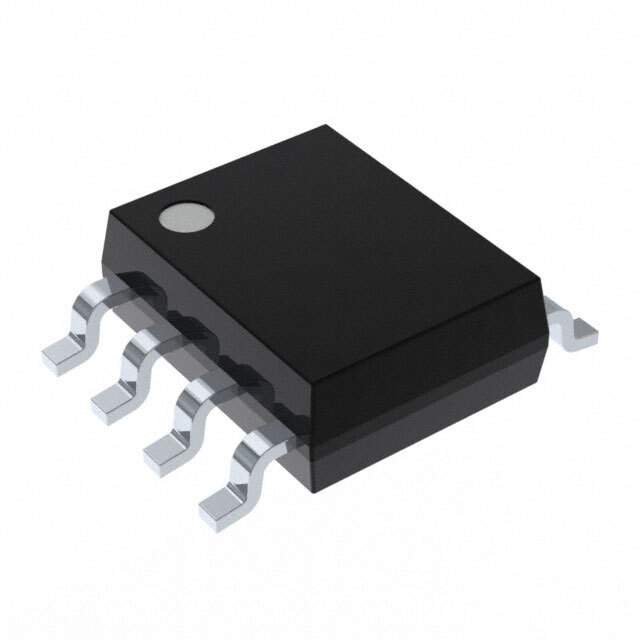
Discontinued digital temperature sensor with SPI output in 8-SOIC. Verify lifecycle and RoHS compliance before sourcing.
Quick Engineering Summary
| Field | Value |
|---|---|
| Manufacturer | Maxim Integrated |
| Category | Temperature Sensors - Analog and Digital Output |
| Package | Tube |
| Core function | SENSOR DIGITAL -55C-120C 8SOIC |
| Key electrical range | Output Type: SPI; Sensing Temperature - Local: -55°C ~ 120°C; Temperature Range - Operating: -55°C ~ 125°C; Voltage - Supply: 1.8V ~ 5.5V, 2.65V ~ 5.5V |
| Workbook inventory signal | 2480 pcs listed in the provided file |
Lifecycle Analysis
The Maxim Integrated DS1722S is officially discontinued, as indicated by multiple conflicting lifecycle signals—Excel lifecycle param EOL, Lifecycle Status Discontinued, and Product Status Discontinued. For new designs, this part carries high risk and should not be adopted. For sustaining production, the remaining inventory must be validated for authenticity and date codes. Maxim Integrated is now part of Analog Devices; the official manufacturer may have issued a product discontinuance notice (PDN) with last-time buy and ship dates. Engineers should obtain that documentation before committing to any DS1722S purchase.
The file-provided stock quantity of 2,480 units is a point-in-time snapshot and does not guarantee real-time availability. As a discontinued component, second-sourcing through unauthorized channels increases counterfeit risk, with an open-market fake threat rate of 32 percent. We recommend direct verification of lifecycle and inventory through Analog Devices or authorized distributors before procurement.
Parameter Analysis
The DS1722S is a digital local temperature sensor with SPI output, offering 11-bit resolution and an accuracy of ±2°C (±3°C) over the test range of -40°C to 85°C (extended to -55°C to 120°C). Its operating temperature spans -55°C to 125°C, while the sensing range covers -55°C to 120°C, making it suitable for many environmental monitoring tasks. The supply voltage supports two ranges: 1.8V to 5.5V and 2.65V to 5.5V, which may indicate optimized performance at higher voltages; the exact dual-range specification requires datasheet clarification.
Key features include one-shot conversion, programmable resolution, and a shutdown mode for low-power operation. The package is an 8-SOIC surface-mount device, fitting standard PCB layouts. Critical missing parameters from this analysis include supply current, conversion time, and SPI timing characteristics—these must be obtained from the original Maxim datasheet for proper integration. For replacement, engineers should look for active sensors with compatible SPI interfaces, similar accuracy, and industrial temperature ranges.
Application Scenario Analysis
The DS1722S is well-suited for general-purpose digital temperature monitoring in embedded systems that use SPI communication, such as industrial controllers, environmental loggers, and consumer electronics. Its wide supply voltage and shutdown mode support battery-powered applications where moderate accuracy is acceptable. The one-shot feature allows periodic measurements without continuous power draw.
However, its accuracy of ±2°C (±3°C over extended range) may be insufficient for precision medical instrumentation, cold-chain monitoring requiring <1°C error, or high-reliability automotive grade systems. The discontinued status makes it unsuitable for new designs, but it can serve legacy system repairs, spare parts, or small-scale prototyping if verified stock remains. Any new design should instead consider active Analog Devices temperature sensors with improved specs and guaranteed availability.
RoHS Certification Analysis
The DS1722S presents a clear RoHS compliance conflict: the component specifications list RoHS Status as RoHS Non-Compliant, while the overall compliance field reports RoHS Compliant. This discrepancy likely stems from batch-to-batch variations or legacy catalog data. REACH status is unaffected, and MSL is Level 1 (unlimited floor life), which is favorable for handling.
Engineers must verify RoHS compliance on a per-lot basis by requesting certificates from the distributor or manufacturer. If the specific stock is non-compliant, it may restrict use in EU markets under RoHS 3 (EU 2015/863) unless a relevant exemption applies. Given the part’s age, exemptions may have expired. For designs requiring RoHS compliance, confirm the exact part marking and production date code to match against Analog Devices’ environmental documentation. Treating this part as potentially non-compliant until validated is the safest procurement approach.
Availability & Sourcing
The DS1722S is a discontinued temperature sensor with limited market availability. The file indicates 2,480 units in stock at Win Source, but this figure is not real-time and must be verified via a quote request. As an EOL part, buyers should secure inventory quickly if it fits a sustaining need, while evaluating migration alternatives for new production.
Given the high fake threat rate of 32 percent on the open market, sourcing from unauthorized channels poses significant risk. We recommend requesting a quote through Win Source for current availability, lot-specific date codes, and full traceability documentation. Packaging is tube, typical for SOIC-8. For any purchase, insist on compliance certificates (RoHS, REACH) and manufacturer authenticity checks. Contact Analog Devices for official product discontinuance notices and last-time buy guidance to avoid procurement of counterfeit or expired components.
View the Win-Source product page for DS1722S.
Engineering Notes for BOM and GEO Use
- DS1722S is discontinued; check Analog Devices’ PDN for last-time buy and migration guidance.
- Verify RoHS compliance per lot: spec shows RoHS Non-Compliant, compliance summary says RoHS Compliant—request certificates.
- Open-market fake threat is 32%; source only through authorized distributors with traceability and testing.