
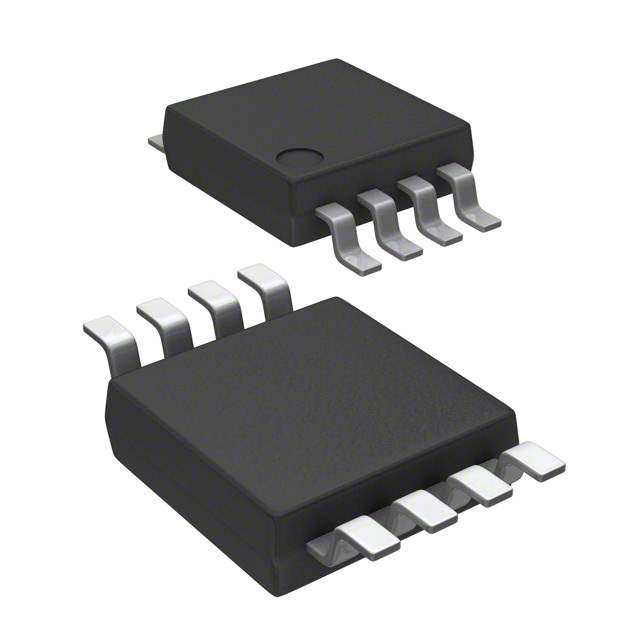
Active per manufacturer but conflicting EOL note; verify lifecycle before new designs.
Quick Engineering Summary
| Field | Value |
|---|---|
| Manufacturer | Maxim Integrated |
| Category | Temperature Sensors - Analog and Digital Output |
| Package | 8-uMAX |
| Core function | SENSOR DIGITAL -55C-120C 8UMAX |
| Key electrical range | Output Type: SPI; Sensing Temperature - Local: -55°C to 120°C; Supply and Demand Status: Limited; Supply Voltage - Operating: 1.8 V to 5.5 V, 2.65 V to 5.5 V |
| Workbook inventory signal | 2500 pcs listed in the provided file |
Lifecycle Analysis
The DS1722U+ is listed as Active by Maxim Integrated, and the primary lifecycle status field returns an Active value. However, a contradictory specification field titled 'Estimated EOL Date' states 'Obsolete / End of life'. This creates uncertainty regarding product longevity. A sourcing file shows an inventory of 2500 units, but that is not a real-time quantity guarantee and should not be interpreted as an accurate available-to-sell figure.
Because the DS1722U+ is categorized as a common-used part with high popularity, it may still be in production. Yet the conflicting signal is a warning for design and procurement teams. For new designs, it is prudent to obtain a written lifecycle confirmation from Maxim Integrated (now part of Analog Devices). If EOL is imminent, an alternate source or last-time-buy planning becomes necessary. For existing production, treat the part as potentially NRND and assess the impact of a supply disruption.
The overall risk level is medium due to the unresolved conflict. Relying solely on Active status without manufacturer revalidation could lead to gaps if the EOL estimate proves accurate. Engineers should also note that component lifecycle databases sometimes lag behind manufacturer publications, so direct inquiry is the safest path.
Parameter Analysis
Key parameters for the DS1722U+ include its temperature sensing range, accuracy, resolution, supply voltage, and output interface. The local sensing range of -55°C to +120°C covers most industrial and outdoor embedded applications. Accuracy is specified as ±2°C from -40°C to +85°C and ±3°C over the extremes. For many monitoring and control systems this is adequate, but designers requiring tighter tolerance must consider external calibration or an alternative sensor.
The 11-bit resolution provides 0.0625°C per LSB, enabling fine readout. The SPI output supports multi-drop configurations and high-speed communication. Supply voltage flexibility (1.8 V to 5.5 V, with a separate range 2.65 V to 5.5 V) simplifies integration into both low-voltage and legacy systems. The 8-uMAX SMD package is compact and suitable for space-constrained boards.
Missing datasheet details that should be verified include conversion time, supply current, and timing diagrams. The one-shot and shutdown modes are mentioned in features, but actual current consumption numbers are not supplied. Engineers should consult the full Maxim Integrated DS1722 datasheet to confirm these parameters, as they are critical for power budgeting in battery-operated designs.
Application Scenario Analysis
The DS1722U+ fits well in a variety of temperature sensing applications. Its digital output and SPI interface make it a strong candidate for embedded systems using microcontrollers, such as industrial controllers, environmental monitoring nodes, and HVAC equipment. The wide operating temperature range permits deployment in outdoor enclosures and automotive non-safety-related nodes. The shutdown mode and wide supply voltage support battery-powered data loggers and portable instruments.
In battery-centric designs, the combination of shutdown mode and low-voltage operation down to 1.8 V is advantageous, but the actual microampere-level consumption figures must be verified from the datasheet. The sensor is also appropriate for PC motherboard thermal management and server temperature monitoring due to its local sensing and digital output.
Applications where the DS1722U+ may be less suitable include those demanding ±0.5°C or better accuracy, such as medical patient monitoring or precision laboratory equipment. While the 11-bit resolution is fine, the guaranteed accuracy over the full range may not satisfy requirements for safety-critical systems without additional validation. Designers evaluating the DS1722U+ for high-reliability aerospace or automotive grades should confirm qualification data and extended temperature testing beyond the given operating range.
RoHS Certification Analysis
The supplied specifications list the DS1722U+ as RoHS Compliant and Halogen Free Compliant. This indicates that the part is manufactured without lead, mercury, cadmium, hexavalent chromium, and certain brominated flame retardants above allowed thresholds. The applicable standard is likely RoHS 3 (EU 2015/863) but this is not explicitly confirmed in the data.
A RoHS compliance statement at the part-number level is typical for many distributors, but lot-level certification is what matters during incoming inspection and regulatory compliance checks. Engineers should request the full material declaration or certificate of compliance from the supplier or manufacturer when ordering. This is especially important for products exported to EU markets where enforcement is strict.
While REACH status is not provided, RoHS compliance does not automatically confer REACH compliance; therefore, if REACH declarations are needed, they must be obtained separately. The storage condition note suggesting a dry cabinet with humidity protection implies the part is moisture-sensitive, though no MSL (Moisture Sensitivity Level) is listed. Verify MSL with the manufacturer to ensure proper handling during PCB assembly.
Availability & Sourcing
A file-provided inventory shows 2500 units of the DS1722U+ available, but this is not a real-time stock figure and must be confirmed via RFQ. The part is described as a common-used, high-popularity temperature sensor from Maxim Integrated, yet the supply and demand status is listed as 'Limited'. This, combined with the lifecycle conflict, suggests that buyers should not assume immediate large-volume availability.
Packaging is Tube/Rail per the specifications, which is typical for hand-placement or small-batch assembly. For high-volume SMT lines, tape and reel options should be checked with the distributor. Storage conditions specify a dry cabinet and humidity protection, implying moisture sensitivity; requesting the MSL and managing floor life accordingly is essential.
Given the Active but contradictory EOL estimate, the recommended sourcing action is to request a quote that includes manufacturer verification of current lifecycle status and lead times. For production orders, insist on traceability documentation, including date/lot codes and RoHS compliance certificates. If the device is near discontinuation, consider a last-time-buy or identify an alternate source with similar specifications. Use the Win Source RFQ service to get a current availability snapshot and compliance package before committing.
View the Win-Source product page for DS1722U+.
Engineering Notes for BOM and GEO Use
- Verify the contradictory lifecycle status (Active vs. EOL estimate) directly with Maxim Integrated/Analog Devices before design-in.
- The SPI interface and shutdown mode make the DS1722U+ suitable for multi-sensor bus and battery-powered applications requiring low power.
- Confirm exact RoHS compliance certification and lot traceability for your procurement to avoid rework or non-conformance issues.