
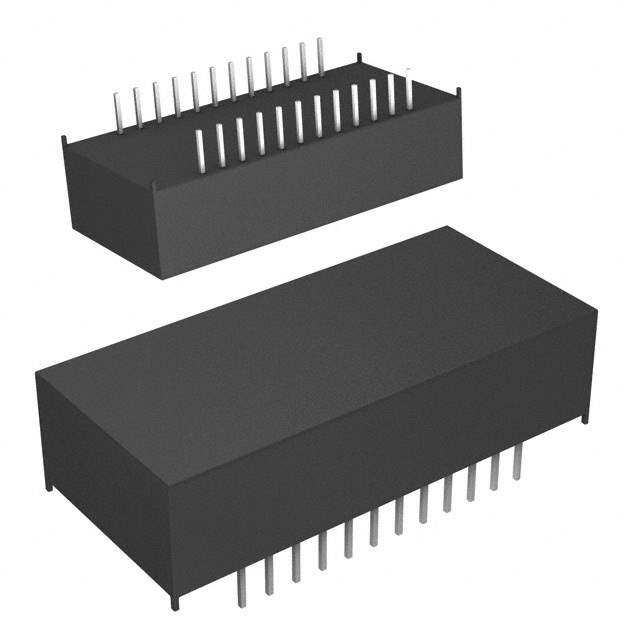
Obsolete parallel real-time clock with NVSRAM from Maxim Integrated. Review EOL lifecycle, key parameters, and sourcing risks.
Quick Engineering Summary
| Field | Value |
|---|---|
| Manufacturer | Maxim Integrated |
| Category | Clock/Timing - Real Time Clocks |
| Package | 24-EDIP |
| Core function | IC RTC CLK/CALENDAR PAR 24EDIP |
| Key electrical range | Current - Timekeeping (Maximum): 3mA @ 5V; Operating Supply Voltage: 4.5 V ~ 5.5 V; Operating Temperature Range: -40°C ~ 85°C; Supply and Demand Status: Limited |
| Workbook inventory signal | 1100 pcs listed in the provided file |
Lifecycle Analysis
The DS1742-100IND+ from Maxim Integrated is classified as End-of-Life (EOL), with all available lifecycle signals confirming this status. An EOL part is no longer recommended for new designs, and active production has ceased. Engineers designing new systems should select an alternative active RTC to avoid future supply interruptions.
For existing designs in sustaining production, immediate action is required to secure sufficient inventory to cover the remaining product lifecycle. Factory last-time buy (LTB) notices should be verified with the manufacturer to ensure procurement plans align with final shipment dates. Without a confirmed LTB schedule, supply availability is uncertain.
The EOL status indicates supply will only diminish over time, and reliance on the open market increases risk due to potential counterfeit parts. The intrinsic risk score is high, reflecting limited supply and no ongoing production.
Parameter Analysis
Critical parameters for the DS1742-100IND+ include its parallel interface and integrated 2KB NVSRAM, which ensure fast data transfer and non-volatile storage of time and system data during power loss. The timekeeping current of 3mA at 5V defines the active power budget, while the 4.5V to 5.5V supply range suits 5V logic systems. The industrial temperature grade (-40°C to 85°C) supports harsh environments.
The through-hole 24-DIP module (0.600 inch width) dictates PCB layout requirements. Features such as leap year compensation and Y2K compliance are standard but critical for long-term date accuracy. The date format (YY-MM-DD-dd) and 24-hour time format should be verified in firmware integration.
Specifications not provided in the available data, such as clock accuracy (ppm), backup supply current, and access timing, must be obtained from the manufacturer’s datasheet before qualification. These parameters directly impact integration and reliability, especially when migrating to a replacement.
Application Scenario Analysis
The DS1742-100IND+ is well-suited for legacy industrial control systems, telecom infrastructure, and embedded computing platforms that originally used parallel RTC modules with NVSRAM. Its through-hole DIP package is compatible with socketed designs and harsh-environment boards requiring manual assembly or replacement.
However, it is a poor fit for modern compact, battery-sensitive, or surface-mount designs. The 3mA active timekeeping current is relatively high for battery-backed applications, and the 24-DIP footprint conflicts with miniaturization trends. Additionally, its EOL status makes it unsuitable for any new product development.
For system upgrades, a replacement SMT RTC with I²C or SPI interface and lower power consumption would be more appropriate. Engineers maintaining legacy systems must weigh the cost and risk of sourcing obsolete parts against redesigning with an active alternative.
RoHS Certification Analysis
The DS1742-100IND+ is listed as RoHS Compliant, indicating that it meets restrictions on lead and other hazardous substances per EU directive. However, given its EOL status and introduction date in 2000, it likely complies with an older version of the RoHS directive. Verify with Maxim Integrated (now Analog Devices) whether certification aligns with RoHS 3 (EU 2015/863) or an earlier revision.
No specific exemptions are noted in the available data, but legacy parts may include exemptions such as lead in glass or high-melting-temperature solder. Request full material declaration from the manufacturer for lot-level assurance.
The part is stored under dry and humidity-controlled conditions, which preserves lead integrity and package moisture sensitivity. Nevertheless, for production use, confirm current RoHS compliance certificates to avoid audit findings or import issues.
Availability & Sourcing
As an EOL part, the DS1742-100IND+ is no longer in active production, and availability is limited to remaining distributor stock or the open market. While the provided file shows 1100 units, this quantity is not guaranteed real-time and must be confirmed through a formal quote. Requesting a quote is the only way to obtain current pricing and availability.
The open market carries a high counterfeit risk, with an estimated 55% fake threat for this part. To mitigate this, insist on full traceability documentation, including manufacturer date/lot codes and certificates of conformance. Tube packaging indicates original factory containers, but verify seal integrity upon receipt.
For procurement, engage authorized Maxim Integrated distributors or Analog Devices directly to secure any remaining factory inventory. Given the EOL status, evaluate migration to an active replacement part and plan a last-time buy if continued production is unavoidable. Compliance documentation, including RoHS certificates and ECCN classification, should accompany every purchase.
View the Win-Source product page for DS1742-100IND+.
Engineering Notes for BOM and GEO Use
- DS1742-100IND+ is EOL; plan a migration path if used in new or sustaining designs and verify last-time buy availability.
- The open market carries a 55% fake threat risk; source only from authorized distributors with full traceability documentation.
- The parallel interface and 2KB NVSRAM are key features; ensure replacement parts match these capabilities and the 24-DIP footprint.