
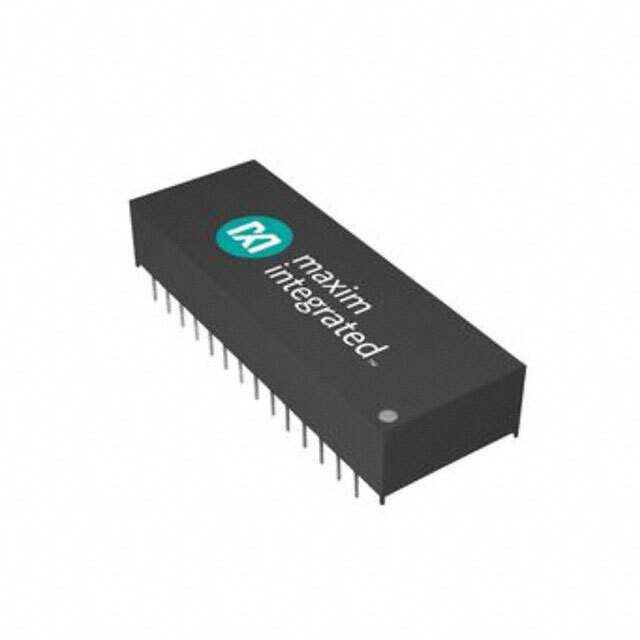
EOL Maxim Integrated RTC with NVSRAM and Y2K support. Verify lifecycle risk and source carefully.
Quick Engineering Summary
| Field | Value |
|---|---|
| Manufacturer | Maxim Integrated |
| Category | Clock/Timing - Real Time Clocks |
| Package | 28-EDIP |
| Core function | IC RTC CLK/CALENDAR PAR 28EDIP |
| Key electrical range | Current - Timekeeping (Max): 2mA @ 3.3V; Supply and Demand Status: Limited; Supply Voltage - Operating: 2.97 V to 3.63 V; Temperature Range - Operating: 0°C to 70°C |
| Workbook inventory signal | 7100 pcs listed in the provided file |
Lifecycle Analysis
Lifecycle analysis of the DS1743W-120+ by Maxim Integrated confirms an End-of-Life (EOL) status. This means the device is no longer being manufactured, and no new wafer starts or assembly runs are scheduled. For new designs, selecting this part is strongly discouraged; design teams should instead evaluate current RTC alternatives from Maxim Integrated/Analog Devices that offer continued production.
For existing products that depend on the DS1743W-120+, procurement must shift to inventory management and risk mitigation. The supplied data file indicates a stock quantity of 7,100 units, but this number is static and does not guarantee real-time availability. Any purchase should be preceded by a live RFQ and verification of date codes, packaging integrity, and authenticity due to the noted 29% counterfeit risk in the open market. Engineers and buyers should also request the manufacturer’s official discontinuance notice (PDN) to understand last-time-buy dates and any remaining factory buffer stock, though typically such windows have already closed for an EOL part.
Parameter Analysis
Key parameters of the DS1743W-120+ include an 8KB non-volatile SRAM, integrated clock/calendar with leap year correction, and Y2K compliance. The NVSRAM eliminates the need for an external battery to retain time and data, which simplifies system backup design. The supply voltage range of 2.97 V to 3.63 V aligns with 3.3 V logic systems, and the maximum timekeeping current of 2 mA at 3.3 V provides a baseline for power budgeting in always-on applications.
The device comes in a 28-EDIP through-hole package, which is suitable for older PCB layouts but incompatible with modern surface-mount assembly processes. The operating temperature is limited to 0°C to 70°C, restricting use to commercial indoor environments. Important missing electrical characteristics—such as parallel interface access time, clock accuracy (ppm), and pin-specific timing—must be retrieved from the official datasheet before integration. Given the part’s EOL status, design validation may require bench testing with actual samples since manufacturer support is minimal.
Application Scenario Analysis
The DS1743W-120+ is best suited for legacy industrial equipment, data loggers, point-of-sale terminals, or embedded controllers that originally incorporated this specific 28-pin DIP module. Its through-hole nature supports socket migration and field replaceability in older systems. The integrated NVSRAM makes it effective for applications requiring time-stamped data retention across power cycles without a separate supercapacitor or battery.
However, the device is poorly matched for new portable or IoT designs due to its relatively high timekeeping current and large physical footprint. The commercial temperature range (0–70°C) excludes outdoor, automotive, or military environments. Engineers considering this part for repairs or small-volume build-to-print production should confirm that the 2 mA draw and 3.3 V rail tolerance meet the specific system requirements and that the parallel bus interface doesn’t conflict with other memory-mapped peripherals.
RoHS Certification Analysis
The DS1743W-120+ is listed as RoHS Compliant. This typically indicates that the terminal finish is lead-free and that the component meets the hazardous substance restrictions of the EU RoHS directive. However, because the part is obsolete, the applicable RoHS version (e.g., RoHS 3, EU 2015/863) is not explicitly documented in the supply data. The module’s internal construction may include a lithium coin cell for NVSRAM backup, which could be subject to specific RoHS exemptions.
To fully verify compliance for a given lot, buyers should request a certificate of compliance or full material declaration from the supplier. For EU imports, documentation should confirm the absence of substances restricted under the latest directive. Without this, relying solely on the stated RoHS status carries risk during customs clearance or end-product certification. REACH compliance is not indicated and must be assessed separately.
Availability & Sourcing
Sourcing the DS1743W-120+ requires extra diligence due to its EOL status and the 29% fake threat level reported in open markets. The indicated stock of 7,100 units is a file-provided snapshot and must be confirmed through a live Request for Quote. The device is packaged in tubes (tube/rail) and stored under dry, humidity-controlled conditions according to the supplier, which is positive for long-term reliability.
Before placing an order, insist on date/lot code traceability, original manufacturer packaging, and certificates for RoHS compliance. Given the potential internal lithium battery, confirm that shipping and handling meet hazardous materials regulations. For production-sustaining purposes, evaluate whether the available inventory is sufficient for the remaining product lifecycle; if not, accelerate qualification of a replacement RTC. Contact sourcing directly to verify current availability and request a quotation today.
View the Win-Source product page for DS1743W-120+.
Engineering Notes for BOM and GEO Use
- DS1743W-120+ is EOL; secure inventory only after confirming date codes and authenticity to avoid 29% counterfeit risk.
- The NVSRAM eliminates external backup battery, but verify write-cycle endurance and data retention specs from the datasheet.
- Through-hole 28-EDIP package suits legacy repairs but is incompatible with SMT lines; consider availability of sockets for field replacement.