
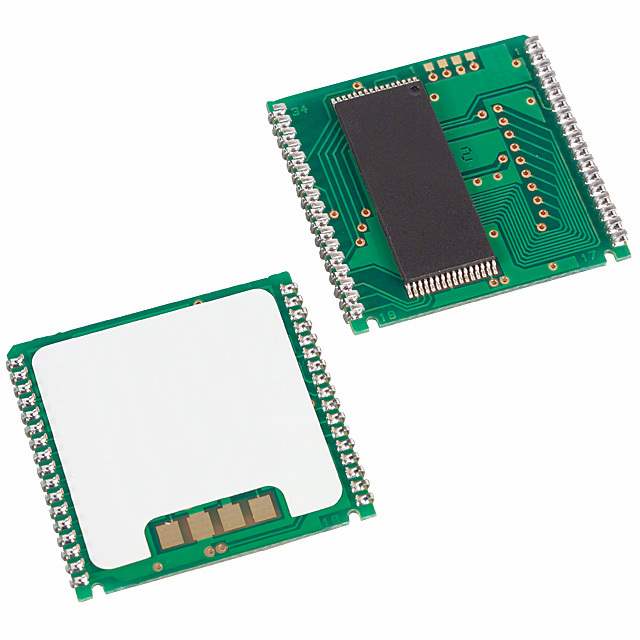
EOL Maxim Integrated IC with 8KB NVSRAM, parallel interface, 34-PowerCap module. Verify lifecycle for procurement.
Quick Engineering Summary
| Field | Value |
|---|---|
| Manufacturer | Maxim Integrated |
| Category | Clock/Timing - Real Time Clocks |
| Package | 34-PowerCap Module |
| Core function | IC RTC CLK/CALENDAR PAR 34PCM |
| Key electrical range | Current - Timekeeping (Max): 2mA @ 3.3V; Supply and Demand Status: Limited; Supply Voltage - Operating: 2.97 V to 3.63 V; Temperature Range - Operating: 0°C to 70°C |
| Workbook inventory signal | 1 pcs listed in the provided file |
Lifecycle Analysis
The DS1743WP-120+ real-time clock from Maxim Integrated is classified as End-of-Life (EOL). This status means the manufacturer has ceased production, and the device is no longer available for new design registrations. For engineers maintaining legacy equipment, this confirms that procurement must rely on existing distributor or aftermarket inventory. Any available stock should be purchased with careful attention to date codes and battery condition, as the integrated PowerCap module includes a lithium battery that may degrade over time.
The lifecycle risk is high, with no pin-compatible replacement identified in the provided data. Existing designs using the DS1743WP-120+ should be reviewed for potential migration paths. The file indicates a single unit in stock, but this quantity is not guaranteed and must be validated through a quote request. Engineers should anticipate sourcing challenges and plan for long-term availability risks by either securing sufficient inventory or qualifying an alternate part.
Parameter Analysis
Key parameters for the DS1743WP-120+ include the 8KB NVSRAM with parallel clock/calendar access, operating voltage of 2.97V to 3.63V, and timekeeping current of 2mA maximum at 3.3V. The 34-PowerCap module integrates a crystal and battery, simplifying board integration but also making the module sensitive to battery shelf-life. The commercial temperature range (0°C to 70°C) is suitable for indoor applications but may not cover industrial extremes.
Critical items to verify from the official datasheet include access time specifications for the parallel interface, battery-life expectancy in the application, and RTC accuracy over temperature. The NVSRAM write-cycle endurance and data retention after power loss are also important for systems that log critical data. Without these values, designers should apply conservative timing margins and consider implementing software checks for RTC validity after extended sleep periods. The EOL status means no factory support is available for parameter verification.
Application Scenario Analysis
The DS1743WP-120+ was designed for embedded systems requiring a non-volatile clock/calendar and SRAM. Typical strong-fit applications include legacy industrial controllers, point-of-sale terminals, data loggers, and medical devices where the parallel bus interface and integrated battery-backed memory provided a straightforward solution. The Y2K and leap-year features indicate it was intended for long-term deployment with firmware-friendly date handling.
Weak-fit scenarios include new designs that favor serial (I²C/SPI) RTCs with smaller footprints and lower power consumption. Applications exceeding 70°C or those needing extended battery life (where 2mA timekeeping current is significant) are not recommended. Because the part is EOL, any new production run should avoid this component; it is only justified in exact-form-factor replacements for existing systems where software and hardware constraints prevent a change. Engineers must verify that the 34-PowerCap module’s mechanical fit and battery availability align with their maintenance schedule.
RoHS Certification Analysis
According to the supplier data, the DS1743WP-120+ is RoHS Compliant. While the specific directive revision (e.g., RoHS 3 2015/863) is not explicitly listed, the designation suggests conformance to EU hazardous substance restrictions at the time of manufacture. As an EOL component, it is crucial to obtain the original manufacturer’s RoHS certificate of compliance (CoC) for the specific lot, as compliance status may vary between production batches.
Buyers should note that the integrated battery module may have an exemption under RoHS for lead as an alloying element in battery chemistries, though such exemptions are typically documented in the full material declaration. REACH status is not provided; REACH compliance should be requested separately if needed for EU market access. End-product RoHS responsibility rests with the system integrator, and using an EOL part may complicate recertification if the supply chain changes.
Availability & Sourcing
Sourcing the DS1743WP-120+ requires careful due diligence due to its EOL status and a reported 45% counterfeit threat in the open market. The preferred packaging is Tube/Rail, and stock may be available through specialized distributors. The file shows a quantity of one unit, but this is not real-time inventory and should be confirmed by requesting a quote. Buyers should insist on full traceability documentation, date code verification, and RoHS compliance certificates.
Given the high lifecycle risk, procurement teams should evaluate the long-term availability strategy: either buy sufficient stock to cover the product’s remaining lifetime or actively develop a replacement design using a current RTC from Maxim Integrated or a compatible supplier. Authorized distributors may offer EOL notifications and last-time buy support if any inventory remains. Engineers should also verify the battery condition of any PowerCap module, as the integrated lithium cell may have a limited shelf life. Request a quote today to secure authenticated parts for your legacy system.
View the Win-Source product page for DS1743WP-120+.
Engineering Notes for BOM and GEO Use
- EOL status: Not for new designs; verify existing stock authenticity and battery condition before procurement.
- Key parameters: 8KB NVSRAM, 2mA timekeeping at 3.3V, commercial temp range; verify bus timing and RTC accuracy from datasheet.
- Sourcing risk: 45% open-market counterfeit rate; insist on RoHS CoC and date code traceability when buying aftermarket.