
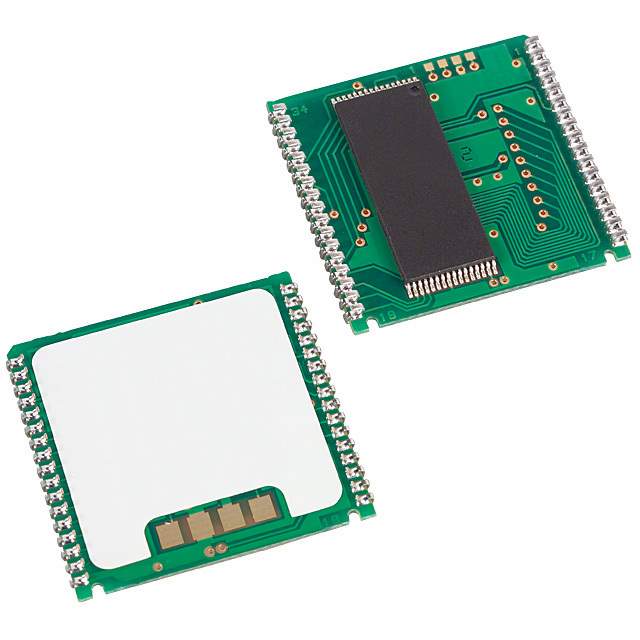
EOL parallel real-time clock module with 8KB NVSRAM, 2mA timekeeping at 3.3V, and 34-PowerCap package. Verify EOL status before use.
Quick Engineering Summary
| Field | Value |
|---|---|
| Manufacturer | Maxim Integrated |
| Category | Clock/Timing - Real Time Clocks |
| Package | 34-PowerCap Module |
| Core function | IC RTC CLK/CALENDAR PAR 34PCM |
| Key electrical range | Current - Timekeeping (Maximum): 2mA @ 3.3V; Operating Supply Voltage: 2.97 V ~ 3.63 V; Operating Temperature Range: 0°C ~ 70°C; Supply and Demand Status: Limited |
| Workbook inventory signal | 1 pcs listed in the provided file |
Lifecycle Analysis
DS1743WP-150+ from Maxim Integrated is an End-of-Life (EOL) real-time clock module, classified as high risk for procurement. The product introduction date of February 23, 2001, indicates a mature part that has now been phased out by the manufacturer. All lifecycle signals confirm full discontinuity, with no conflicting optimistic indicators. This status means the part is no longer recommended for new designs; engineering teams should only consider it for sustaining existing production systems.
For procurement, EOL status demands immediate action: verify last-time-buy (LTB) windows with the manufacturer and secure remaining inventory. The file-provided quantity of one unit underscores extremely limited availability, not a real-time stock guarantee. Additionally, open market sourcing carries a documented 35% fake threat rate, increasing the risk of counterfeit or degraded components. Buyers must prioritize traceability, authorized distribution, and thorough incoming inspection when sourcing any DS1743WP-150+ units.
Parameter Analysis
The DS1743WP-150+ is a parallel-interface clock/calendar RTC with 8KB of integrated NVSRAM, housed in a 34-PowerCap module. Key operating specifications include a supply voltage range of 2.97V to 3.63V and a maximum timekeeping current of 2mA at 3.3V, which is critical for battery-backed applications. The battery supply input is rated at 3V. The date format is YY-MM-DD-dd, and the device supports leap year and Y2K compliance. The commercial operating temperature range is 0°C to 70°C.
The parallel interface requires a full data bus and address lines, making it suited for legacy microprocessor systems. The 8KB NVSRAM can store time data and user-defined information without external memory, while the PowerCap package integrates the crystal and battery, simplifying PCB design but making module replacement necessary for battery failure. Engineers should note that the datasheet does not list crucial AC characteristics or bus timing specifications in the available summary; these parameters must be verified against the official Maxim Integrated datasheet before finalizing any design. Missing specifications like clock accuracy and RTC crystal ppm tolerance are also essential for time-critical applications.
Application Scenario Analysis
Typical applications for the DS1743WP-150+ include industrial embedded systems, data loggers, point-of-sale terminals, and legacy medical devices that require reliable timekeeping with non-volatile storage. The parallel bus architecture aligns well with older microcontrollers and microprocessors that lack serial interface support, making it a drop-in fit for sustaining existing equipment.
In new designs, this part is generally a weak fit due to its EOL status and the availability of modern RTCs with serial interfaces (e.g., I2C, SPI) that save board space and power. The commercial temperature range limits its use to indoor or climate-controlled environments; applications requiring extended or industrial temperature ranges would necessitate alternative parts. For any design-in, the battery integration and NVSRAM features remain advantageous, but the high risk of obsolescence and supply-chain uncertainty outweigh benefits for new products. The primary recommended scenario is exact replacement in fielded units where no hardware redesign is feasible.
RoHS Certification Analysis
The DS1743WP-150+ is marked as RoHS Compliant according to the provided data. This generally indicates compliance with the EU RoHS Directive (2011/65/EU and its amendment 2015/863), restricting hazardous substances such as lead, mercury, and cadmium. However, the exact certification version is not specified in the available summary, so verification against the latest directive is prudent.
Because the part is EOL and may have been manufactured years ago, lot-level compliance documents should be requested from any supplier. The PowerCap module includes a battery, which may be subject to additional environmental regulations (e.g., EU Battery Directive), although no such information is available here. For procurement, insisting on a valid certificate of conformance and, if possible, laboratory test reports can mitigate compliance risks. No exemptions are noted, but it is advisable to confirm that no RoHS exemptions apply to the specific materials used in this module.
Availability & Sourcing
Sourcing the DS1743WP-150+ requires extreme caution due to its EOL and Obsolete(EOL) status. The workbook quantity shows only 1 unit, indicating critically low availability. The supply-and-demand status is limited, and open-market fake threat is estimated at 35%. Buyers should initiate a request-for-quote (RFQ) as soon as possible to determine real-time stock levels, but must treat any available units as subject to authenticity verification.
For traceability, require date/lot codes, photos, and compliance documentation. The original packaging is tube, and storage condition is described as dry storage cabinet with humidity protection; verify that stock has been properly stored. Since the part is obsolete, avoid using it for new production; instead, secure inventory for repair and maintenance only, and begin evaluating modern RTC alternatives from Maxim Integrated (now Analog Devices) or other vendors. Contact the manufacturer for official last-time-buy dates and recommended replacement parts. Never commit to volume orders without thorough incoming inspection and functional testing.
View the Win-Source product page for DS1743WP-150+.
Engineering Notes for BOM and GEO Use
- Confirm last-time-buy status with Analog Devices/Maxim Integrated; this part is not for new designs.
- Insist on date-code traceability, dry-pack verification, and anti-counterfeit testing due to 35% open-market fake threat.
- Verify battery backup circuit design: ensure 3V battery supply and examine datasheet for NVSRAM write cycle requirements.